
Why Men’s and Women’s Shirts Button Differently …The History Behind the Design
Most people get dressed every day without ever noticing a small but curious detail: men’s and women’s shirts button on opposite sides. While it may seem like an arbitrary design choice, this difference actually traces back centuries and reflects social customs, class structures, and practical realities of the past.
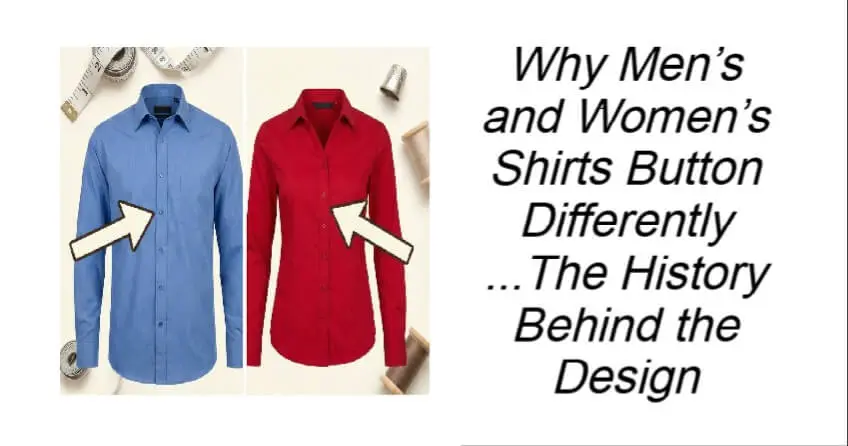
Traditionally, women’s shirts button on the left, while men’s button on the right. This convention emerged in the 18th and 19th centuries, a time when fashion was deeply intertwined with wealth and social status.
Women’s Fashion and the Role of Servants
In earlier centuries, upper-class women rarely dressed themselves. Their clothing was often elaborate, layered, and tightly fitted, making it difficult to manage without help. Because most people were right-handed, it was more practical for a maid standing face-to-face with her mistress to fasten buttons positioned on the left side of the garment.
What began as a practical decision gradually became a cultural signal. Left-side buttons subtly indicated privilege, suggesting that the wearer belonged to a social class that could afford assistance. Over time, this design choice became associated with refinement, tradition, and femininity.
Men’s Clothing and Practical Function
Men’s clothing evolved along a very different path. Historically, many men carried weapons such as swords or early firearms, typically worn on the left side of the body. This positioning allowed them to draw a weapon quickly with their dominant right hand.
Shirts and jackets that buttoned on the right made it easier to access these weapons without obstruction. As military influence shaped men’s fashion, this practical arrangement became the standard, reinforcing ideals of readiness, function, and strength.
A Tradition That Still Endures
Although modern life no longer revolves around personal servants or weapon belts, fashion has a way of preserving old customs. The side on which a shirt buttons remains a subtle reminder of historical gender roles, class distinctions, and practical needs from centuries ago.
What seems like a simple design detail today is actually a thread connecting modern clothing to long-standing social habits—proof that even the most ordinary garments can carry the imprint of history.
You’ve just read, Why Men’s and Women’s Shirts Button Differently. Why not read Manager Had To Hire A New Employee.