
Think Chickenpox Is Gone for Good …The Hidden Risk of Shingles
Many people assume that once they’ve had chickenpox as a child, the virus is gone for good.
But there’s an important detail that often comes as a surprise: the virus remains in the body after chickenpox has cleared.
The virus responsible for chickenpox, varicella-zoster virus (VZV), can remain dormant in nerve tissue for many years. In some people, it can later reactivate and cause a painful condition known as shingles, or herpes zoster.
So how does this happen, and what should you look out for?
What Happens After Chickenpox?
After a person recovers from chickenpox, the visible illness disappears, but the virus isn’t completely eliminated from the body.
Instead, VZV becomes inactive and remains in certain nerve cells.
It can stay there quietly for decades without causing any symptoms.
For most people, there is no way to know that the dormant virus is still present.
But sometimes it becomes reactivated.
When that happens, the result can be shingles.
Why Does Shingles Occur?
The exact reason the virus reactivates isn’t always clear.
However, the risk of shingles generally increases as people get older, particularly because immune function changes with age.
Certain medical conditions and treatments that weaken the immune system can also increase the risk.
Stress and physical or emotional strain are sometimes associated with shingles, but it’s important not to assume that stress alone causes an outbreak.
The key point is that shingles can occur even in someone who otherwise feels healthy.
What Does Shingles Feel Like?
One of the tricky things about shingles is that the first symptoms aren’t always obvious.
Before the characteristic rash appears, some people experience:
- Burning or aching pain
- Tingling or itching
- Increased sensitivity to touch
- Numbness
- Discomfort in a specific area of the body
These symptoms may appear several days before the rash.
Then a distinctive rash can develop.
Why Does the Rash Usually Appear on One Side?
Shingles occurs when the dormant virus becomes active along a particular nerve.
As a result, the rash often follows the path of that nerve, creating a localized pattern.
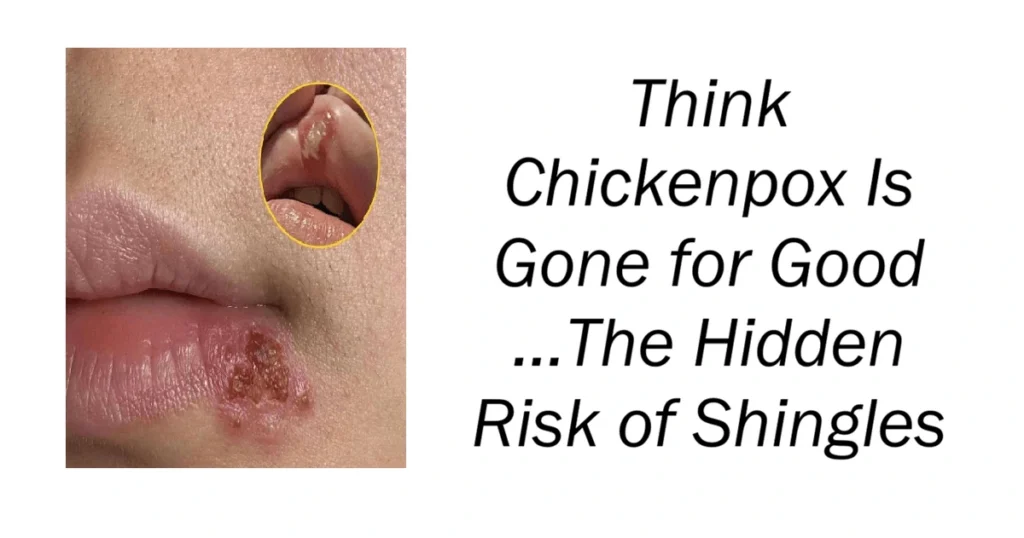
It commonly appears as clusters of fluid-filled blisters on one side of the body or face.
This one-sided pattern is one of the characteristic features of shingles.
If you develop an unexplained painful or blistering rash—particularly on one side of your body—it’s worth contacting a healthcare professional promptly.
A Complication You Should Know About
Most people recover from shingles, but complications can occur.
One of the most important is postherpetic neuralgia (PHN).
This condition causes nerve pain that continues after the shingles rash has healed. In some people, the pain can persist for months or even longer and may significantly affect sleep and quality of life.
The risk of complications tends to increase with age.
That’s one reason early medical assessment is important.
Is Shingles Contagious?
Here’s where the explanation can sometimes become confusing.
A person with shingles does not give another person shingles directly.
However, the fluid from shingles blisters can contain varicella-zoster virus. Someone who has never had chickenpox and hasn’t been vaccinated against it can potentially become infected through direct contact with the blister fluid.
That person would develop chickenpox, not shingles.
Until the rash has crusted over, people with shingles should therefore avoid direct contact with individuals who could be particularly vulnerable, including pregnant people who aren’t immune to chickenpox, newborn babies, and people with weakened immune systems.
Covering the rash and practicing good hand hygiene can also help reduce the risk of transmission.
When Should You Seek Medical Advice?
If you suspect you may have shingles, contacting a healthcare professional promptly is a good idea.
Antiviral medicines can be used to treat shingles and are generally most effective when started early.
This is particularly important if the rash is near the eye or face, because shingles affecting the eye can cause serious complications.
Don’t ignore significant pain, an unexplained blistering rash, or symptoms involving the eye.
Can Shingles Be Prevented?
There is a vaccine that can significantly reduce the risk of shingles and its complications.
Eligibility and vaccination recommendations vary depending on your age, health, and where you live, so it’s worth discussing vaccination with a healthcare professional or checking your local vaccination guidance.
Prevention is particularly important because shingles becomes more common with increasing age.
The Takeaway
Chickenpox may be an illness you remember from childhood, but the virus behind it doesn’t necessarily disappear afterward.
Varicella-zoster virus can remain dormant in the nervous system for years and later reactivate as shingles.
Knowing the early warning signs—especially localized burning, tingling, pain, or sensitivity followed by a one-sided blistering rash—can help you recognize the condition and seek medical advice promptly.
Shingles isn’t something to panic about, but it is something worth taking seriously.
If you ever develop a suspicious rash or unexplained nerve pain, particularly on one side of your body or around your eye, don’t simply wait and see. Speak with a healthcare professional.
You’ve just read Think Chickenpox Is Gone for Good. Why not read Can You Spot the Hidden Chicken