
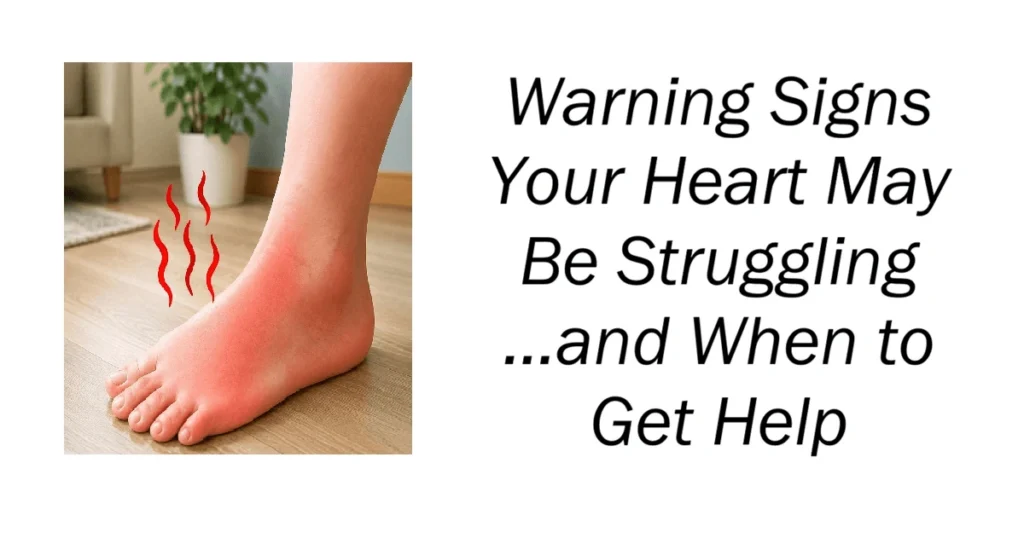
Warning Signs Your Heart May Be Struggling …and When to Get Help
Your heart works around the clock, quietly pumping blood and oxygen throughout your body. Because it does its job so continuously, it’s easy to overlook changes when something begins to feel different.
Unusual tiredness. Breathlessness after an activity that used to feel easy. Swollen ankles. A strange flutter in your chest.
These symptoms can have many different causes, and they don’t automatically mean that you have heart disease. But new, persistent, or worsening symptoms deserve attention, particularly if you have risk factors for cardiovascular disease.
The important lesson isn’t to panic at every unusual sensation. It’s to recognize changes in your body and know when it’s time to seek medical advice.
1. Unusual Fatigue That Doesn’t Improve With Rest
Everyone has days when they’re exhausted.
But unexplained fatigue that is new, persistent, or significantly different from your normal energy level shouldn’t simply be dismissed as getting older or being busy.
Some people with heart problems experience unusual tiredness because the heart isn’t pumping blood as effectively as it should. However, fatigue can also result from many other conditions, including anemia, infections, thyroid problems, sleep disorders, medications, and stress.
Pay attention to a significant change in your normal energy level—especially when it occurs alongside other symptoms such as breathlessness, chest discomfort, or swelling.
2. Shortness of Breath During Everyday Activities
Have you suddenly started getting out of breath doing something that used to feel easy?
Perhaps walking upstairs leaves you unusually winded, or you find yourself needing to stop and catch your breath during a normal walk.
Shortness of breath can have many causes, but it can also occur when the heart isn’t keeping up with the body’s demands.
Some people with heart failure also experience difficulty breathing when lying flat or wake during the night feeling short of breath.
A noticeable change in your breathing is worth discussing with a healthcare professional—particularly if it’s getting worse.
3. Chest Pressure, Tightness, Pain, or Discomfort
Chest discomfort is one of the symptoms that should never be casually dismissed.
Heart-related discomfort can feel like pressure, squeezing, heaviness, tightness, or aching. It may occur during physical activity or emotional stress and sometimes improve with rest.
The sensation isn’t always located directly over the heart. Discomfort can spread into the arm, shoulder, back, neck, jaw, or upper abdomen.
It can also sometimes resemble indigestion.
When Is Chest Pain an Emergency?
If you have new or severe chest discomfort, especially when it occurs with shortness of breath, sweating, nausea, weakness, or pain spreading to your arm, back, neck, or jaw, seek emergency medical help immediately.
Don’t wait for the symptoms to become unbearable.
Heart attacks can present differently from person to person, and not everyone experiences dramatic chest pain.
4. New Swelling in Your Legs, Ankles, or Feet
Have your shoes suddenly started feeling tighter by the end of the day?
Swelling in the feet, ankles, or legs can have numerous causes. But fluid retention can occur when the heart isn’t pumping effectively, making new or worsening swelling an important symptom to discuss with a healthcare professional.
You may also notice that your weight increases rapidly over a short period because of fluid accumulation.
Rather than relying on a specific number of pounds as a universal warning sign, pay attention to rapid, unexplained changes in weight, especially when they occur together with swelling or breathlessness.
If you’ve been diagnosed with heart failure, your healthcare team may give you specific instructions about when a change in weight should prompt a call.
5. Dizziness, Fainting, or New Heart Palpitations
A sudden fluttering, racing, pounding, or irregular sensation in your chest can be unsettling.
Occasional palpitations can occur for harmless reasons, including stress, caffeine, or lack of sleep. But new or recurring palpitations can sometimes be associated with abnormal heart rhythms.
Dizziness, lightheadedness, or fainting can also have many causes.
However, fainting or near-fainting accompanied by chest pain, severe breathlessness, or a racing or irregular heartbeat requires urgent medical attention.
Don’t assume that a recurring episode is simply dehydration or tiredness without getting it checked.
Why Paying Attention to Patterns Matters
One symptom by itself doesn’t necessarily point to a heart problem.
Fatigue might come from poor sleep. Breathlessness could be related to a respiratory condition. Swollen ankles can have several causes. And palpitations may be triggered by stress or caffeine.
But when symptoms are new, persistent, worsening, or appearing together, it’s important to have them evaluated.
Your doctor can consider your medical history, risk factors, medications, symptoms, and examination findings and decide whether tests such as an electrocardiogram (ECG), blood tests, imaging, or other cardiac investigations are appropriate.
What Should You Do If You Notice These Symptoms?
Instead of trying to diagnose yourself, focus on what has changed.
Step 1: Pay Attention
Make a simple note of:
- When the symptom started
- How often it occurs
- What you were doing when it happened
- How long it lasted
- Whether anything made it better or worse
- Whether other symptoms occurred at the same time
This information can be extremely helpful during a medical appointment.
Step 2: Arrange a Medical Assessment
If symptoms are new or persistent, contact your healthcare professional.
Tell them exactly what has changed rather than assuming it’s simply part of aging.
Depending on your symptoms and risk factors, they may recommend further assessment or testing.
Step 3: Know the Emergency Warning Signs
Don’t wait for a routine appointment if you develop symptoms that could indicate a heart attack or another medical emergency.
Seek emergency medical help for symptoms such as:
- Severe or persistent chest pressure or pain
- Severe difficulty breathing
- Fainting or loss of consciousness
- Chest discomfort accompanied by sweating, nausea, or marked weakness
- New symptoms that are severe, rapidly worsening, or feel life-threatening
When in doubt about severe symptoms, it’s safer to seek urgent medical care.
Simple Habits That Support Heart Health
While lifestyle changes can’t diagnose or treat a heart condition, they can play an important role in cardiovascular health.
Helpful habits include:
- Eating a balanced diet rich in vegetables, fruits, whole grains, and other minimally processed foods
- Limiting excessive sodium and highly processed foods
- Staying physically active according to your abilities and your healthcare professional’s advice
- Avoiding tobacco and seeking help to quit if you smoke
- Maintaining a healthy blood pressure, cholesterol, and blood sugar level
- Getting enough quality sleep
- Managing chronic stress in healthy ways
- Attending recommended health checks
You don’t need to change everything overnight.
Small, sustainable improvements can add up over time.
What About Heart Symptoms in Women?
Heart disease can affect everyone, but symptoms don’t always look identical from person to person.
Women may experience symptoms such as fatigue, shortness of breath, nausea, back or jaw discomfort, or unusual weakness, sometimes with less obvious chest pain.
That doesn’t mean women never experience classic chest pressure—they certainly can.
The important message is to recognize the full range of possible symptoms rather than waiting for one stereotypical sign.
The Bottom Line: Don’t Ignore Significant Changes
Your body can give you clues when something isn’t right, but no list of symptoms can tell you with certainty whether you have heart disease.
The five signs discussed here—unusual fatigue, shortness of breath, chest discomfort, unexplained swelling, and dizziness or new palpitations—can have many causes.
What matters is noticing when something is new, persistent, unusual for you, or getting worse.
And when symptoms suggest a possible emergency, don’t wait for them to pass.
Listen to your body, seek appropriate medical advice, and take severe or sudden symptoms seriously.
Your heart doesn’t need you to panic.
It needs you to pay attention.
Frequently Asked Questions
Can heart warning signs appear suddenly?
Yes. Some heart problems develop gradually, while others can appear suddenly. Never assume that you have plenty of warning time before a serious cardiac event.
Are heart symptoms different in women and men?
Symptoms can vary between individuals, and women may experience symptoms such as unusual fatigue, shortness of breath, nausea, or back or jaw discomfort. Everyone should take new or concerning symptoms seriously.
What if I have symptoms but my initial tests are normal?
If symptoms continue, worsen, or change, stay in communication with your healthcare professional. They can decide whether further evaluation is appropriate.
Should I wait until symptoms become severe?
No. New or persistent symptoms deserve appropriate medical attention, while severe or sudden symptoms may require emergency care immediately.
Medical disclaimer: This article is for general educational purposes and isn’t a diagnosis or substitute for professional medical advice. If you’re experiencing concerning symptoms, contact a qualified healthcare professional. For severe or potentially life-threatening symptoms, seek emergency medical help immediately.