
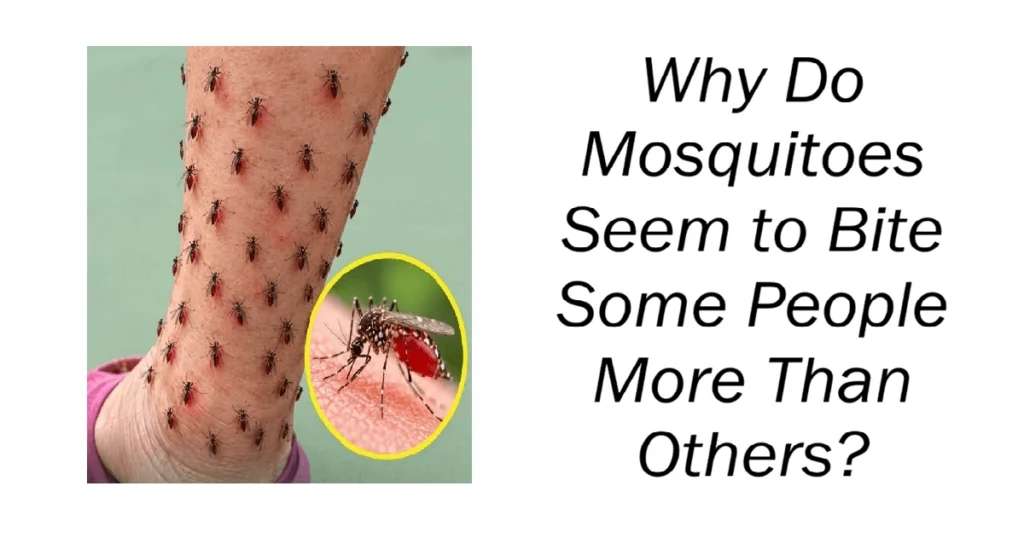
Why Do Mosquitoes Seem to Bite Some People More Than Others
You spend a relaxing evening outdoors with family or friends. The weather is warm, the conversation is flowing, and nobody seems particularly bothered by insects.
Then you get home.
You look down at your arms and legs and discover several itchy red bumps. Meanwhile, the person sitting next to you has barely been bitten at all.
Maybe you even used mosquito repellent. Perhaps you wore long sleeves or avoided areas with tall grass. Yet somehow, the mosquitoes still seemed to find you.
It is easy to joke that mosquitoes have “favorite people.”
Surprisingly, there is some science behind the idea.
Mosquitoes do not choose their targets completely at random. Their behaviour is influenced by a complicated combination of carbon dioxide, body heat, skin chemistry, sweat, odour, clothing, genetics and environmental conditions.
In other words, some people naturally produce a stronger combination of signals that mosquitoes are particularly good at detecting.
That does not necessarily mean anything is wrong with your body. From a mosquito’s perspective, you may simply be easier to locate.
Mosquitoes Are Remarkably Skilled Hunters
One important fact is often overlooked: male mosquitoes do not bite people for blood.
It is primarily female mosquitoes that take blood meals because they need nutrients from blood to help develop their eggs.
Over millions of years, mosquitoes have evolved an impressive sensory system for locating potential hosts. They do not rely on just one clue. Instead, they combine several different signals.
They can detect carbon dioxide in the air, respond to heat and moisture, recognise visual contrast and sense numerous chemicals released from human skin.
Imagine being able to locate someone using the warmth of their body, the chemicals in their breath and the faint scent coming from their skin.
That is, in a simplified sense, what mosquitoes are capable of doing.
And some people naturally give off a stronger combination of those signals than others.
Carbon Dioxide Is One of Their Most Important Clues
Every time you breathe out, you release carbon dioxide, or CO₂.
Humans barely notice it, but mosquitoes do.
Carbon dioxide is one of the important long-range signals mosquitoes can use to recognise that a living host is nearby.
The amount of CO₂ a person produces can be influenced by factors such as body size, metabolism and physical activity.
Larger adults generally produce more carbon dioxide than smaller individuals because their bodies require more oxygen and produce more CO₂.
Exercise can temporarily increase the signal even further.
After running, cycling, gardening, dancing or even walking quickly on a warm evening, your breathing rate increases. You exhale more carbon dioxide while your body becomes warmer and begins producing more sweat.
From the mosquito’s perspective, several attractive signals may suddenly become stronger at the same time.
Body Heat Helps Mosquitoes Find You
Mosquitoes do not rely on smell alone.
Temperature also matters.
The human body naturally produces heat, and warmer areas of exposed skin can help mosquitoes locate a suitable place to land and feed.
This may help explain why mosquitoes can seem particularly bothersome after physical activity.
Exercise raises body temperature, while warm summer weather can have a similar effect.
Pregnancy is another situation in which changes in metabolism, breathing and body temperature may influence mosquito attraction.
If you are breathing heavily, sweating and standing outside on a humid evening, you may be producing a particularly strong collection of signals that mosquitoes can detect.
Your Skin Has Its Own Chemical Signature
Two people can use the same soap, eat the same meal and sit beside each other outdoors—and still smell completely different to a mosquito.
That is because human skin continuously produces a complex mixture of chemical compounds.
Some come from sweat. Others come from natural skin oils, while additional compounds are produced when bacteria living on the skin break down substances released by the body.
Together, these chemicals create something similar to a biological scent signature.
And everyone’s signature is different.
Mosquitoes appear to find certain combinations of skin compounds more attractive than others. This may be one reason two people in exactly the same location can experience very different numbers of bites.
Importantly, this has little to do with whether someone is “clean”.
A person who showers regularly can still naturally produce a skin-odour profile that mosquitoes find attractive.
The Bacteria Living on Your Skin May Also Matter
Your skin is home to a vast community of microorganisms.
These bacteria are normal and play important roles in maintaining healthy skin. However, they also interact with sweat and skin secretions, producing various odour compounds in the process.
The exact combination of bacterial species varies from person to person.
As a result, two individuals can produce very different scents even under almost identical conditions.
Research suggests that the types and diversity of microorganisms living on the skin may influence how attractive someone is to certain mosquito species.
This could help explain why bites are sometimes concentrated around areas such as the feet and ankles, where distinctive odours can be produced.
Could Your Blood Type Make a Difference?
Blood type is another factor researchers have investigated.
Some studies have found differences in mosquito attraction depending on blood type, with type O sometimes associated with greater attraction than type A in certain mosquito species.
However, blood type is only one part of a much larger biological picture.
Mosquitoes cannot simply look at a person and know their blood type. Researchers believe that chemicals associated with blood type may be detectable indirectly through skin secretions.
Having type O blood does not mean mosquitoes will automatically prefer you, just as having another blood type does not make you immune to bites.
Your breathing, skin chemistry, temperature, movement, clothing and environment may have a much greater influence at any particular moment.
Why Sweat Can Make You More Noticeable
Sweat contains several substances that mosquitoes can detect, including compounds such as lactic acid, ammonia and other metabolic by-products.
During exercise, several things happen at once:
- Your body temperature rises.
- You breathe faster.
- You release more carbon dioxide.
- You produce more sweat.
- Your skin becomes warmer and more humid.
Together, these factors can create a stronger signal for mosquitoes.
That is why someone who has just finished exercising may notice mosquitoes gathering around them more quickly than someone who has been sitting quietly.
Even without intense exercise, hot and humid weather can increase perspiration and change the chemical signals coming from the skin.
Does the Colour of Your Clothes Matter?
Mosquitoes do not navigate exclusively by smell. Vision can also help them locate potential hosts.
Dark clothing can create stronger visual contrast with the surrounding environment, making a person easier to detect under some conditions.
Colours such as black, navy and dark blue may therefore be more noticeable than lighter shades.
That does not mean wearing a white shirt will make you invisible.
If your body is producing strong signals of carbon dioxide, heat and attractive skin chemicals, mosquitoes can still find you.
However, wearing lighter-coloured clothing may be one simple measure that provides some additional protection, particularly when combined with other precautions.
Can Alcohol Make You More Attractive to Mosquitoes?
You may have heard people claim that mosquitoes become more interested in them after drinking alcohol.
There is some research suggesting that alcohol consumption, particularly beer in certain studies, may increase mosquito attraction. However, the evidence is limited and scientists do not yet have a complete explanation for the effect.
Possible factors include changes in skin temperature, blood circulation, sweating or metabolic chemicals released through the skin.
The effect may also vary considerably from person to person.
Alcohol should therefore not be viewed as a universal explanation for mosquito bites, but it may be one contributing factor in certain situations.
Why Pregnancy May Increase Mosquito Attraction
Pregnancy causes significant changes in metabolism, circulation, breathing and body temperature.
Some research has found that pregnant women may attract more mosquitoes under certain conditions.
Two possible explanations are particularly relevant.
First, pregnancy can increase the amount of carbon dioxide a person exhales.
Second, body temperature can also increase slightly.
Together, these changes may make someone easier for mosquitoes to detect.
This is especially important in areas where mosquito-borne diseases are present, as avoiding mosquito bites during pregnancy can be particularly important.
Hormones and Metabolism Can Change Your Body Odour
The chemicals released through your skin are not necessarily the same throughout your life.
They can change with age, hormones, diet, physical activity, medication, stress and other factors.
This means someone who rarely attracts mosquitoes at one point in their life may notice more bites under different circumstances.
Hormonal changes can influence sweating, body temperature and skin secretions, potentially altering the scent profile mosquitoes encounter.
Scientists are still investigating exactly how these biological changes affect mosquito behaviour, and there is unlikely to be one simple explanation.
Is Your Perfume Attracting Mosquitoes?
People sometimes blame perfume, shampoo, body lotion or scented soap for attracting mosquitoes.
The reality is more complicated.
Because mosquitoes use odour information to locate hosts, scented products can potentially influence how a person smells to them. Some fragrances may contain floral or fruity notes that alter the chemical environment around the skin.
However, perfume is only one factor.
Natural body odour, carbon dioxide, heat, sweat and skin chemistry all remain important.
Two people wearing exactly the same perfume could therefore experience completely different numbers of bites.
If you consistently notice more mosquitoes after using a particular strongly scented product, trying an unscented alternative may be worth considering.
Genetics May Play a Role
Perhaps the most frustrating factor is also one you have little control over: genetics.
Your genes influence many characteristics that could affect mosquito attraction, including metabolism, body odour, sweat composition, skin secretions and potentially the microorganisms living on your skin.
Research involving twins and other experimental models suggests that mosquito attractiveness can have an inherited component.
This could help explain why some people seem to be mosquito magnets year after year.
However, it would be misleading to reduce mosquito attraction to genetics alone. The effect can vary between mosquito species, individuals and environments.
Different Mosquito Species Behave Differently
There is no single universal “mosquito”.
Thousands of mosquito species exist around the world, and their behaviour can differ considerably.
Some species prefer humans, while others are more likely to feed on birds, livestock or other animals.
Some are most active around dawn and dusk, while others can bite during daylight hours.
Different species can also respond differently to odour, temperature, moisture, movement and visual cues.
This means that mosquito behaviour can depend heavily on where you live and which species are present.
Why Warm, Humid Weather Brings More Mosquitoes
Mosquitoes generally thrive in warm environments where sufficient moisture is available.
That is why they can become particularly common during warm seasons and in tropical or subtropical climates.
After rainfall, mosquito populations can increase when water collects in places where females can lay their eggs.
Potential breeding sites can be surprisingly small, including:
- Flowerpots
- Buckets
- Birdbaths
- Old tyres
- Gutters
- Plastic containers
- Children’s toys
- Pet water bowls
- Clogged drains
- Tarps and outdoor covers
Even relatively small amounts of stagnant water can provide a breeding site for certain mosquito species.
Why Do Mosquitoes Often Bite at Dawn and Dusk?
Many mosquito species are particularly active during the cooler, lower-light periods around sunrise and sunset.
These conditions can be favourable because temperatures are often lower and humidity can be higher than during the middle of the day.
For people who enjoy evening walks, gardening, outdoor dining or sitting outside after sunset, this can mean increased exposure.
However, not every mosquito follows the same schedule. Some important species are active during the daytime as well.
For that reason, mosquito protection should not be limited to nighttime.
Why Can One Person Have Ten Bites While Another Has None?
Imagine two people sitting outside at the same table.
Person A has just finished playing tennis, is wearing a dark shirt, has warm skin and naturally produces a combination of skin compounds that mosquitoes find attractive.
Person B is sitting quietly, wearing lighter clothing and happens to produce a less attractive combination of chemical signals.
Both people are in exactly the same location.
Yet from a mosquito’s perspective, they may be sending very different signals.
What feels like mosquito “preference” can therefore be the result of multiple biological and environmental factors working together.
Why Do Some People React More Strongly to Bites?
There is another reason someone may believe they are being bitten more than everyone else: their skin may simply react more visibly.
When a mosquito bites, it introduces saliva containing substances that help it feed.
Your immune system responds to proteins in that saliva.
For many people, this produces the familiar itchy, swollen bump.
However, immune responses vary.
One person might develop a large red welt after a single bite, while another may have only a tiny mark that disappears quickly.
So two people could receive a similar number of bites, yet only one appears to be covered in noticeable welts.
Scratching Can Make Things Worse
Mosquito bites can be extremely itchy, but repeatedly scratching them can damage the skin.
Once the skin barrier is broken, bacteria can enter and potentially cause an infection.
Keeping the area clean and avoiding aggressive scratching can help reduce this risk.
A cool compress may also help relieve itching and swelling. Some people use appropriate over-the-counter anti-itch treatments when needed.
If a bite causes severe swelling, difficulty breathing, widespread hives, signs of infection or other unusual symptoms, seek medical attention.
How Can You Make Yourself Less Attractive to Mosquitoes?
You cannot change your blood type or completely alter your natural body chemistry.
Fortunately, mosquito prevention does not depend on becoming biologically “unattractive”.
The goal is simply to make it harder for mosquitoes to detect, reach or bite you.
Use an Effective Insect Repellent
Repellents containing proven active ingredients can interfere with a mosquito’s ability to locate or land on exposed skin.
Always follow the product instructions carefully and reapply as recommended.
Wear Protective Clothing
Long sleeves, long trousers, socks and closed shoes can reduce the amount of exposed skin available to mosquitoes.
When practical, lighter-coloured clothing may also reduce visual contrast.
Tightly woven fabrics can provide better protection than loose materials that mosquitoes may sometimes bite through.
Remove Standing Water
Reducing breeding sites around your home can help limit local mosquito populations.
Empty containers that collect rainwater, clean gutters, change birdbath water regularly and turn buckets upside down when they are not being used.
Check plant saucers, children’s toys, drains and outdoor equipment after rainfall.
Use Screens and Physical Barriers
Window screens, door screens and mosquito nets can help prevent mosquitoes from entering your home.
Repair holes or gaps when you find them.
Outdoor fans may also make it more difficult for mosquitoes to approach because they are relatively weak flyers.
Pay Attention to Mosquito Activity
If mosquitoes in your area are particularly active around sunrise or sunset, take extra precautions during those periods.
That might mean using repellent, wearing protective clothing or moving activities indoors.
Being a “Mosquito Magnet” Is Usually About Multiple Factors
There is rarely one single reason mosquitoes choose one person over another.
Instead, it is usually a combination of signals.
You may release more carbon dioxide, have warmer skin, produce particular skin odours, have recently exercised or wear clothing that makes you easier to detect.
Genetics may influence several of these characteristics at the same time.
Add warm weather, high humidity and a large mosquito population, and the difference between two people can become surprisingly noticeable.
The Bottom Line
If you always seem to be the person covered in mosquito bites while everyone else walks away untouched, you may not be imagining the difference.
Mosquitoes use a sophisticated combination of smell, heat, carbon dioxide, moisture, visual cues and chemical signals to locate potential hosts.
Some people naturally produce a combination of signals that certain mosquito species find particularly attractive.
Body size, physical activity, skin chemistry, sweat, clothing, pregnancy, genetics and the microorganisms living on the skin can all play a role.
The good news is that you do not need to change your biology to protect yourself.
Using an effective repellent, wearing protective clothing, reducing standing water, maintaining window screens and paying attention to mosquito activity in your area can all help reduce your chances of being bitten.
So the next time mosquitoes seem to ignore everyone else and head straight for you, remember:
They probably are not holding a personal grudge. Your body may simply be broadcasting a signal they are exceptionally good at detecting.
This article is intended for general educational purposes and is not a substitute for individual medical advice, diagnosis or treatment.
You’ve just read Why Do Mosquitoes Seem to Bite Some People More Than Others. Why not read Here Are Some Signs She Might Have a Crush on You