
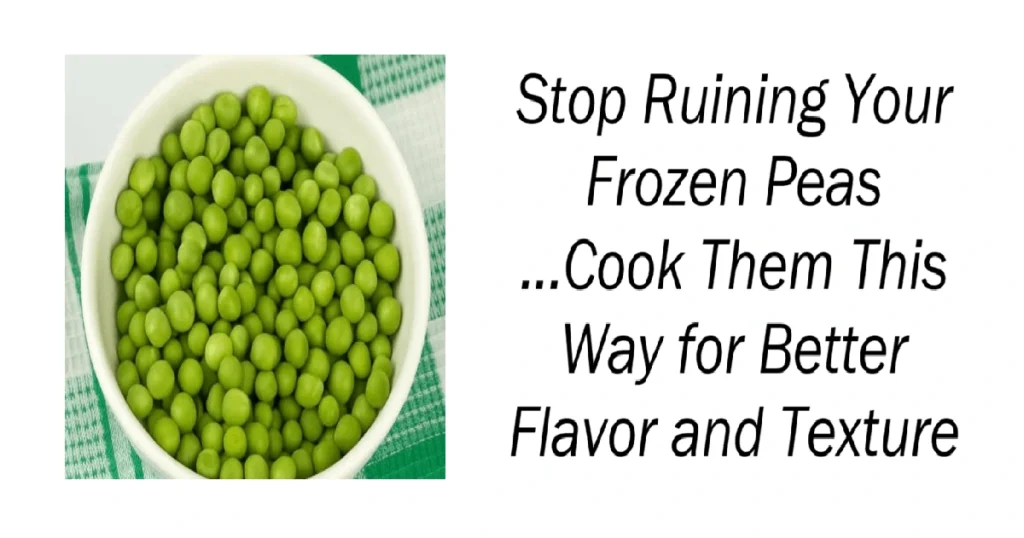
Stop Ruining Your Frozen Peas …Cook Them This Way for Better Flavor and Texture
Frozen peas might seem like one of the easiest ingredients to cook—but surprisingly, they’re also one of the most commonly mishandled. The result? Dull color, mushy texture, and a disappointing lack of flavor.
If you’ve been tossing them straight into boiling water and hoping for the best, it’s time for a small upgrade in technique. With just a few simple changes, you can turn frozen peas into a vibrant, sweet, and perfectly tender addition to any meal.
Why Frozen Peas Go Wrong
The biggest mistake people make is overcooking them. Frozen peas are already partially cooked during processing, so treating them like raw vegetables often leads to soggy, lifeless results.
Another common issue is boiling them for too long or trapping them in steam—both of which destroy their natural sweetness and bright green color.
Let’s fix that.
The Right Way to Cook Frozen Peas
1. Skip the Thawing Step
Unlike meat or fish, frozen peas should go straight from the freezer to the pan. Thawing them first can make them soft and watery.
Here’s the better approach:
- Bring a pot of water to a boil
- Add a pinch of salt (and a tiny bit of baking soda if you want to keep them extra green)
- Add the peas directly from frozen
- Cook for just 2 to 4 minutes
- Drain and rinse immediately with cold water to stop the cooking process
This keeps them firm, bright, and fresh-tasting.
2. Add Them Last
If you’re making stir-fries, rice dishes, or stews, timing matters.
Because frozen peas cook so quickly, adding them too early can ruin their texture.
Instead:
Add them during the last 3 to 5 minutes of cooking. This way, they stay plump, sweet, and intact.
3. Avoid Over-Steaming
Cooking peas in a covered pot for too long traps moisture and leads to sogginess.
Try this instead:
Sauté them uncovered over medium heat with a little butter or olive oil. Stir gently and let their natural sweetness develop without excess moisture.
Extra Tips for Perfect Peas
- Add a pinch of sugar to enhance their natural sweetness
- Pair with fresh herbs like mint for a brighter flavor
- Avoid reheating—they’re best served fresh
- Use only enough water to cover them when boiling
- Add acidic ingredients like lemon juice or vinegar after cooking, not during
Final Thoughts
Frozen peas don’t need complicated techniques—but they do need a bit of care. By avoiding overcooking and adjusting when and how you add them, you’ll get peas that are vibrant, tender, and full of flavor every time.
Sometimes, it’s the smallest changes in the kitchen that make the biggest difference on your plate.
You’ve just read Stop Ruining Your Frozen Peas. Why not read I Put Mayonnaise on My Faded Patio Chairs