
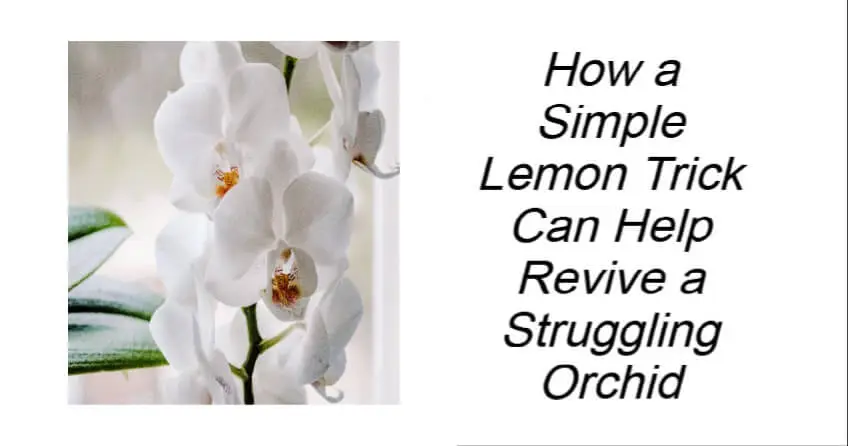
How a Simple Lemon Trick Can Help Revive a Struggling Orchid
Phalaenopsis orchids and other indoor varieties are admired for their elegant blooms and graceful shape—but anyone who’s owned one knows how delicate they can be. Issues like root rot, water-logged potting media, fungal infections, or mineral buildup on leaves can quietly weaken an orchid over time. When leaves lose their shine, roots turn dark, or flowers stop appearing, it’s often the plant’s way of asking for help.
Among the many tips orchid growers share, one unconventional method has gained attention: using lemon juice as part of a revival routine. While it’s not a miracle cure, when used correctly, it may give a struggling orchid a gentle reset.
The Lemon Trick Explained
The idea behind using lemon comes down to acidity. Lemon juice is mildly acidic, and in small, diluted amounts it may help:
- Break down mineral salt buildup on leaves and roots
- Slightly rebalance pH levels around the root zone
- Create a cleaner, more favorable environment for root function
Some growers describe it as giving the orchid a “fresh start.” It doesn’t replace proper care, but it can complement it when a plant is under stress.
How to Use Lemon on Your Orchid (Safely)
If you’d like to try this method, careful application is essential. Follow these steps:
- Inspect the plant
Remove any mushy, blackened, or dead roots. Trim yellow or brown leaves and check that the potting medium drains well. - Rinse gently
Use lukewarm water to wash dust, old fertilizer residue, or debris from the leaves and roots. - Dilute the lemon juice
Mix one teaspoon of fresh lemon juice in one liter of water. Never apply undiluted lemon juice—it’s too strong. - Apply lightly
Either mist the leaves or pour a small amount into the pot so it reaches the roots. Avoid soaking the plant. - Rinse again
After about one hour, flush with clean water to remove leftover acidity and prevent irritation. - Return to normal care
Place the orchid in bright, indirect light, maintain humidity around 50–70%, and keep the potting mix lightly moist—not soggy.
Why This Method Sometimes Works—and Sometimes Doesn’t
The lemon trick can be helpful for a few reasons:
- Mild acidity may dissolve alkaline salt buildup that blocks nutrient absorption
- Cleaner leaves improve light intake and air flow
- The process encourages growers to inspect roots, refresh media, and correct care mistakes
However, it has limits. Lemon juice won’t reverse severe root rot, cure advanced infections, or compensate for chronic overwatering. Overusing acidic treatments can also damage sensitive orchid tissues.
Think of lemon as a supportive tool—not a replacement for good orchid care.
Essential Care Tips for Long-Term Orchid Health
To truly revive and maintain an orchid, consistent habits matter most:
- Use a loose, airy orchid mix (bark, charcoal, perlite)
- Water only when the top inch of media is dry
- Ensure excess water drains freely from the pot
- Provide bright, indirect sunlight
- Maintain moderate humidity and gentle air circulation
- Fertilize lightly with diluted orchid food every 2–4 weeks during growth
- Repot every 1–2 years or when the potting mix breaks down
Final Thoughts: A Gentle Boost With Real Potential
Using diluted lemon juice can be a simple, low-cost way to help refresh a struggling orchid—but it works best as part of a complete care routine. Think of it as a small nudge rather than a cure-all.
When paired with proper light, airflow, watering habits, and fresh potting media, this subtle trick may help your orchid regain strength and bloom again. With patience and attentive care, even a tired plant can make a beautiful comeback.
You’ve just read, How a Simple Lemon Trick Can Help Revive a Struggling Orchid. Why not read Manager Had To Hire A New Employee.