
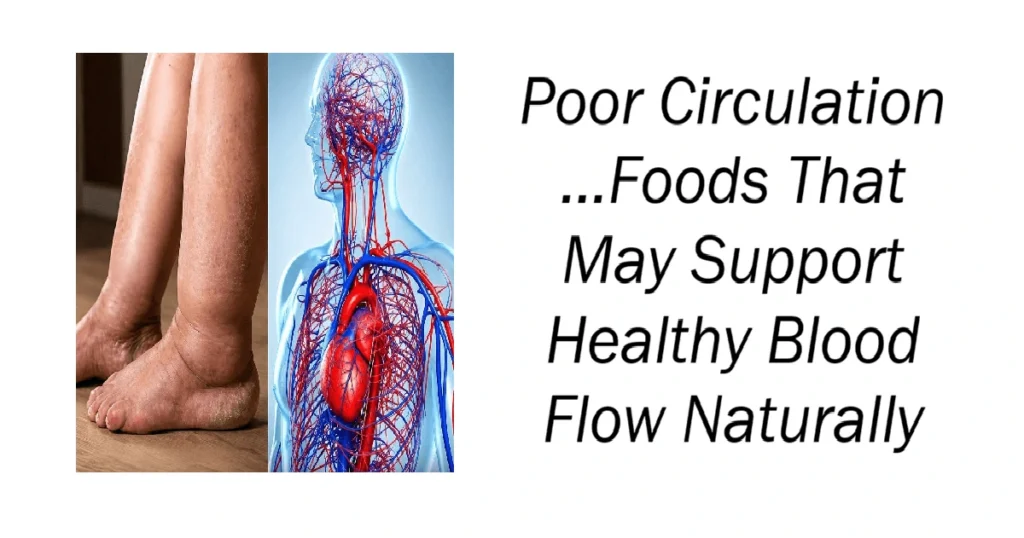
Poor Circulation …Foods That May Support Healthy Blood Flow Naturally
Looking for foods for poor circulation? Certain foods may support healthy blood flow, blood vessels, blood pressure, and overall cardiovascular health. From beetroot and leafy greens to fatty fish, berries, nuts, and whole grains, adding more nutrient-rich foods to your diet can be a useful part of a heart-healthy lifestyle.
Cold feet, swollen ankles, numbness, tingling, or heavy legs are often described as signs of poor circulation. However, these symptoms can have many different causes, including prolonged sitting, vein problems, nerve conditions, diabetes, peripheral artery disease, and other cardiovascular conditions.
That means there isn’t one food that can “fix” poor circulation.
Instead, the best approach is to build an overall eating pattern that supports healthy blood vessels and cardiovascular function.
In this guide, we’ll look at 10 foods that may support healthy blood flow naturally, explain why they can be beneficial, and discuss when circulation symptoms should be checked by a healthcare professional.
What Is Poor Circulation?
“Poor circulation” is a common phrase rather than a specific medical diagnosis.
People may use it to describe symptoms such as:
- Cold hands or feet
- Swollen ankles or legs
- Numbness or tingling
- Leg heaviness
- Leg discomfort
- Changes in skin color
- Slow-healing wounds
The cause matters because these symptoms don’t all come from the same problem.
For example, peripheral artery disease (PAD) can develop when arteries supplying the legs become narrowed. Some people experience pain or cramping in the legs while walking that improves after resting.
Venous problems can produce a different pattern. When blood doesn’t return efficiently through the veins, fluid may accumulate in the lower legs and ankles, causing swelling or heaviness.
Nerve problems, certain medications, thyroid disorders, anemia, dehydration, and prolonged inactivity can also cause symptoms that people interpret as poor circulation.
So while changing your diet can support cardiovascular health, it shouldn’t replace finding out what’s causing persistent symptoms.
Can Food Improve Blood Circulation?
A healthy diet can support many factors involved in cardiovascular and vascular health.
For example, certain foods provide:
- Dietary fiber
- Unsaturated fats
- Potassium
- Magnesium
- Natural nitrates
- Omega-3 fatty acids
- Polyphenols and other plant compounds
These nutrients and compounds may support healthy blood pressure, cholesterol levels, blood vessels, and overall heart health.
However, it’s important to keep expectations realistic.
No single food can instantly improve circulation, dissolve arterial plaque, or unblock a blood vessel.
Instead, think about the overall pattern of what you eat.
A diet rich in vegetables, fruits, whole grains, legumes, fish, nuts, seeds, and unsaturated fats can be a much more meaningful strategy for long-term cardiovascular health.
10 Foods That May Support Healthy Blood Flow
1. Beetroot
Beetroot is one of the most commonly discussed foods for blood flow because it naturally contains dietary nitrates.
The body can convert nitrates into nitric oxide, a compound involved in blood-vessel relaxation and vascular function.
Research suggests that dietary nitrate may influence blood pressure and certain aspects of vascular function.
That doesn’t mean beetroot juice will suddenly “clear your arteries.”
Instead, beetroot can be one nutritious component of a balanced diet designed to support cardiovascular health.
Try roasted beetroot in salads, grain bowls, or vegetable dishes.
2. Leafy Green Vegetables
Leafy greens such as spinach, rocket, kale, lettuce, and Swiss chard can provide several nutrients associated with cardiovascular health.
They’re sources of:
- Natural nitrates
- Potassium
- Magnesium
- Folate
- Fiber
- Plant compounds
They’re also generally low in calories and easy to incorporate into everyday meals.
Add leafy greens to salads, soups, omelets, sandwiches, pasta, or smoothies.
Rather than looking for one “best” vegetable for circulation, aim for variety.
3. Berries
Blueberries, strawberries, raspberries, and blackberries are rich in polyphenols and other plant compounds.
They also provide dietary fiber and naturally occurring vitamins and minerals.
Eating a variety of fruits and vegetables gives your body a broad range of nutrients and plant compounds that can support overall health.
For an easy breakfast, add berries to oatmeal or natural yogurt.
You can also use frozen berries in smoothies or eat them as a simple snack.
4. Citrus Fruits
Oranges, grapefruit, lemons, and other citrus fruits provide vitamin C, flavonoids, and other plant compounds.
Whole citrus fruits also provide fiber.
This is one reason whole fruit is generally a better everyday choice than relying heavily on fruit juice.
If you’re looking for simple ways to add more foods that support cardiovascular health, try an orange as a snack or add citrus segments to salads.
5. Fatty Fish
Fatty fish such as salmon, sardines, trout, herring, and mackerel provide omega-3 fatty acids and high-quality protein.
Omega-3 fats are associated with cardiovascular health and are a common part of heart-healthy eating patterns.
Fish can also be useful as a replacement for meals containing processed or fatty meats.
This highlights an important principle of healthy eating: what you replace can matter just as much as what you add.
Try replacing some processed meat meals with grilled salmon, sardines, or another oily fish.
6. Nuts and Seeds
Nuts and seeds can be excellent additions to a heart-healthy diet.
Almonds, walnuts, pistachios, chia seeds, and flaxseeds provide combinations of:
- Unsaturated fats
- Fiber
- Minerals
- Plant-based nutrients
Walnuts are particularly notable for their fatty-acid profile, while chia and flaxseeds provide alpha-linolenic acid, a plant-based omega-3 fatty acid.
Remember that nuts and seeds are energy-dense, so portion size still matters.
A small handful of nuts or a spoonful of seeds can be enough to add nutritional value to a meal.
7. Beans and Other Legumes
Beans, lentils, chickpeas, and peas are sometimes overlooked when people search for foods that improve circulation.
Yet they’re packed with dietary fiber and provide useful amounts of plant protein.
Soluble fiber can help reduce LDL cholesterol by affecting the absorption and recycling of bile acids.
Try adding lentils to soups, chickpeas to salads, or beans to chili and stews.
Replacing some meat-based meals with legumes can also improve the overall nutritional profile of your diet.
8. Whole Grains
Whole grains such as oats, barley, brown rice, and whole-grain bread can help increase your daily fiber intake.
Oats and barley are particularly interesting because they contain beta-glucan, a type of soluble fiber associated with LDL-cholesterol reduction.
If you currently eat mostly refined grains, gradually switching to whole-grain alternatives can be a simple dietary change.
For example, try:
- Oatmeal instead of a highly refined breakfast cereal
- Whole-grain bread instead of white bread
- Brown rice instead of refined white rice
- Barley in soups and stews
9. Extra-Virgin Olive Oil
Extra-virgin olive oil is a key feature of Mediterranean-style eating patterns.
It is rich in monounsaturated fat and contains a variety of plant compounds.
One practical way to use it is to replace some sources of saturated fat.
For example, use olive oil in salad dressings or cooking instead of relying heavily on butter.
The goal isn’t to consume large quantities of olive oil because it’s considered “healthy.”
It’s to use it as part of an overall balanced eating pattern.
10. Avocado
Avocado provides monounsaturated fat, fiber, and several micronutrients.
Like olive oil, avocado can be particularly useful when it replaces foods containing less favorable types of fat.
Try adding avocado to salads, whole-grain toast, sandwiches, or grain bowls.
Again, portion size matters because avocado is relatively calorie-dense.
What Foods Should You Limit for Better Circulation?
When thinking about diet and circulation, it’s easy to focus entirely on what you should eat.
But what you eat less often can also matter.
A diet that includes vegetables and berries but is still dominated by processed meat, salty snacks, sugary drinks, and highly refined foods may not provide the cardiovascular benefits you’re looking for.
Instead of simply asking:
“What foods improve blood circulation?”
Try asking:
“What unhealthy foods can I replace with healthier options?”
For example:
- Replace processed meat with beans or fish.
- Replace butter with an unsaturated vegetable oil.
- Replace sugary drinks with water.
- Replace refined grains with whole grains.
- Replace highly processed snacks with fruit, nuts, or yogurt.
These changes may seem simple, but consistency is more important than finding a miracle food.
What About Garlic for Circulation?
Garlic is frequently promoted online as a natural remedy for poor circulation.
Garlic contains biologically active compounds, and some research has investigated its potential effects on cardiovascular risk factors.
However, claims that garlic can literally “dissolve plaque” or “clean blocked arteries” go beyond what the evidence supports.
Garlic can certainly be part of a healthy diet.
It shouldn’t, however, be considered a replacement for medical treatment.
Is Dark Chocolate Good for Blood Flow?
Cocoa contains flavanols that have been studied for their potential effects on vascular function.
However, chocolate products can also contain considerable amounts of sugar and calories.
If you enjoy dark chocolate, a modest portion of a higher-cocoa product can fit into a balanced diet.
The important point is that one food doesn’t determine your cardiovascular health.
Your overall dietary pattern matters much more.
Can Ginger Improve Circulation?
Ginger contains several bioactive compounds and has been investigated for a range of potential health effects.
However, there isn’t strong evidence that eating ginger alone can cure poor circulation or restore blocked blood vessels.
It’s perfectly reasonable to include ginger in a varied diet, but be cautious of online claims that present ordinary foods as medical treatments.
When Should Poor Circulation Be Checked by a Doctor?
Diet can support your health, but persistent circulation symptoms shouldn’t simply be treated with food.
Speak with a healthcare professional if you experience ongoing or unexplained:
- Leg pain when walking that improves with rest
- Numbness or weakness
- Persistent swelling
- Changes in skin color
- Unusually cold feet
- Wounds that heal slowly
- Recurrent leg discomfort
Sudden swelling in one leg
Sudden swelling, pain, warmth, or redness affecting one leg can sometimes be associated with a deep-vein thrombosis (DVT).
This requires prompt medical assessment.
If you experience sudden shortness of breath, chest pain, coughing up blood, fainting, or severe difficulty breathing, seek urgent medical attention.
These symptoms can indicate a potentially serious blood clot complication.
Other Ways to Support Healthy Circulation
Food is only one part of cardiovascular health.
Regular movement is also important.
Walking, cycling, swimming, and other forms of physical activity can support cardiovascular fitness and help reduce the effects of prolonged sitting.
If you’ve been diagnosed with peripheral artery disease or another cardiovascular condition, speak with a healthcare professional about the most appropriate type and intensity of exercise for you.
Smoking is another major factor to consider.
Smoking damages blood vessels and increases the risk of cardiovascular disease and peripheral artery disease.
No food can compensate for the effects of continued smoking.
Managing blood pressure, blood sugar, LDL cholesterol, and other cardiovascular risk factors is equally important.
Frequently Asked Questions About Foods for Poor Circulation
What is the best food for poor circulation?
There isn’t one best food for poor circulation. A varied diet containing vegetables, fruit, whole grains, legumes, fish, nuts, seeds, and unsaturated fats is a better approach for supporting overall cardiovascular health.
What foods increase blood flow naturally?
Foods containing natural nitrates, unsaturated fats, omega-3 fatty acids, fiber, and plant compounds may support cardiovascular and vascular health. Examples include beetroot, leafy greens, fatty fish, nuts, seeds, berries, legumes, and olive oil.
What foods are good for circulation in the legs?
Foods that support overall cardiovascular health can also contribute to healthy circulation in the legs. These include leafy greens, beetroot, berries, fatty fish, legumes, whole grains, nuts, seeds, and unsaturated fats.
However, persistent leg symptoms should be medically assessed because circulation problems can have different causes.
Can drinking water improve circulation?
Staying adequately hydrated supports normal body function, but drinking extra water isn’t a treatment for blocked arteries or significant vascular disease.
If you’re experiencing persistent circulation symptoms, it’s important to investigate the underlying cause.
Can foods unblock arteries?
No single food can unblock an artery.
A heart-healthy diet can help manage cardiovascular risk factors such as LDL cholesterol, blood pressure, and body weight, but established arterial disease may require medical treatment.
What should I avoid if I have poor circulation?
There isn’t one universal list of foods everyone with circulation symptoms must avoid.
However, limiting excessive amounts of highly processed foods, sodium, added sugars, and saturated fats can be part of a heart-healthy dietary pattern.
Your individual needs may differ, particularly if you have a diagnosed medical condition.
Final Takeaway: Focus on the Bigger Picture
If you’re searching for foods for poor circulation, it’s tempting to look for one ingredient that will dramatically improve blood flow.
Unfortunately, nutrition doesn’t work that way.
Beetroot, leafy greens, berries, citrus fruits, fatty fish, nuts, seeds, legumes, whole grains, olive oil, and avocado can all fit into a dietary pattern designed to support cardiovascular health.
But the real benefit comes from the overall pattern — and from maintaining those habits consistently.
At the same time, don’t ignore persistent symptoms.
Swelling, numbness, leg pain when walking, skin-color changes, unusually cold feet, or slow-healing wounds can have medical causes that food alone cannot treat.
The goal isn’t to find a miracle food for circulation. It’s to build an eating pattern and lifestyle that support healthy blood vessels for years to come.
You’ve just read Foods That May Support Healthy Blood Flow Naturally. Why not read She Found a Ring on the Beach