
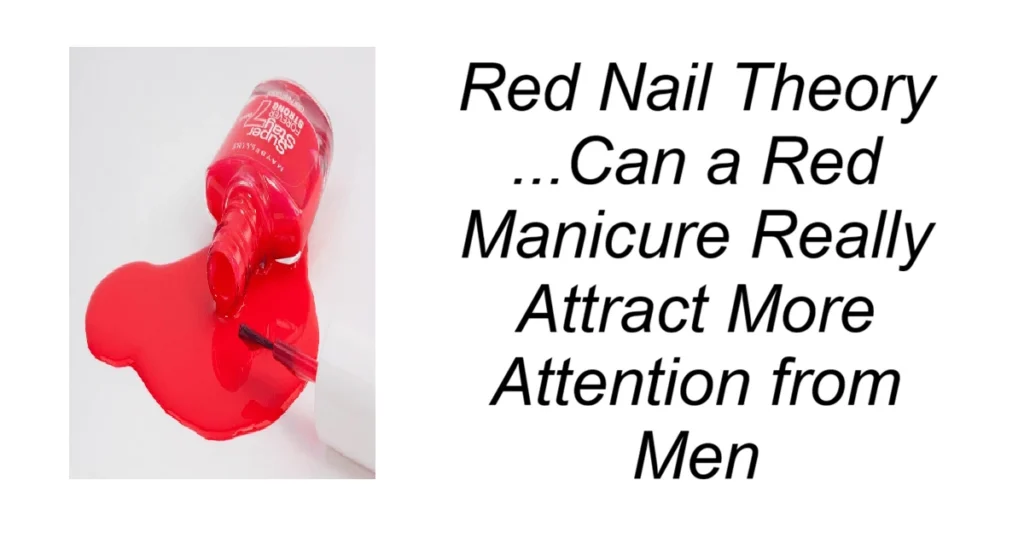
Red Nail Theory …Can a Red Manicure Really Attract More Attention from Men
Could something as simple as painting your nails red make you more attractive to potential partners? Social media users seem to think so. The viral #RedNailTheory trend has turned a classic manicure into a dating experiment, with women sharing stories of unexpected compliments, increased attention, and even second dates.
But is there any psychology behind the trend, or is it just another social media theory? Experts suggest there may be some truth to the idea, although the science is more complicated than TikTok might have you believe.
What Is the Red Nail Theory?
Red nails have long been a beauty staple, often associated with confidence, glamour, and timeless style. Recently, however, the color has gained a new meaning thanks to the Red Nail Theory, which claims that wearing red nail polish can make women more noticeable and attractive, particularly to men.
The trend gained popularity in 2022 when TikTok creator Robyn DelMonte shared her observation that men frequently complimented her red nails. She wondered whether the color reminded them of their mothers, many of whom wore red nail polish during the 1990s.
Her theory quickly caught the attention of social media users, inspiring women to try red manicures for themselves and share their experiences. Some reported receiving more compliments, feeling more confident during job interviews, and experiencing positive developments in their dating lives.
While these anecdotes helped fuel the trend, the question remains: does red really have the power to attract attention?
What Does Psychology Say About Red Nails?
There is some scientific evidence suggesting that the color red can influence perceptions of attractiveness.
Psychologist Stefanie Mazer points to a 2008 study published in the Journal of Personality and Social Psychology. The research found that men tended to rate women presented with red clothing or red backgrounds as more attractive and sexually desirable than women presented with other colors. Researchers described this phenomenon as the “red-attractiveness effect.”
A 2024 study involving Chinese college students also found that people wearing red were rated as more attractive by members of the opposite sex than those wearing white.
However, there is an important distinction: these studies examined the effects of red in broader visual settings, not specifically red nail polish. Although the findings offer an interesting explanation for the trend, they do not prove that a red manicure alone can make someone more attractive.
Why Does the Color Red Stand Out?
Part of red’s appeal may come from the different meanings people associate with the color.
According to Mazer, red can symbolize romance and passion in many Western cultures, while in some Asian cultures, it is associated with luck and prosperity. Depending on the context, it can also represent danger, power, or urgency.
Evolutionary psychology offers another possible explanation. Red can be associated with signals of vitality, dominance, and fertility in various species, although the significance of these signals differs across contexts.
Clinical psychologist Renee Solomon also notes that people are naturally attentive to the color red, which can be associated with flushed skin and physical attraction.
Together, these ideas suggest that red may capture attention for several reasons. However, cultural associations and findings about red clothing cannot automatically be applied to every situation involving red nail polish.
So, Does the Red Nail Theory Actually Work?
The answer is not as straightforward as social media suggests.
Experts believe the color red may influence how people perceive attractiveness, but there is limited evidence that wearing red nail polish specifically will lead to more romantic attention.
One potentially important factor is confidence.
Mazer suggests that if someone believes a red manicure makes them look more attractive or helps them stand out, that belief may influence how they carry themselves. They might feel more confident, appear more comfortable in social situations, and engage more readily with others.
In this case, the manicure’s impact may have less to do with the color itself and more to do with how wearing it makes someone feel.
This also raises the possibility of a placebo-like effect: believing that a particular beauty choice will make a difference may change your behavior in ways that influence your experience.
Of course, confidence is only one piece of the puzzle. Attraction depends on many factors, including individual preferences, personality, social context, and personal chemistry.
Real-Life Experiences: Do Red Nails Make a Difference?
Personal stories have helped keep the Red Nail Theory alive.
One woman told Women’s Health that a man she was dating liked her red nails. She also recalled receiving a compliment on her manicure at a party, even though her polish was no longer freshly applied.
Mazer shared a similar observation about a friend who felt more put together whenever she wore red nail polish. However, her friend could not tell whether she received more attention because of the color or because the manicure made her feel more confident.
These experiences are relatable and may help explain why the trend resonates with so many people. Still, personal anecdotes cannot establish a cause-and-effect relationship. A compliment or second date might coincide with a red manicure without necessarily being caused by it.
Which Red Nail Shade Should You Try?
If the trend has inspired you to book a manicure or experiment with a new polish, the good news is that red comes in plenty of variations.
Elle editors have highlighted several shades worth considering, depending on your personal style and the look you want to achieve:
- Classic cherry red: A timeless choice that works for both everyday wear and special occasions.
- Warm coral red: A brighter, sun-kissed shade that feels playful and fresh.
- Shimmering ruby: A deeper, more dramatic option for an evening look.
- Bright raspberry: A vibrant shade for anyone who enjoys a bold pop of color.
- Brown-red: A rich, understated option that brings warmth and depth to a manicure.
Whether you prefer short, natural-looking nails or a longer, more dramatic shape, red can make a statement. Ultimately, the best shade is the one that suits your taste and makes you feel good.
These recommendations are style inspiration, not scientifically tested ways to attract attention.
What About Other Nail Color Theories?
Red is not the only nail color receiving attention on social media. Other viral theories assign different personality traits or social signals to particular shades.
Some TikTok users suggest that blue nails project calm confidence, black nails communicate “boss energy,” and pink nails convey a playful personality.
As with the Red Nail Theory, these claims are best viewed as fun interpretations of personal style rather than established psychological facts. Nail color alone cannot reliably reveal someone’s personality or predict how others will respond to them.
The Final Word: Confidence May Be the Real Secret
The Red Nail Theory is an intriguing example of how beauty trends, psychology, and social media can intersect. Research suggests that red can influence perceptions of attractiveness in certain contexts, but there is not enough evidence to conclude that red nail polish directly increases romantic attention.
What may matter just as much is how a manicure makes you feel. If wearing red helps you feel stylish, confident, and comfortable in your own skin, that positive feeling may influence how you approach social interactions.
So, should you try the Red Nail Theory? If you love red nails, absolutely give them a go. Enjoy the color, embrace your personal style, and see how you feel.
Just remember: a red manicure might be a confidence booster, but no nail color can guarantee a compliment, a date, or a second date.
You’ve just read Red Nail Theory . Why not read I Thought My Wife Was Using Breast Pumping as an Excuse