
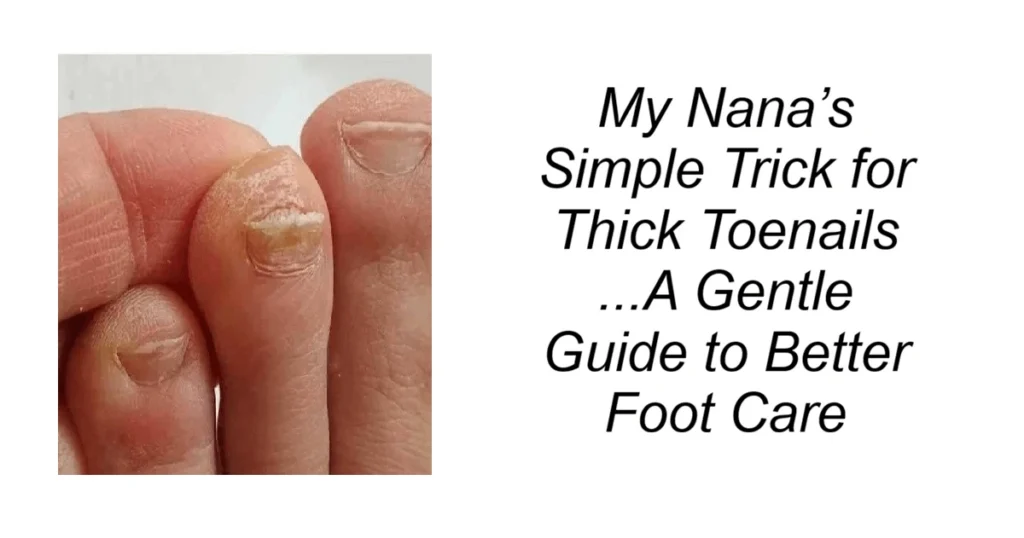
My Nana’s Simple Trick for Thick Toenails …A Gentle Guide to Better Foot Care
Thick toenails are more common than you might think. Whether caused by ageing, an injury, or an underlying nail condition, thickened toenails can be frustrating to manage. They may become difficult to trim, look discoloured, or even cause discomfort when wearing shoes.
Fortunately, there are simple ways to care for thick toenails at home. My nana always believed that a little patience and a consistent foot-care routine could make a difference. Her approach focuses on softening the nails, keeping the feet clean, and gently maintaining their appearance.
But before trying any home remedy, it’s important to understand what causes thick toenails and when professional treatment may be needed.
Why Do Toenails Become Thick?
Thick toenails can develop for several reasons, and identifying the cause is the first step towards managing them effectively.
Common causes include:
- Ageing: Toenails often become thicker, harder, and more brittle as we get older.
- Fungal infections: A fungal infection can cause nails to thicken, turn yellow or white, and become crumbly.
- Repeated pressure or injury: Tight shoes and repeated trauma can change the appearance and texture of toenails.
- Skin conditions: Conditions such as psoriasis can affect nail growth and appearance.
- Circulation problems: Certain circulation-related conditions may contribute to changes in nail health.
Although thick toenails are not always a serious concern, persistent changes deserve attention, particularly when accompanied by pain, swelling, or discolouration.
Nana’s Simple Approach to Managing Thick Toenails
My nana’s approach centres on a straightforward idea: soften the nails before attempting to trim or file them.
A warm foot soak, gentle cleaning, careful nail maintenance, and moisturising can help make routine foot care more comfortable. However, these steps won’t necessarily treat the underlying cause of thick toenails, especially if a fungal infection is responsible.
Here’s how to establish a gentle foot-care routine at home.
What You’ll Need
Gather a few everyday foot-care essentials:
- A basin of comfortably warm water
- A soft-bristled nail brush
- Clean towels
- A nail file designed for toenails
- Moisturising lotion for the surrounding skin
You don’t need a complicated collection of products. The key is to work gently and avoid damaging the nail or the skin around it.
Step-by-Step Guide to Caring for Thick Toenails
Step 1: Soak your feet in warm water
Fill a basin with comfortably warm water and soak your feet for around 10–15 minutes. This can soften hard nails, making them easier to trim or file.
Avoid hot water, especially if you have reduced sensation or circulation problems in your feet.
Step 2: Clean your toenails gently
Use a soft nail brush to remove dirt and debris from around the nails. Avoid digging underneath the nail or scrubbing aggressively, as this can injure the surrounding skin.
Step 3: Dry your feet thoroughly
After soaking, dry your feet carefully, paying particular attention to the spaces between your toes. Keeping these areas dry helps reduce the risk of certain fungal infections.
Step 4: File the nails carefully
If your nails are only mildly thickened and you can safely manage them yourself, use a clean nail file to smooth rough edges and gently reduce excess thickness.
Avoid filing too deeply or trying to remove large amounts of nail at once. Stop if you experience pain or notice bleeding.
Step 5: Moisturise the surrounding skin
Apply a suitable moisturiser to the skin around your toenails and on your feet. Avoid leaving excess cream between the toes, where moisture can accumulate.
For particularly thick nails, a pharmacist or podiatrist may recommend a suitable nail-softening product.
Do Vinegar and Baking Soda Help Thick Toenails?
You may have heard that white vinegar or baking soda can improve the appearance of thick toenails. These ingredients are popular in traditional home remedies, but there is limited reliable evidence that they can effectively treat thickened nails or cure fungal infections.
Vinegar has acidic properties, while baking soda is alkaline. Using them together does not make the treatment more effective, and homemade mixtures may irritate the surrounding skin.
For that reason, a simple warm-water soak followed by gentle nail care is a more sensible starting point. If a fungal infection is suspected, a pharmacist or healthcare professional can advise you on appropriate treatment.
Everyday Habits for Healthier Toenails
Small changes to your daily routine can help keep your feet comfortable and support good nail hygiene.
- Keep your feet clean and dry. Dry carefully between your toes after washing.
- Choose well-fitting footwear. Shoes that squeeze your toes can contribute to repeated nail damage.
- Trim nails carefully. Cut toenails straight across where possible, and avoid cutting them too short.
- Keep nail-care tools clean. Don’t share nail clippers or files with other people.
- Change socks regularly. Choose breathable materials and replace damp socks promptly.
- Check your feet regularly. Look for changes in nail colour, thickness, shape, or surrounding skin.
If you have diabetes, poor circulation, reduced sensation, or a weakened immune system, seek professional advice before attempting to soak, cut, or file thick toenails yourself.
When Should You Seek Professional Help?
Home care may help with basic nail maintenance, but it cannot address every cause of thick toenails.
Consider speaking to a pharmacist, GP, or podiatrist if your nails become increasingly thick, change colour, crumble, separate from the nail bed, or remain difficult to manage.
Seek prompt medical advice if you develop significant pain, redness, swelling, discharge, or spreading inflammation.
A healthcare professional can assess whether the problem is caused by a fungal infection, repeated injury, psoriasis, or another condition. Depending on the diagnosis, treatment may involve prescription medication, an appropriate nail preparation, or professional nail reduction.
The Takeaway: Simple Foot Care Can Make a Difference
Thick toenails can be inconvenient, but looking after them doesn’t have to be complicated. A gentle warm-water soak, careful filing when appropriate, clean feet, and regular monitoring can make routine foot care easier.
My nana’s advice serves as a useful reminder that simple habits matter. However, there is no guaranteed household trick that works for every type of thick toenail.
If your nails remain thick, painful, or discoloured, getting the right diagnosis is the best way to protect your foot health and find an effective solution.
You’ve just read My Nana’s Simple Trick for Thick Toenails. Why not read Woman Noticed a Horrible Smell in Her Car