
What Is the Tiny Hole Near Your Ear …Preauricular Pits Explained
Have you ever noticed a tiny hole or indentation near the front of someone’s ear and wondered what it was?
It might look like a piercing, a small scar, or an unusual skin mark. In many cases, however, it’s something called a preauricular pit.
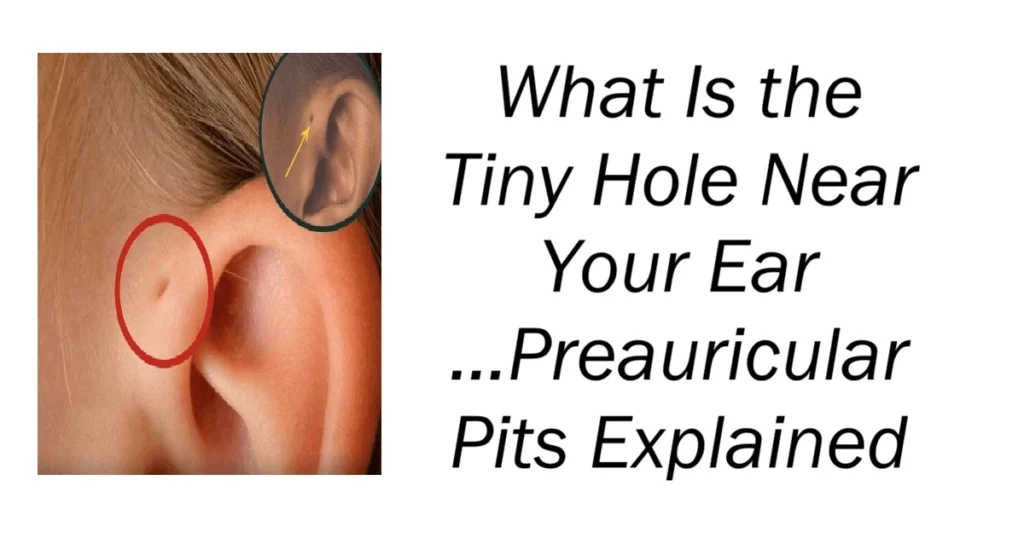
A preauricular pit is a small opening or dimple that forms near the outer ear before birth. It’s usually harmless and may never cause any problems.
Although this tiny ear opening is relatively inconspicuous, it has fascinated doctors and researchers for many years.
So, what causes a preauricular pit, and should you be concerned if you have one?
Let’s take a closer look.
What Is a Preauricular Pit?
A preauricular pit, sometimes called a preauricular sinus or ear pit, is a small opening, dimple, or indentation in the skin near the front of the ear.
It’s usually found where the upper part of the ear meets the side of the face.
The opening may be so small that you barely notice it.A preauricular pit is congenital, which means it develops before birth rather than appearing later in life.
Some people have a pit on one side, while others have one near both ears.
In many cases, it doesn’t cause any symptoms at all.
Why Do Some People Have a Hole Near Their Ear?
To understand why a preauricular pit develops, it helps to look at how the ear forms before birth.
During fetal development, several small structures come together and fuse to form the external ear.
Sometimes this process doesn’t occur completely as expected.
A small tract can remain beneath the skin, creating the tiny opening that becomes visible near the ear.
The exact developmental process is complex, but the important point is that a preauricular pit is something a person is generally born with.
It isn’t caused by poor hygiene, an injury, or anything the person did.
Is a Preauricular Pit Normal?
For most people, yes.
A preauricular pit is generally considered a benign congenital variation.
Many people with one experience no symptoms and may go their entire lives without needing treatment.
The pit can simply remain as a tiny indentation in the skin.
In other cases, however, the small opening can become infected.
Can a Preauricular Pit Become Infected?
Yes.
Although most preauricular pits don’t cause problems, bacteria can sometimes enter the opening and cause an infection.
Possible signs of an infected preauricular pit include:
- Redness around the opening
- Swelling
- Tenderness or pain
- Warmth around the area
- Fluid or pus draining from the pit
- A lump developing underneath the skin
An infection may sometimes resemble a small pimple or swollen area near the ear.
If the area becomes increasingly painful, swollen, or begins producing discharge, it’s worth seeking medical advice.
Does a Preauricular Pit Need Treatment?
Usually, no treatment is necessary if the pit isn’t causing problems.
Doctors may simply recommend monitoring it.
If an infection develops, treatment depends on the situation. A healthcare professional may recommend appropriate treatment, which can include antibiotics in some circumstances.
For people who experience repeated infections, a doctor may discuss surgical removal of the pit and its underlying tract.
Surgery isn’t normally necessary simply because someone has a preauricular pit.
The decision depends on symptoms and individual circumstances.
Can You Prevent a Preauricular Pit?
No.
Because preauricular pits develop before birth, they can’t be prevented through skincare, hygiene, diet, or lifestyle changes.
Trying to squeeze, pick, or repeatedly manipulate the opening may irritate the surrounding skin and increase the risk of infection.
If you have one and it isn’t causing problems, the best approach is generally to leave it alone.
Are Preauricular Pits Hereditary?
They can run in families.
Genetic factors appear to play a role in some cases, although the inheritance pattern isn’t always straightforward.
A person can have a preauricular pit even if nobody else in their immediate family has one.
The condition is also more common in some populations than others.
Are Preauricular Pits Linked to Hearing Problems?
For most people, an isolated preauricular pit does not mean they have a hearing problem.
Most people with these small ear openings have normal hearing.
In some uncommon cases, preauricular pits can occur alongside other congenital abnormalities or as part of a genetic syndrome.
However, having an isolated pit by itself does not automatically mean that someone has an underlying medical condition.
If there are additional ear abnormalities, hearing concerns, or other unusual symptoms, a healthcare professional can determine whether further assessment is appropriate.
When Should You See a Doctor?
A preauricular pit usually doesn’t require medical attention unless symptoms develop.
It’s sensible to speak with a healthcare professional if the area:
- Becomes painful
- Becomes red or swollen
- Produces pus or other fluid
- Develops a lump
- Becomes repeatedly infected
- Causes persistent discomfort
If you aren’t sure whether a small opening near your ear is a preauricular pit, a doctor can usually assess it through a physical examination.
How Common Are Preauricular Pits?
Preauricular pits aren’t extremely rare, although their frequency varies between populations.
Because they’re often harmless and may never cause symptoms, many people don’t think much about them.
Some people may not even realize they have one until they notice the tiny opening in a mirror or someone else points it out.
That’s part of what makes them so interesting.
A tiny feature that may seem unusual can actually be a relatively common variation in human development.
The Myths Behind Tiny Ear Holes
Unusual physical features often attract myths and stories.
Preauricular pits are no exception.
In some cultures, people have attached special meanings or beliefs to the presence of these tiny ear openings.
From a medical perspective, however, there’s no evidence that having a preauricular pit gives someone special abilities or unique health characteristics.
Scientifically, it’s best understood as a feature associated with the development of the outer ear before birth.
Frequently Asked Questions
What is the tiny hole in front of my ear?
A tiny opening or dimple in front of the ear may be a preauricular pit. It’s a congenital feature that develops before birth and is usually harmless.
Is a hole near the ear dangerous?
Usually not. Most preauricular pits don’t cause health problems. However, they can occasionally become infected, causing redness, swelling, pain, or discharge.
Can a preauricular pit go away?
The opening itself generally doesn’t disappear on its own. However, if it isn’t causing symptoms, it may simply remain unnoticed throughout a person’s life.
Should I squeeze a preauricular pit?
It’s best not to squeeze or repeatedly manipulate it. Doing so can irritate the area and potentially contribute to infection.
Can a preauricular pit affect hearing?
Most people with an isolated preauricular pit have normal hearing. In uncommon cases, preauricular pits can occur alongside other congenital conditions, so additional symptoms may warrant medical assessment.
Does a preauricular pit need surgery?
Usually not. Surgery may be considered when a person experiences recurrent infections or other ongoing problems associated with the pit.
Is a preauricular pit genetic?
Genetic factors can contribute to the development of preauricular pits, and they can sometimes occur in families. However, a person can also have one without a known family history.
The Bottom Line
That tiny hole near the front of your ear may be more interesting than it looks.
A preauricular pit is a small congenital opening or indentation that develops during the formation of the outer ear. For most people, it’s completely harmless and requires no treatment.
Occasionally, however, the area can become infected.
If you notice redness, swelling, pain, a lump, or discharge around the opening, it’s a good idea to seek medical advice.
Otherwise, that tiny mark is usually nothing to worry about.
It’s simply one of the many small ways human bodies can differ — a fascinating reminder that no two ears are exactly alike.
You’ve just read What Is the Tiny Hole Near Your Ear . Why not read How to Get Rid of Urine Smell in the Bathroom