
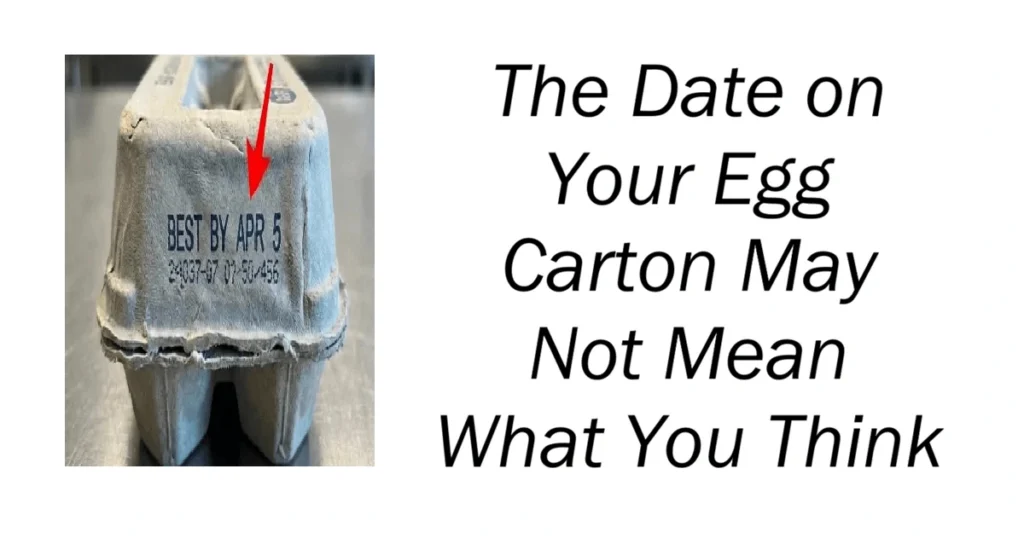
The Date on Your Egg Carton May Not Mean What You Think
You open the refrigerator, reach for a carton of eggs, and notice a string of numbers printed along the side. One might say “Best By,” another may begin with the letter “P,” and somewhere nearby you may spot a mysterious three-digit number.
If those codes have ever left you wondering whether your eggs are still safe to eat, you’re not alone.
The good news is that these markings don’t all mean the same thing. In the United States, that three-digit number may actually be a pack date—a code that indicates the day of the year the eggs were processed and placed into the carton.
Understanding these small numbers can make it much easier to manage the eggs in your refrigerator and decide which carton to use first.
What Does the Three-Digit Number on Eggs Mean?
The three-digit code represents the day of the year, using numbers from 001 through 365.
For example:
- 001 = January 1
- 032 = February 1
- 198 = July 17 in a non-leap year
This code is different from an expiration or quality date. Instead, it gives you information about when the eggs were packed.
If you have two cartons of eggs in your refrigerator, the pack date can help you determine which one is older and should be used first.
What Does the “P” Code Mean?
You may also notice a code beginning with the letter “P.”
This generally identifies the processing or grading plant where the eggs were handled. While this information may not be particularly useful during an everyday grocery trip, it can help trace eggs through the food-supply system if a food-safety issue or recall occurs.
You may also see terms such as “Sell By,” “Best By,” or “Best Before.”
These dates can serve different purposes. A sell-by date primarily helps retailers manage inventory, while a best-by date is generally associated with expected quality.
That means reaching a printed date does not necessarily mean an egg instantly becomes unsafe.
How Long Do Eggs Last in the Refrigerator?
According to USDA guidance, raw shell eggs generally keep for around three to five weeks when properly refrigerated at 40°F (4°C) or below.
For the best storage conditions, keep eggs in their original carton and place them on an interior refrigerator shelf rather than in the door. The carton helps protect the shells, while the interior of the refrigerator tends to have more stable temperatures.
Remember, however, that freshness and food safety are not exactly the same thing.
An older egg may still be usable, while a fresh-looking egg can potentially contain harmful bacteria.
Can the Water-Float Test Tell You If an Egg Is Safe?
You’ve probably heard of the popular water test: place an egg in a glass of water and see whether it sinks or floats.
While this can provide a rough indication of an egg’s age, it cannot tell you whether the egg is contaminated with bacteria such as Salmonella.
As an egg ages, its air cell gradually becomes larger, which can cause it to float. But an egg that sinks isn’t automatically free of harmful bacteria, just as a floating egg isn’t necessarily dangerous.
When it comes to food safety, appearance and simple freshness tests aren’t enough.
What About Cracked or Dirty Eggs?
The condition of the shell matters.
Avoid buying eggs with cracked shells because bacteria can potentially enter through the damaged area. If an egg becomes cracked during transportation or storage, it is generally safer to discard it rather than take unnecessary chances.
It’s also important to practice good kitchen hygiene. Wash your hands after handling raw eggs and clean countertops, utensils, bowls, and other surfaces that come into contact with them.
These simple steps can help reduce the risk of cross-contamination.
Cooking Eggs Properly Matters
How you prepare eggs is just as important as how you store them.
For the safest option, cook eggs until both the whites and yolks are firm. Foods containing eggs should also be cooked to an appropriate safe internal temperature.
If you enjoy soft or runny eggs, remember that undercooked eggs can carry a greater food-safety risk, particularly for young children, older adults, pregnant people, and those with weakened immune systems.
For recipes that call for raw or lightly cooked eggs, pasteurized eggs or pasteurized egg products can provide a safer alternative.
Don’t Forget About Leftover Egg Dishes
Food safety doesn’t stop once your eggs are cooked.
Cooked egg dishes should be refrigerated promptly rather than left sitting at room temperature for extended periods. According to FDA guidance, refrigerated cooked egg dishes generally should be eaten within three to four days, while hard-cooked eggs can generally be kept for about one week.
If an egg-based dish has been sitting out for too long, don’t rely on smell or taste to decide whether it is safe. When in doubt, throwing it away is the safer choice.
So, What Should You Actually Look At?
The numbers on an egg carton can seem confusing, but each marking has a purpose.
The pack date can help you understand when the eggs were processed and compare the age of different cartons. A sell-by or best-by date provides additional information about retail handling or expected quality.
But none of these markings replaces proper food safety.
Keep eggs refrigerated, handle raw shells carefully, avoid cracked eggs, prevent cross-contamination, and cook eggs appropriately.
The Bottom Line
The next time you see a mysterious three-digit number on your egg carton, don’t assume it’s an expiration date.
It may be a pack date showing the day of the year the eggs were processed and packaged. Once you understand the code, it becomes a useful tool for managing freshness rather than another confusing number on the carton.
Most importantly, don’t judge an egg’s safety by its appearance or rely solely on a date printed on the package.
Keep eggs cold, handle them carefully, cook them properly, and use older cartons first.
A few simple habits can help you get the most from your eggs while keeping food-safety risks as low as possible.
You’ve just read The Date on Your Egg Carton May Not Mean What You Think . Why not read Little Girl Is Spending Time With Her Grandfather