
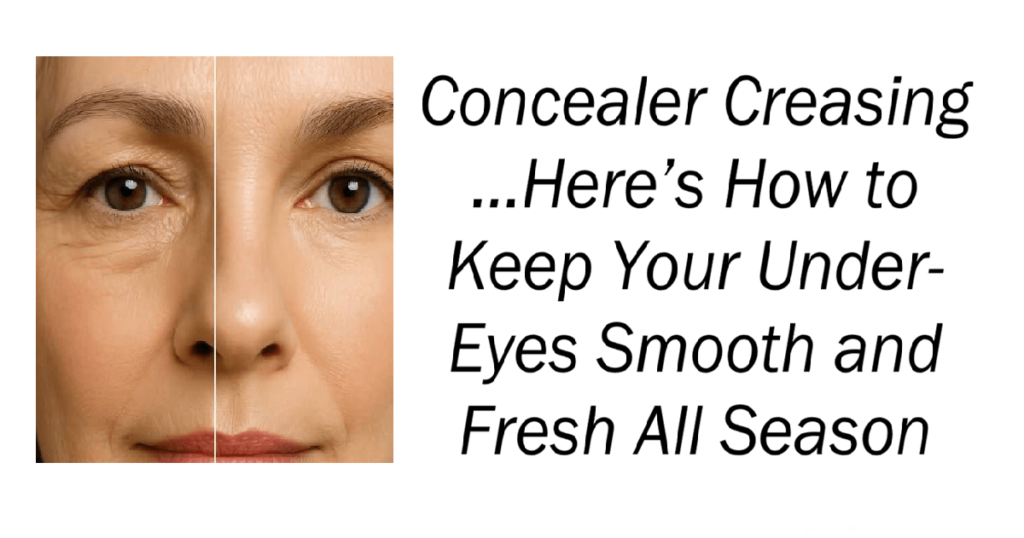
Concealer Creasing …Here’s How to Keep Your Under-Eyes Smooth and Fresh All Season
Winter may bring cozy sweaters, warm drinks, and glowing holiday lights — but it also brings one frustrating beauty problem many people know too well: concealer creasing.
You apply your makeup carefully in the morning, only to glance in the mirror a few hours later and notice:
- Fine lines looking more obvious
- Dry patches under the eyes
- Concealer settling into creases
- A cakey or uneven finish
The good news? Winter creasing usually isn’t about your makeup skills — it’s about how cold weather changes your skin.
Here’s why it happens and the best ways to keep your concealer smooth, hydrated, and crease-free during the colder months.
Why Concealer Creases More in Winter
Cold air contains less humidity, which means winter naturally dries out your skin.
At the same time:
- Indoor heating removes moisture from the air
- Skin produces less oil
- Fine lines become more visible
- Makeup clings to dry patches more easily
The under-eye area is especially vulnerable because the skin there is already thinner and drier than the rest of the face.
When concealer sits on dehydrated skin, it tends to settle into lines instead of blending smoothly.
The Hidden Skin Changes Causing Under-Eye Problems
Winter affects your skin in several subtle ways:
- Reduced oil production
- Increased water loss
- Rougher texture
- More visible creases
Even your skincare routine can unintentionally contribute to the issue. Heavy creams that don’t fully absorb may cause makeup to slide around instead of staying put.
That’s why prepping the skin correctly is often more important than the concealer itself.
The “Moisture Sandwich” Trick Everyone Loves
One of the most popular winter makeup techniques is called the “Moisture Sandwich.”
The goal is simple: layer hydration properly so your skin stays plump and smooth underneath makeup.
Try this routine:
- Start with gentle cleanser
- Apply a hydrating serum
- Follow with moisturizer
- Finish with a nourishing eye cream
This layered approach helps lock in moisture and creates a smoother surface for concealer application.
Hydrated skin = less creasing.
Don’t Rush Your Eye Cream
One common mistake is applying concealer immediately after eye cream.
If the product hasn’t absorbed yet, concealer may:
- Slide around
- Separate
- Set unevenly
The fix:
Wait about 5–10 minutes after applying eye cream before starting makeup.
Look for eye creams with ingredients like:
- Hyaluronic acid
- Glycerin
- Ceramides
These help attract and retain moisture without feeling greasy.
Choose a Winter-Friendly Concealer Formula
Not all concealers work well in cold weather.
In winter, avoid:
- Very matte formulas
- Thick, dry textures
- Heavy powders
Instead, look for:
- Creamy formulas
- Hydrating concealers
- Lightweight textures
- Satin or natural finishes
Ingredients like:
- Shea butter
- Jojoba oil
- Squalane
can help keep the under-eye area comfortable throughout the day.
Less Concealer Often Looks Better
One of the biggest causes of creasing is simply using too much product.
Instead of covering the entire under-eye area, apply concealer only where needed:
- Inner corners
- Dark shadows
- Small discolorations
Using less product creates:
- A more natural finish
- Less buildup in lines
- Better movement throughout the day
Sometimes the lightest application gives the smoothest result.
Try the Viral “Dot Method”
The “Dot Method” became popular because it helps prevent heavy buildup under the eyes.
How it works:
Apply tiny dots of concealer only in targeted areas, then blend gently with:
- A damp makeup sponge
- A soft brush
- Your fingertip
The damp sponge adds a little extra hydration while helping the product melt into the skin naturally.
This technique is especially helpful during dry winter months.
Powder Carefully — Or Skip It
Powder can help lock makeup in place, but too much powder often makes winter dryness worse.
If you use powder:
- Choose finely milled translucent powder
- Use only a tiny amount
- Apply lightly with a fluffy brush
Focus on areas that crease most, rather than coating the entire under-eye area.
If your skin is very dry:
You may get better results skipping powder entirely and using a hydrating setting spray instead.
The “Baking Lite” Technique
Traditional makeup baking can look too heavy in winter, but a softer version works beautifully.
Try this:
- Apply a very thin layer of translucent powder
- Let it sit for 1–2 minutes
- Dust away the excess gently
This helps set concealer while avoiding the dry, thick appearance that heavy baking can create.
Perfect for:
- Long events
- Holiday parties
- Full-day makeup wear
Color Correctors Can Reduce Creasing
Sometimes the issue isn’t the concealer — it’s using too much of it to cover dark circles.
Color correctors help neutralize discoloration so you need less concealer overall.
Common choices:
- Peach/orange for blue-purple circles
- Yellow for dullness
- Pink for brightness
Using a thin layer of corrector underneath can create a smoother final result with less product buildup.
Winter Makeup Is All About Hydration
The secret to crease-free concealer in winter isn’t piling on more makeup — it’s giving your skin what it needs underneath.
Small changes like:
- Better hydration
- Lighter layers
- Smarter product placement
- Gentler setting techniques
can completely transform how your makeup looks and feels.
Because in winter, healthy, comfortable skin is the real foundation for flawless makeup.
You’ve just read Concealer Creasing . Why not read Leg Exercises That Become More Important After 50.