
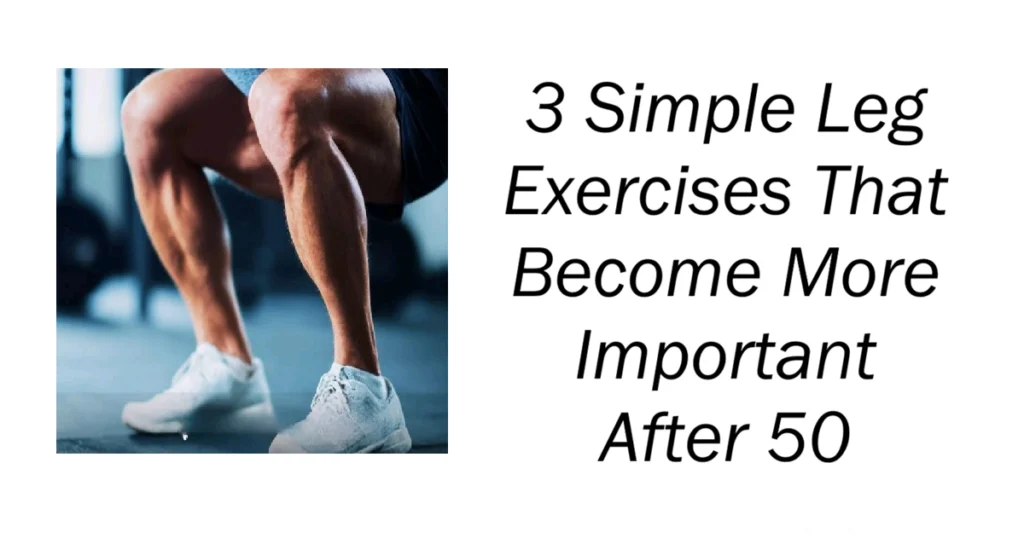
3 Simple Leg Exercises That Become More Important After 50
As we age, keeping our legs strong becomes one of the most important things we can do for long-term health and independence.
Strong legs help with:
- Balance and stability
- Walking confidently
- Preventing falls
- Protecting joints
- Staying active and mobile
The good news? You don’t need a gym membership or intense workouts to make a difference.
Just a few simple daily exercises can help maintain strength, improve coordination, and support healthy aging. Here are three of the best lower-body exercises for adults over 50: calf raises, squats, and lunges.
Why Leg Strength Matters More With Age
Lower-body strength affects nearly every part of daily life:
- Climbing stairs
- Getting out of chairs
- Carrying groceries
- Walking safely
- Maintaining balance
As muscle mass naturally declines with age, weak legs can increase the risk of:
- Falls
- Hip injuries
- Joint stiffness
- Loss of independence
That’s why even a few minutes of movement each day can have a major impact over time.
1. Calf Raises
Calf raises are simple, gentle, and extremely effective for improving balance and ankle strength.
How to Do Them
- Stand upright near a wall, chair, or counter for support.
- Keep both feet flat on the floor.
- Slowly rise onto your toes.
- Hold briefly at the top.
- Lower your heels back down slowly.
Start with:
- 10–15 repetitions
As you get stronger, you can:
- Increase repetitions
- Try one leg at a time
- Hold the raised position longer
Benefits of Calf Raises
- Improves balance and stability
- Strengthens calves and ankles
- Supports circulation
- Helps maintain walking confidence
These are especially useful because strong calves help stabilize the body during everyday movements.
2. Squats
Squats are one of the best exercises for overall lower-body strength.
They target:
- Thighs
- Hips
- Glutes
- Core muscles
How to Do a Basic Squat
- Stand with feet shoulder-width apart.
- Bend your knees slowly.
- Push your hips back as if sitting into a chair.
- Keep your chest lifted.
- Return to standing.
Helpful Tip:
Only go as low as feels comfortable. Even partial squats are beneficial.
Easier Variations
Chair Squats
Sit down lightly in a chair and stand back up.
Split Squats
Keep one foot slightly forward for added balance support.
Benefits of Squats
- Builds leg strength
- Improves posture
- Supports joint flexibility
- Helps maintain independence in daily tasks
Squats mimic real-life movements like sitting and standing, making them especially practical.
3. Lunges
Lunges improve strength, coordination, and mobility all at once.
They work:
- Quadriceps
- Hamstrings
- Glutes
- Hip stabilizers
How to Do a Basic Lunge
- Step forward with one foot.
- Lower your back knee toward the floor.
- Keep your front knee above your ankle.
- Push back to the starting position.
- Switch sides.
Beginner Tips
- Hold onto a wall or chair if needed.
- Take smaller steps if your knees feel strained.
- Reduce the depth of the movement at first.
Benefits of Lunges
- Improves balance and coordination
- Builds hip flexibility
- Strengthens multiple leg muscles at once
- Helps support walking stability
Walking lunges can add an extra challenge once basic lunges feel easier.
“Exercise Snacks” Throughout the Day
You don’t need a long workout to see benefits.
Many people find success by adding small bursts of movement throughout the day.
Easy Ideas:
- Calf raises while brushing your teeth
- Squats during TV commercials
- Lunges while waiting for the kettle to boil
These mini-workouts add up surprisingly fast.
Even 5 minutes here and there can improve strength and mobility over time.
Tips for Staying Safe and Consistent
Start Slowly
A few repetitions are enough in the beginning.
Use Support
Walls, chairs, or countertops can help with stability.
Focus on Form
Controlled movement matters more than speed.
Listen to Your Body
Some muscle fatigue is normal, but sharp pain is not.
Stay Consistent
Small daily habits often work better than occasional intense workouts.
Strong Legs Support a Stronger Life
Maintaining leg strength after 50 isn’t about building massive muscles — it’s about protecting your mobility, confidence, and independence.
Simple exercises like:
- Calf raises
- Squats
- Lunges
can help you stay active, steady, and capable for years to come.
Start small. Stay consistent. And remember: every movement you make today is an investment in your future strength and freedom.
You’ve just read Leg Exercises That Become More Important After 50. Why not read Why So Many People Start Their Day With Warm Lemon Water