
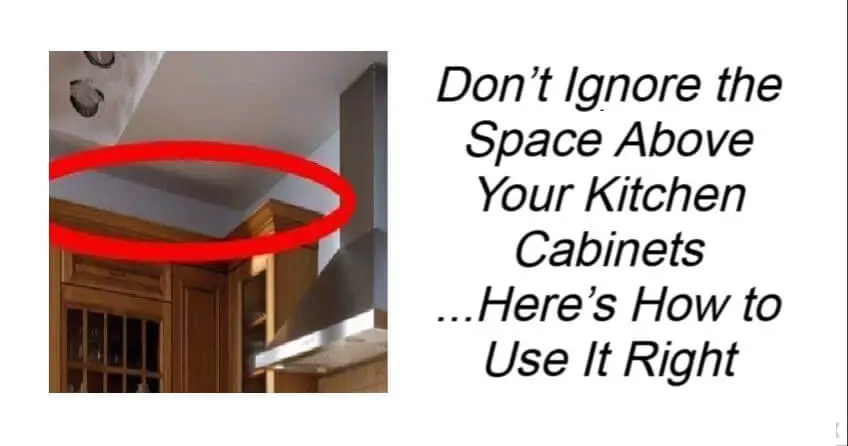
Don’t Ignore the Space Above Your Kitchen Cabinets …Here’s How to Use It Right
Look up in almost any kitchen and you’ll find it: that awkward gap between the tops of the cabinets and the ceiling. For many homeowners, it becomes an overlooked strip of wasted space—or worse, a dust-collecting void. But with a little planning, this often-ignored area can become both functional and visually striking.
Used thoughtfully, the space above your cabinets can add storage, highlight décor, and even make your kitchen feel taller and more complete. The key is knowing what works—and what doesn’t.
Smart Storage Ideas for the Cabinet Gap
If extra storage is what you need, the area above your cabinets is ideal for items you don’t use every day. Think:
- Large serving platters
- Seasonal dishes or glassware
- Backup pantry supplies
- Rarely used kitchen tools
The secret to keeping this storage looking polished is consistency. Matching containers, baskets, or boxes create a clean, intentional look rather than visual clutter. Clear or labeled jars can be especially effective—they offer function while still contributing to the kitchen’s aesthetic.
Just be mindful of weight. Anything stored overhead should be light enough to retrieve safely with a step stool.
Turning the Space Into a Design Feature
If storage isn’t a priority, the cabinet gap can become a decorative focal point. Designers often use this space to draw the eye upward, giving the kitchen a more open and finished feel.
Some popular options include:
- Grouped pottery, vases, or baskets in a cohesive color palette
- A mix of tall and short pieces to create visual rhythm
- Decorative greenery or sculptural objects
For a more seamless look, consider extending your backsplash or wall finish above the cabinets. This makes the gap feel like a deliberate design choice rather than leftover space.
Subtle lighting—such as LED strip lights or small spotlights—can also elevate the area, transforming it into a softly illuminated display instead of a shadowy shelf.
Common Mistakes to Avoid
Before you start placing items overhead, a few design rules can save you from frustration later:
- Too small to style: If the gap is under about 24 inches (60 cm), decorating it may make the space feel cramped rather than enhanced.
- Too many small items: Tiny objects get lost at that height and often look messy from below.
- Using it as a dumping ground: Random items tossed up high quickly turn into visual chaos—and are magnets for grease and dust.
One homeowner even noted that cooking residue mixed with dust created a surprisingly stubborn cleaning task. Out of sight doesn’t mean out of maintenance.
Practical Tips for Keeping It Clean and Useful
To make the most of this space long-term:
- Stick to matching containers or baskets
- Label storage boxes for easy retrieval
- Keep a sturdy step stool nearby
- Dust regularly—grease travels upward more than you think
- Store only items you rarely need
If your cabinets already sit close to the ceiling, leaving the space mostly clear can be the best choice. Sometimes restraint creates a cleaner, more modern look than filling every inch.
Final Thoughts
The space above your kitchen cabinets doesn’t have to be forgotten or wasted. With intention and restraint, it can become a practical storage zone or a stylish design element that elevates your entire kitchen.
Whether you choose neatly boxed overflow items, a curated décor display, or subtle lighting, the goal is the same: make the space feel purposeful. Avoid overcrowding, choose items that suit the scale, and maintain it regularly. When done right, that once-ignored gap becomes a smart use of vertical space—and a finishing touch that makes your kitchen feel truly complete.
You’ve just read, Don’t Ignore the Space Above Your Kitchen Cabinets. Why not read Manager Had To Hire A New Employee.