
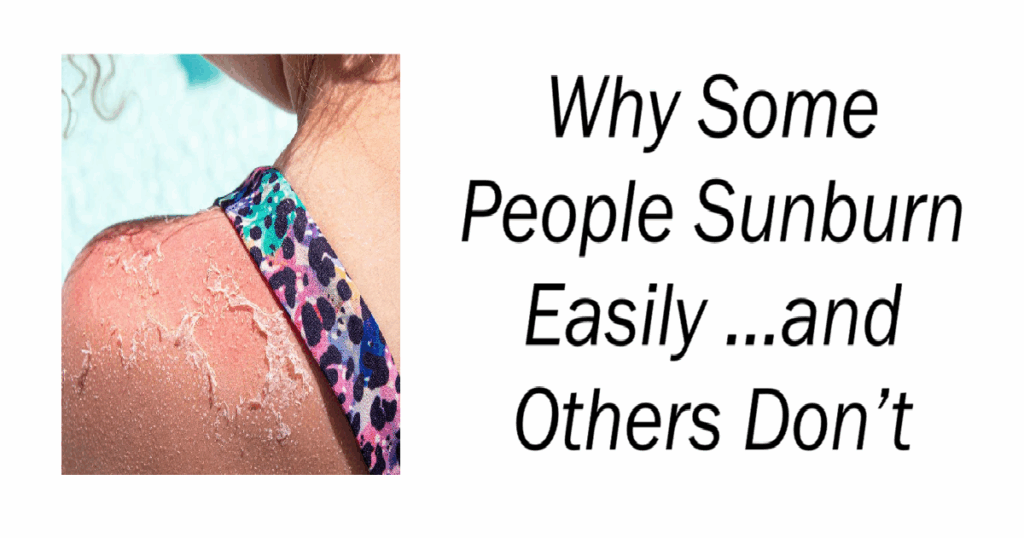
Why Some People Sunburn Easily …and Others Don’t
As summer rolls in and we spend more time outdoors, one question always seems to come up: why do some people tan beautifully while others burn in minutes?
If you’ve ever compared your sun response to a friend’s and wondered what’s going on, the answer isn’t luck—it’s biology. Your skin’s reaction to the sun is shaped by a mix of genetics, environment, and daily habits. Understanding these factors can help you protect your skin more effectively, not just during summer, but all year long.
What’s Really Happening When You Get Sunburned?
Sunburn isn’t just a surface issue—it’s your body responding to damage. When ultraviolet (UV) rays penetrate your skin, they can harm the DNA inside your cells. In response, your body increases blood flow to repair that damage, which is why sunburn shows up as redness, warmth, and tenderness. In more severe cases, you might even see swelling, blistering, or peeling.
There are different types of UV radiation at play:
- UVA rays penetrate deep into the skin and contribute to aging and long-term damage.
- UVB rays are the main cause of sunburn.
- UVC rays are blocked by the ozone layer and don’t reach us.
Repeated exposure—especially burns—can significantly increase the risk of skin cancer, including melanoma.
Skin Type: Your Built-In Sun Response
One of the biggest factors in how easily you burn is your natural skin type. Dermatologists often refer to the Fitzpatrick scale, which classifies skin based on how it reacts to sunlight.
- Very fair skin tends to burn quickly and rarely tans
- Medium skin may burn sometimes but can tan gradually
- Darker skin tones are less likely to burn, thanks to higher melanin levels
Melanin acts like a natural shield, absorbing and dispersing UV radiation. But it’s not perfect protection. Even people with darker skin can experience sun damage and develop skin cancer—it may just happen less visibly or less frequently.
Genetics: More Than Skin Deep
Beyond what you can see, your genes play a huge role in how your skin handles the sun.
For example, variations in the MC1R gene are linked to red hair, freckles, and a higher likelihood of burning. Other genetic factors influence:
- How much melanin your body produces
- How efficiently your cells repair DNA damage
- How your immune system responds to UV stress
In short, some people are simply wired to be more sensitive to sunlight.
Location, Lifestyle, and the Environment
Where you are in the world matters more than you might think.
- Closer to the equator means stronger, more direct sunlight
- Higher altitudes increase UV exposure (roughly 4–5% per 1,000 feet)
- Surfaces like water, sand, and snow reflect UV rays, intensifying exposure
Even on cooler or cloudy days, UV radiation can still be strong enough to cause burns.
Age and Changing Skin Sensitivity
Your skin doesn’t respond the same way throughout your life.
- Children have thinner, more delicate skin, making them more vulnerable
- Older adults may have slower repair mechanisms, meaning damage can last longer
That’s why sun protection should evolve with age—but never be skipped.
Medications That Make You More Sensitive
Some medications can quietly increase your risk of sunburn by making your skin more photosensitive. These include:
- Certain antibiotics
- Anti-inflammatory drugs like ibuprofen
- Diuretics
- Antihistamines
If you’re taking prescription medication, it’s worth checking whether sun exposure requires extra caution.
Can Diet Help?
Nutrition won’t stop you from burning—but it can support your skin’s recovery.
Nutrients like vitamins C and E, omega-3 fatty acids, and antioxidants from fruits and vegetables help combat the oxidative stress caused by UV exposure. Think of them as internal support, not a replacement for sunscreen.
Be Careful with “Sun Hacks”
Not everything you see online is helpful.
✔️ Aloe vera can soothe irritated skin after a burn
❌ Coconut oil does not protect against UV rays—and may even make things worse
When it comes to sun protection, stick with methods backed by science.
Sunscreen Still Reigns Supreme
If there’s one habit that makes the biggest difference, it’s using sunscreen properly.
Choose a broad-spectrum formula with SPF 30 or higher and apply it generously—about a shot-glass amount for full body coverage. Reapply every two hours, and again after swimming or sweating.
And don’t forget easy-to-miss areas like your ears, neck, hands, and feet. Most people underapply, which significantly reduces protection.
Common Myths, Cleared Up
- “Darker skin doesn’t need sunscreen.” Not true. Everyone can experience sun damage.
- “A base tan protects you.” Also false. A tan offers minimal protection—roughly equivalent to SPF 3.
The Bottom Line
Your likelihood of burning comes down to a combination of:
- Skin type
- Genetics
- Environment
- Age
- Medications
- Daily habits
No one is completely immune to sun damage. The key is understanding your personal risk and taking simple, consistent steps to protect yourself—like using sunscreen, wearing protective clothing, and avoiding peak UV hours.
Because here’s the part most people underestimate: your skin remembers every burn. Taking care of it now pays off for years to come.
You’ve just read Why Some People Sunburn Easily. Why not read How to Reduce Nighttime Interruptions