
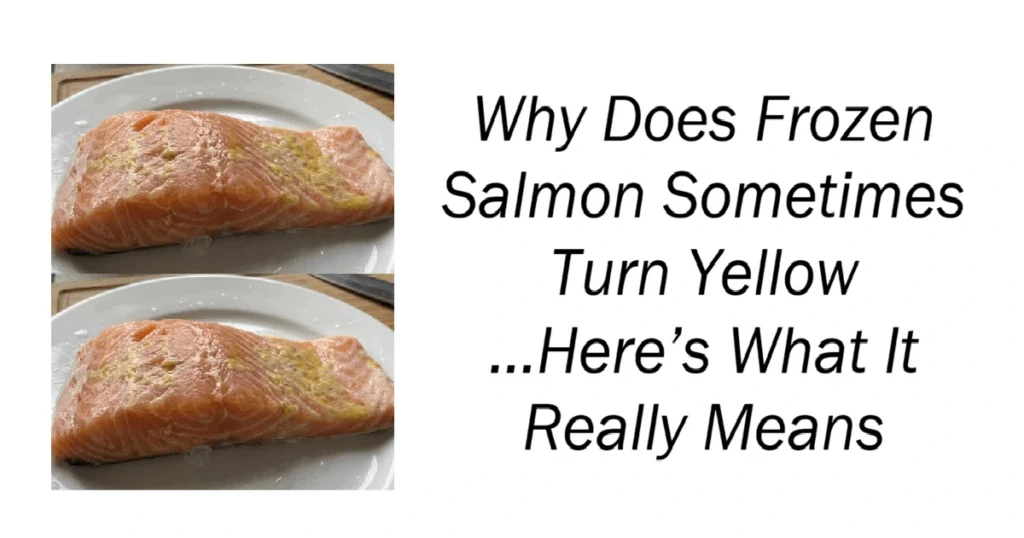
Why Does Frozen Salmon Sometimes Turn Yellow …Here’s What It Really Means
Salmon is one of those go-to meals that rarely disappoints. Whether it’s grilled with lemon, glazed in teriyaki, or simply pan-seared until buttery and tender, it’s a family favorite in many households.
So imagine the surprise: you pull a fillet from the freezer, thaw it out, and notice something unusual—a yellowish tint on the flesh.
Your first instinct might be worry. Is it spoiled? Unsafe? Something gone wrong in the freezer?
The good news: in most cases, that color change is not a sign that your salmon has gone bad.
Let’s break down what’s actually happening.
Why Salmon Can Turn Yellow After Freezing
A change in color doesn’t always mean a change in safety. There are a few common, and mostly harmless, reasons salmon may develop a yellowish hue after freezing or thawing.
1. Fat Oxidation
Salmon is naturally rich in healthy fats, which give it its soft, rich texture and signature flavor. However, those fats are sensitive to oxygen.
Over time—especially if the fish has been stored for a long period or not sealed tightly—fat oxidation can occur. This process can slightly alter the color of the flesh, leading to yellow or light brown patches.
It’s similar to how an apple browns after being cut. The appearance changes, but it doesn’t automatically mean the food is unsafe.
As long as there’s no sour smell, slimy texture, or off taste, oxidized fat is typically a quality issue rather than a safety concern.
2. Freezer Burn
Another very common cause is freezer burn.
If salmon isn’t properly wrapped or vacuum-sealed, air can reach the surface of the fish. This causes moisture loss, leading to dry, discolored patches that may appear white, gray, or even yellow.
Freezer-burned areas can affect texture and flavor, but they are not dangerous to eat. You can simply trim away the affected portions before cooking.
3. Natural Color Variation
Not all salmon looks the same to begin with.
Wild salmon, in particular, can show natural variations in color depending on diet. Their food sources—such as small crustaceans and marine organisms—contain pigments like carotenoids that influence flesh color.
Farmed salmon tends to have more uniform coloring due to controlled diets, but even then, slight variations can occur. A mild yellow tint in certain areas may simply be part of the fish’s natural appearance, especially around the belly.
How to Tell If Salmon Is Still Safe to Eat
When you’re unsure, your senses are your best guide.
Smell it
Fresh salmon should smell clean and mild, like the ocean. A strong fishy, sour, or ammonia-like odor is a warning sign.
Touch it
The flesh should feel firm and spring back when pressed. If it feels mushy or leaves an indentation, it’s best to discard it.
Look at it
Check for excessive sliminess, dull coloring, or widespread discoloration that goes beyond small patches.
If your salmon passes these checks, it is generally safe to cook.
How to Keep Salmon Fresh in the Freezer
Proper storage makes a big difference in both quality and appearance.
Seal it well
Use vacuum-sealed packaging when possible. If not, wrap tightly in plastic wrap and place it in a freezer-safe bag, removing as much air as possible.
Label and date it
For best quality, frozen fish is typically recommended for use within 3 to 8 months.
Rotate your stock
Use older fillets first to maintain freshness and reduce long-term freezer storage issues.
The Bottom Line
A yellowish tint on frozen and thawed salmon can look alarming, but in most cases, it’s harmless. It’s usually the result of fat oxidation, freezer burn, or natural variation in the fish itself.
If the salmon passes a simple smell, touch, and visual check, it’s likely still perfectly fine to cook and enjoy.
So the next time you notice a bit of color variation in your fillet, there’s no need to panic. With proper handling and a quick inspection, you can still end up with a delicious, nutrient-rich meal.
P.S. If you’ve ever noticed the white substance that appears on salmon when cooking, you’re not alone—it’s a natural protein called albumin. And yes, there are simple ways to reduce it.
You’ve just read Why Does Frozen Salmon Sometimes Turn Yellow. Why not read Which Couple Is Most Likely to Divorce