
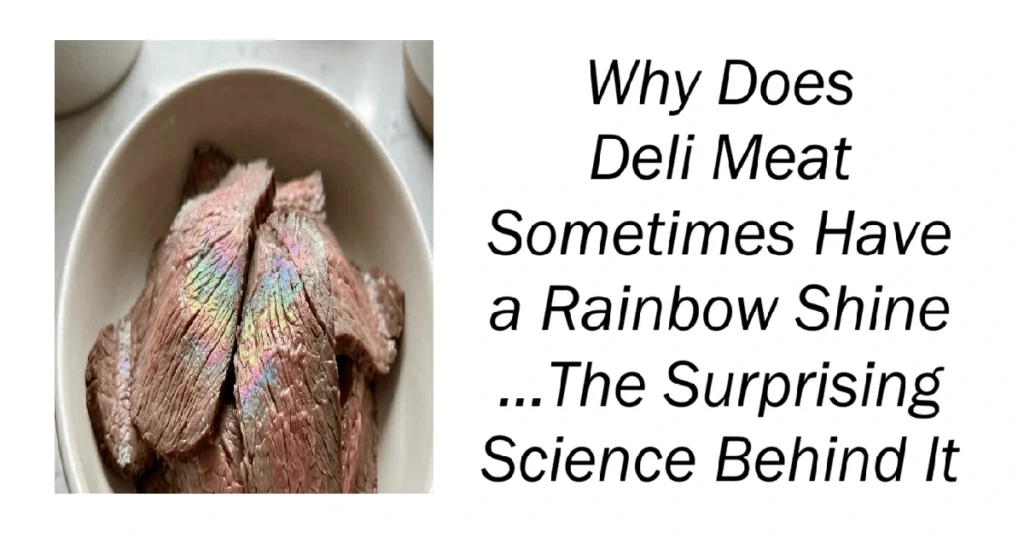
Why Does Deli Meat Sometimes Have a Rainbow Shine …The Surprising Science Behind It
Have you ever opened a package of deli ham, roast beef, or smoked turkey and noticed a strange rainbow shimmer on the surface?
At first glance, it can be a little alarming. The colorful sheen often looks like an oil slick on water or the inside of a pearl shell, leading many people to wonder:
“Is this meat spoiled?”
“Did manufacturers add some kind of chemical?”
“Should I throw it away?”
The good news is that the rainbow effect is completely natural—and in most cases, it’s actually a sign of the meat’s structure rather than a sign of spoilage.
Here’s what’s really happening.
The Rainbow Effect Is a Natural Optical Illusion
Believe it or not, that colorful shine has nothing to do with bacteria, preservatives, or artificial additives.
Instead, it’s caused by the way light interacts with the meat’s microscopic structure.
Meat contains naturally occurring proteins, fats, and iron-rich compounds. When the meat is sliced very thinly—especially across the muscle fibers—the cut surface can act much like a prism.
As light hits the surface, it bends, scatters, and reflects at different angles. This process separates the light into different colors, creating the rainbow-like appearance you see.
It’s similar to the way:
- Soap bubbles display rainbow colors
- Oil creates colorful patterns on water
- A CD reflects multiple colors when held under light
In other words, it’s physics—not spoilage.
Which Meats Show the Rainbow Effect?
The phenomenon is most commonly seen in:
- Deli ham
- Roast beef
- Corned beef
- Turkey
- Smoked meats
- Certain types of fish
The effect tends to be more noticeable when the meat has been sliced very thinly and viewed under bright lighting.
Is Rainbow-Colored Meat Safe to Eat?
Yes.
If the meat is otherwise fresh, the rainbow sheen is completely harmless.
It does not:
- Affect taste
- Change texture
- Alter nutritional value
- Indicate bacterial contamination
Many food safety experts consider it a purely cosmetic effect.
So if your roast beef or ham has a colorful shimmer but smells normal and has been stored properly, there’s no reason to throw it away.
When Should You Actually Be Concerned?
While the rainbow effect itself isn’t a problem, there are several signs that genuinely indicate spoilage.
1. Unpleasant Odor
Fresh meat should have little to no smell.
If you notice:
- Sour odors
- Ammonia-like smells
- Strong unpleasant scents
it’s best to discard the product.
2. Slimy or Sticky Texture
Fresh deli meat should feel moist but not slimy.
A sticky, tacky, or slippery surface can indicate bacterial growth.
3. Unusual Discoloration
Natural color changes can occur over time, but watch for:
- Green patches
- Yellow spots
- Gray areas combined with odor
- Fuzzy or mold-like growth
These are warning signs that the meat is no longer safe to eat.
How to Choose Fresh Meat at the Store
To maximize freshness and quality, keep these simple tips in mind.
Check the Color
Fresh meat should have vibrant, healthy coloring.
- Beef should appear bright red or deep red.
- Pork should have a pinkish-red tone.
- Poultry should look fresh and evenly colored.
Inspect the Packaging
Look for:
- Tight seals
- No punctures or tears
- Minimal liquid pooling inside the package
Damaged packaging can shorten shelf life.
Check Expiration Dates
Always review:
- Sell-by dates
- Use-by dates
- Best-before dates
Choosing the freshest package available helps ensure better quality and safety.
Why the Rainbow Effect Is Actually Fascinating
What many people mistake for spoilage is actually a small scientific wonder happening right in their refrigerator.
The colorful sheen appears because the muscle fibers inside the meat interact with light in a unique way. It’s a natural result of the meat’s structure and how it was sliced—not a sign that anything is wrong.
In fact, some food scientists consider it similar to the iridescence seen in butterfly wings, peacock feathers, and soap bubbles.
Nature creates color in surprising ways.
The Bottom Line
If you notice a rainbow shimmer on your deli meat, don’t panic.
In most cases, it’s simply an optical effect caused by light reflecting off the meat’s natural fibers. It doesn’t mean the meat is spoiled, contaminated, or treated with unusual chemicals.
Instead of focusing on the colors, rely on the signs that truly matter:
- Smell
- Texture
- Packaging condition
- Expiration dates
As long as those check out, your rainbow-colored slice of ham or roast beef is likely perfectly safe to enjoy.
Sometimes, the strangest things we see in our food are simply science at work.
You’ve just read Why Does Deli Meat Sometimes Have a Rainbow Shine . Why not read My Daughter Recognized a Man From My Past