
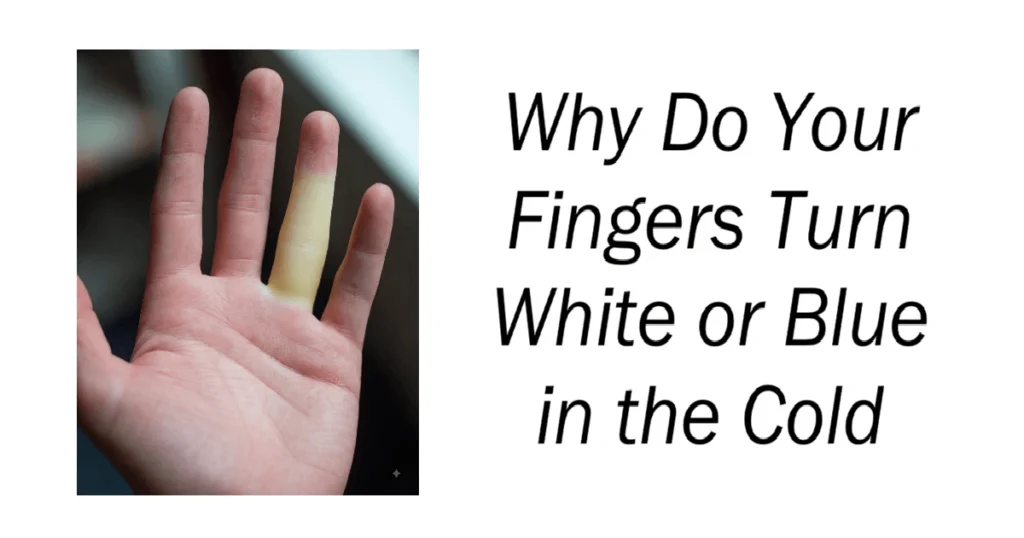
Why Do Your Fingers Turn White or Blue in the Cold
When winter arrives and temperatures begin to fall, many people expect their hands and feet to feel colder than usual. But what if your fingers or toes suddenly turn white, blue, or even red?
It can be alarming, particularly when the color change happens quickly.
For some people, this is more than an ordinary reaction to cold weather. It may be a sign of Raynaud’s phenomenon, a condition that causes the small blood vessels in certain parts of the body to narrow dramatically in response to cold or, sometimes, emotional stress.
Although Raynaud’s is often manageable and is not usually dangerous, the episodes can be uncomfortable and may interfere with everyday activities.
What Is Raynaud’s Phenomenon?
Raynaud’s phenomenon occurs when small blood vessels in areas such as the fingers and toes temporarily constrict more than they should.
When you’re exposed to cold, the body naturally narrows blood vessels near the skin to help conserve heat. In people with Raynaud’s, this response can be unusually strong.
As blood flow decreases, the affected skin may suddenly become pale or white and feel extremely cold or numb.
As the episode continues, the area may take on a bluish color. Once blood flow returns, the skin can become red as circulation is restored.
The entire process can be uncomfortable, but the symptoms vary from person to person.
What Does a Raynaud’s Episode Feel Like?
The color changes are often the most noticeable sign, but they are not the only symptom.
During or after an episode, you may experience:
- Numbness or tingling
- Cold fingers or toes
- Pain or aching
- Throbbing
- Burning or a pins-and-needles sensation
- Redness as circulation returns
Episodes may last only a few minutes or continue for longer, depending on the individual and the circumstances.
It Doesn’t Always Affect the Fingers
Raynaud’s most commonly affects the fingers and toes, but it can sometimes involve other areas that are sensitive to cold.
Some people may notice color changes or unusual sensations in the:
- Ears
- Nose
- Lips
- Nipples
The symptoms may appear on both sides of the body, although this isn’t always the case.
Cold Isn’t the Only Trigger
Cold temperatures are one of the most common triggers, but they aren’t the only one.
Emotional stress can also cause an episode. Stress activates the body’s natural response to a perceived threat, which can cause blood vessels to narrow. In someone with Raynaud’s, that reaction may be more pronounced.
Even relatively mild exposure to cold—such as reaching into a refrigerator or freezer—can trigger symptoms in some people.
Who Is More Likely to Develop Raynaud’s?
Raynaud’s can affect people of all ages, but it is more common in women and often begins during adolescence or early adulthood.
For some people, symptoms remain mild and may become less noticeable over time. Others continue to experience episodes throughout adulthood.
The frequency and severity of attacks can vary considerably. Some episodes are brief and manageable, while others can make everyday activities such as dressing, typing, cooking, or holding objects uncomfortable.
Primary vs. Secondary Raynaud’s
There are two broad forms of Raynaud’s: primary and secondary.
Primary Raynaud’s
Primary Raynaud’s occurs on its own and is the more common form. It is often relatively mild and does not result from another underlying disease.
Secondary Raynaud’s
Secondary Raynaud’s occurs alongside another condition or may be related to certain medications or other factors.
It can sometimes be associated with autoimmune or connective-tissue diseases, including conditions such as lupus or rheumatoid arthritis.
Secondary Raynaud’s can be more serious, so persistent, severe, or unusual symptoms should be evaluated by a healthcare professional.
When Should You See a Doctor?
Because occasional cold hands are common, it can be easy to dismiss Raynaud’s symptoms. However, it is worth discussing them with a healthcare professional if the episodes are frequent, severe, or disruptive.
Seek medical advice if:
- Episodes are particularly painful.
- Symptoms interfere with everyday activities.
- The symptoms are becoming more frequent or severe.
- Only one side of the body is affected.
- You develop sores, ulcers, or other skin changes.
- You suspect the symptoms may be connected to another medical condition.
- Symptoms begin for the first time later in adulthood.
A healthcare professional can assess your symptoms and determine whether further testing is appropriate.
How Can You Manage Raynaud’s in Cold Weather?
Avoiding triggers is often an important part of managing Raynaud’s.
When temperatures drop, try to keep your entire body warm rather than focusing only on your hands. Wearing gloves or mittens, warm socks, and suitable clothing can help.
Other useful habits include:
- Avoiding sudden changes in temperature when possible.
- Keeping your hands and feet warm and dry.
- Using gloves when handling frozen food or reaching into a freezer.
- Managing stress through relaxation techniques, exercise, or other strategies that work for you.
- Avoiding smoking, which can narrow blood vessels.
- Discussing recurring or severe symptoms with your healthcare professional.
For people with more troublesome symptoms, doctors may recommend medications that help improve blood flow.
The Bottom Line
Fingers or toes that suddenly turn white, blue, and then red may be experiencing more than an ordinary reaction to winter weather.
Raynaud’s phenomenon causes temporary narrowing of small blood vessels, often in response to cold or stress. For many people, it is manageable with simple precautions, although some cases require medical treatment.
If your episodes are painful, frequent, worsening, or interfering with your daily life, don’t simply assume you’re “bad with the cold.” Talk to a healthcare professional about what you’re experiencing.
Understanding the trigger is the first step toward managing the symptoms—and with the right precautions, Raynaud’s doesn’t have to make every cold day uncomfortable.
You’ve just read Why Do Your Fingers Turn White or Blue in the Cold. Why not read Why Is Your Glass Bakeware Turning Cloudy