
Why Do Tanker Trucks Have a Chain Hanging Down …The Safety Feature You Probably Overlooked
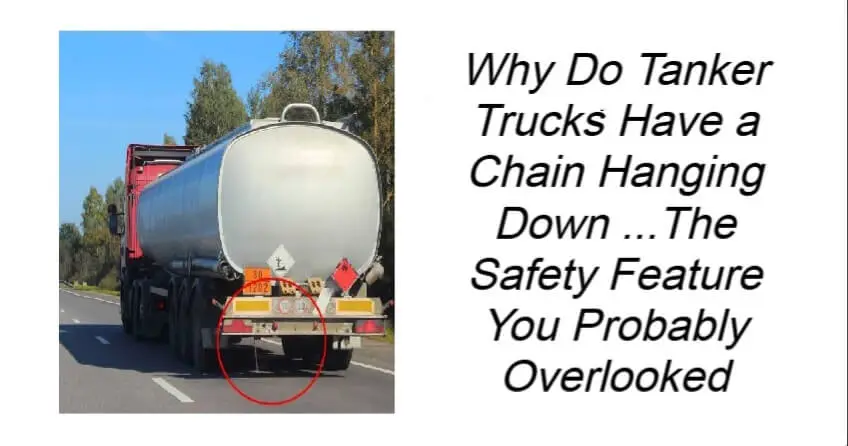
If you’ve ever driven behind a tanker truck, you might have noticed a chain dangling from the back, dragging along the road. It might seem random — maybe even like something forgotten or unnecessary — but that little chain plays a big role in safety, especially when transporting flammable materials like gasoline.
Let’s take a closer look at why that chain is there, what it does, and why it’s so important for fuel transport safety.
What’s the Deal with the Hanging Chain?
That chain is what’s known as a grounding chain, and its job is to safely discharge static electricity that builds up while the truck is moving. When liquids like gasoline or chemicals slosh around inside the tank, they generate static — much like rubbing a balloon on your hair.
If this static electricity isn’t safely released, it can cause a spark. And if that spark occurs near flammable vapors? You’ve got the potential for a fire or explosion.
By dragging along the ground, the chain provides a safe pathway for static charges to dissipate into the earth — keeping both the truck and its surroundings safer.
Why Is Static Electricity a Problem for Fuel Trucks?
Static electricity is a natural part of life — it happens any time two materials come into contact and then separate. But when flammable fuels are involved, even a tiny spark from static discharge can ignite vapors and trigger catastrophic accidents.
Inside a tanker truck, the movement of liquid fuel creates friction, which builds up static. This is especially dangerous when loading or unloading the fuel — times when fumes are more likely to be present.
The grounding chain helps neutralize that charge before it becomes dangerous.
How Did Grounding Chains Become Standard?
In the early days of fuel transport, static-related fires were more common, often with devastating results. As safety research advanced, the connection between static electricity and fuel explosions became clear.
The grounding chain emerged as a simple, low-tech, and highly effective solution. Over time, it became a standard safety feature, backed by industry regulations and national safety guidelines — including those from the U.S. Department of Transportation (DOT) and other global safety agencies.
Safety Standards for Tanker Trucks
Tanker trucks that transport hazardous or flammable materials must meet strict safety standards, including:
- Tank design specifications (e.g. pressure handling, materials)
- Static electricity control (e.g. grounding chains or cables)
- Inspection requirements
- Emergency shutoff systems
Grounding chains are required in many cases and are regularly inspected to make sure they’re functioning properly.
Are There Alternatives to the Chain?
Yes, modern fuel trucks may also use:
- Grounding cables or reels – These are manually connected to grounding points during fuel transfer operations.
- Static-reducing additives – Chemicals mixed into the fuel to reduce static buildup.
- Special coatings or materials – To reduce friction and static inside the tank.
Still, the grounding chain remains one of the most common and reliable anti-static methods in use today — especially during transportation.
Common Misconceptions About the Chain
Let’s clear up a few myths:
- “It’s just for show.” Nope. It plays a critical role in preventing sparks and static buildup.
- “It helps with braking or stability.” Not true. It has no effect on how the truck moves or stops.
- “It’s outdated technology.” While it may seem old-school, it’s still widely used and effective — especially when paired with modern safety systems.
How Is the Chain Maintained?
To be effective, the chain must:
- Touch the ground at all times
- Be free from rust or excessive wear
- Be securely attached to the truck frame
During routine inspections, the grounding chain is checked just like tires, lights, or brakes. If it’s damaged or missing, it must be repaired or replaced immediately.
Final Thoughts: Small Chain, Big Impact
Next time you see a chain dragging behind a tanker truck, you’ll know it’s not an accident or leftover part. It’s a powerful reminder that sometimes, the simplest tools are the most important when it comes to safety.
In a world of high-tech systems and digital monitoring, a metal chain dragging on the ground is still one of the best defenses against a very real risk — and that’s worth appreciating.
You’ve just read, Why Do Tanker Trucks Have a Chain Hanging Down. Why not read Manager Had To Hire A New Employee.