
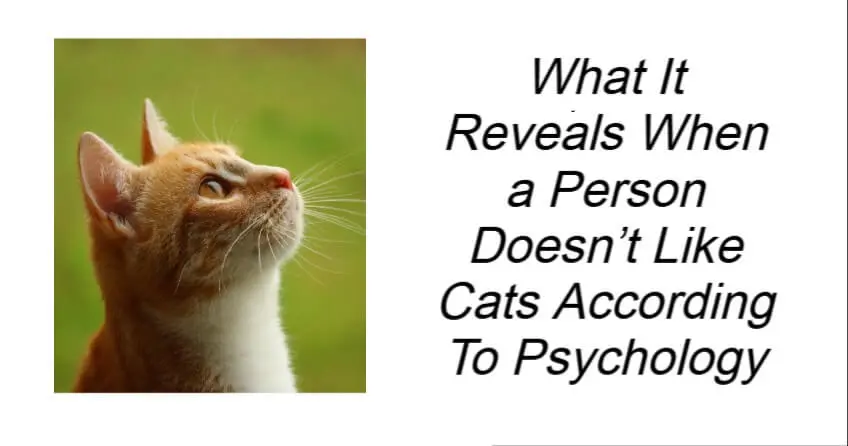
What It Reveals When a Person Doesn’t Like Cats According To Psychology
Cats: adored by many, avoided by others. While some people can’t get enough of their mysterious charm and quiet elegance, others feel uneasy around them — and would never consider having one as a pet.
But have you ever wondered why some people feel this way about felines? The answer often lies in past experiences and deep-seated personality traits that shape our perceptions of these complex creatures.
Let’s take a closer look at what a dislike for cats might actually say about a person — and how understanding feline behavior could lead to better harmony between humans and their whiskered companions.
The Great Cat Divide
Unlike dogs, who are generally affectionate, loyal, and eager to please, cats are independent. They love their space, come and go as they please, and often show affection on their own terms. It’s not uncommon for a cat to disappear for hours (or days!) on a rooftop adventure before returning home like nothing happened.
This unpredictability can be unsettling — especially for people who are used to constant interaction, control, or emotional certainty in their relationships.
Why Some People Just Don’t Like Cats
If someone has an aversion to cats, it may stem from more than just personal preference. Here are a few deeper reasons:
1. Emotional Insecurity
Cats’ aloof or unpredictable behavior can trigger anxiety in people who seek consistency, clear responses, or emotional assurance. The feline tendency to come and go may feel like rejection to someone who values closeness.
2. Bad Experiences
A scratchy encounter in childhood? A neighborhood cat that seemed aggressive? Negative past interactions, especially at a young age, can leave lasting impressions — even if they weren’t very serious.
3. Control-Oriented Personality
Cats don’t follow orders. They climb on counters, disappear for hours, and ignore calls for cuddles. For someone who needs to feel in control, this level of independence can be frustrating or even anxiety-inducing.
4. Cultural or Familial Influence
If you grew up in a household where cats were seen as unclean, dangerous, or superstitious, those views may stick with you — even subconsciously. Early exposure shapes adult preferences more than we realize.
5. Low Tolerance for the Unexpected
Highly structured individuals often prefer routine and predictability. A cat jumping on the table mid-meal or appearing suddenly after days away may feel disruptive or unnerving to someone who thrives on order.
Learning to Understand — Not Control — Cats
The key to enjoying a relationship with a cat? Understanding their nature.
Cats aren’t unsociable — they’re just selective and self-sufficient. Unlike dogs, they express affection in subtle, often delayed ways. They may sit near you without touching, or bring you a “gift” (like a leaf or toy) as a sign of trust. But they’re not always in the mood to cuddle or be touched, and forcing it can lead to scratches or avoidance.
If you’ve ever felt frustrated by a cat’s lack of response, you’re not alone. But adapting to their rhythms — rather than trying to change them — can actually be a rewarding exercise in patience, respect, and emotional growth.
inal Thoughts
Disliking cats doesn’t mean there’s something “wrong” with you. It might simply reflect your emotional needs, your past, or your personality style.
But sometimes, the very things that make us uncomfortable can also help us grow. Understanding how cats operate — and why they behave the way they do — can offer surprising insights into ourselves, too.
So the next time a cat slinks by without so much as a glance, remember: it’s not rejection. It’s just a cat being a cat.
You’ve just read, What It Reveals When a Person Doesn’t Like Cats. Why not read Manager Had To Hire A New Employee.