
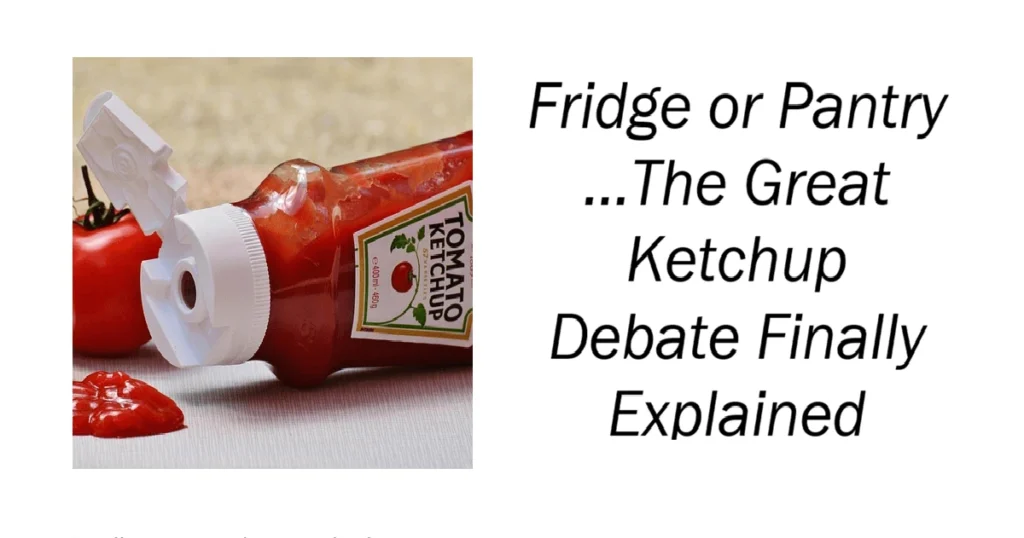
Fridge or Pantry …The Great Ketchup Debate Finally Explained
Few kitchen debates are as surprisingly passionate as this one: should ketchup live in the fridge or the pantry?
It’s a question that has quietly divided households for years. Some people instinctively reach for the fridge door, while others confidently stash their bottle in the cupboard without a second thought. So—who’s right?
Let’s break it down.
What’s Actually in Ketchup?
To understand the debate, it helps to know what ketchup is made of. At its core, ketchup is a blend of tomatoes, vinegar, sugar, and spices.
Here’s where things get interesting:
- Vinegar and tomatoes are naturally acidic, which helps preserve the sauce
- Sugar adds flavor but can also make an environment where bacteria could grow if conditions allow
So yes—ketchup does have built-in preservatives. But does that mean it’s completely safe outside the fridge? Not quite.
Team Fridge: Why Some People Chill Their Ketchup
If you’re someone who automatically refrigerates ketchup, you’re not alone—and there’s solid reasoning behind it.
Keeping ketchup cold:
- Slows down the growth of bacteria and mold
- Helps it last longer after opening
- Preserves its flavor and thickness
Ever noticed how refrigerated ketchup has that satisfying, rich consistency? That’s not a coincidence. Cooler temperatures help maintain that familiar texture and tangy kick.
Team Pantry: Why Others Skip the Fridge
On the flip side, plenty of people proudly store their ketchup in the pantry—and they’ve got history on their side.
Before modern refrigeration, ketchup was commonly kept at room temperature. Thanks to its acidity and sugar content, it can remain stable for a while after opening.
Pantry supporters argue:
- It’s perfectly safe for short-term use
- It’s more convenient (especially for frequent use)
- Cold ketchup can dull the flavor on foods like fries or burgers
And let’s be honest—room-temperature ketchup does spread a lot easier.
What Do Experts Say?
Food safety experts generally lean toward one answer: put it in the fridge after opening.
Why? Because refrigeration minimizes risk and keeps the product fresh for longer. It’s the safest all-around option, especially if you don’t use ketchup very quickly.
That said, some culinary professionals admit it’s not a strict rule. If you go through a bottle fast, pantry storage isn’t likely to cause problems.
What Do People Actually Do?
Interestingly, there’s no universal habit.
Some households are firmly “fridge-only,” often due to concerns about freshness and safety. Others stick with the pantry out of tradition or convenience.
In many cases, it comes down to:
- How you grew up
- How often you use ketchup
- Personal taste preferences
Yes—even ketchup has cultural differences.
Does Storage Change the Taste?
Absolutely.
- Refrigerated ketchup: thicker, tangier, and closer to its original flavor
- Pantry-stored ketchup: slightly runnier and may develop subtle changes over time
Neither is “wrong”—it just depends on what you prefer.
So… What’s the Safest Choice?
If safety is your top priority, the fridge wins. Cooler temperatures reduce the risk of spoilage and keep your ketchup in peak condition.
But if you’re using it regularly and finishing the bottle quickly, storing it in the pantry is generally fine for a short period.
Final Verdict
There’s no one-size-fits-all answer to the ketchup question.
- Want maximum freshness and longevity? → Fridge
- Prefer convenience and quick access? → Pantry (short-term)
At the end of the day, it’s less about rules and more about your habits.
So go ahead—store your ketchup wherever it makes the most sense for you. Just maybe don’t start an argument about it at dinner.
You’ve just read The Great Ketchup Debate Finally Explained. Why not read What Your Fries Say About You