
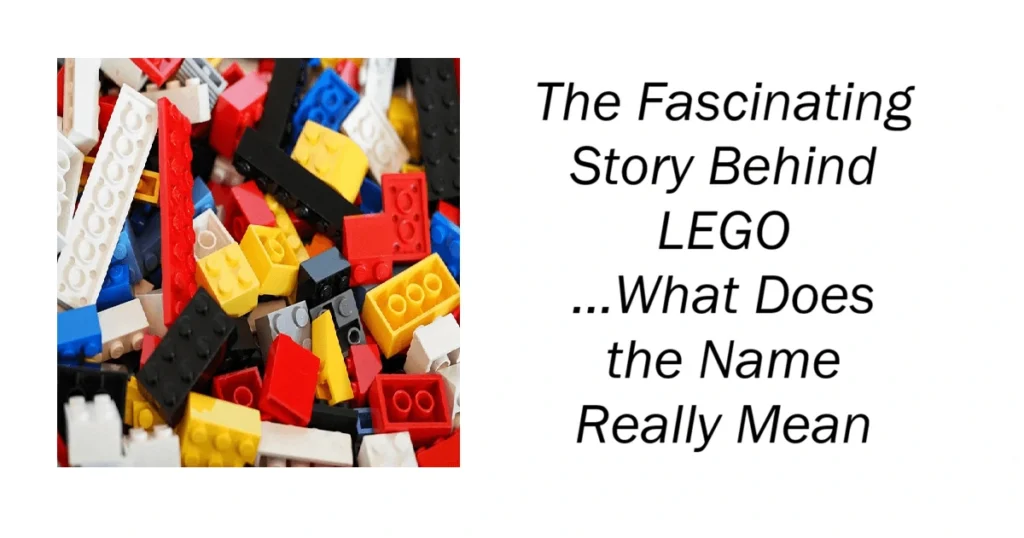
The Fascinating Story Behind LEGO …What Does the Name Really Mean
Few toys have captured the imagination of children and adults quite like LEGO. With a handful of colourful bricks, you can build towering castles, futuristic spaceships, bustling cities, or entire worlds limited only by your imagination.
But LEGO is more than just a building toy. It represents creativity, curiosity, problem-solving, and the simple joy of making something with your own hands.
The story of LEGO began in Denmark, where a small toy-making business would eventually grow into one of the world’s most recognizable brands. And at the heart of that success lies a surprisingly simple name with a meaningful message.
How LEGO Changed the Way Children Play
In 1949, LEGO began producing early plastic building bricks, introducing a new way for children to explore construction through play. Then, in 1958, the company patented its now-famous stud-and-tube coupling system, helping bricks connect securely while remaining compatible with future designs.
This innovation changed everything.
Instead of playing with toys that had only one purpose, children could use LEGO bricks to create almost anything they imagined. A few simple pieces could become a house, a spaceship, a medieval castle, or an entirely imaginary world.
And the possibilities didn’t end when a creation was finished.
Children could dismantle their models, rearrange the pieces, and start again. Every new combination offered another opportunity to experiment, solve problems, and discover something unexpected.
That freedom to build, rebuild, and imagine became one of LEGO’s greatest strengths.
What Does the Word LEGO Actually Mean?
The answer is wonderfully simple.
The name LEGO comes from the Danish phrase leg godt, meaning “play well.”
Ole Kirk Kristiansen, the founder of the company, chose the name in 1934. The two short words expressed an idea that would become central to the brand: play should be enjoyable, meaningful, and an opportunity to learn.
It’s a fitting name for a toy that encourages people to experiment, think creatively, and bring their ideas to life.
But there’s another interesting detail about the word LEGO.
In Latin, lego can mean “I read” or “I gather” and, depending on the context, can be associated with collecting or assembling. Although this creates a delightful connection with the act of putting bricks together, the company’s name was actually derived from the Danish phrase, not Latin.
It’s a small coincidence that makes the name even more memorable.
From a Small Danish Workshop to a Global Brand
LEGO’s journey to worldwide success wasn’t always easy.
The company’s founder, Ole Kirk Kristiansen, began as a carpenter and established a business making wooden products and toys. In 1942, a fire destroyed his workshop, creating a major setback for the growing business.
Rather than abandoning his ambitions, he rebuilt and continued developing toys, maintaining a strong focus on quality and craftsmanship.
One principle became especially associated with the company’s philosophy:
“Only the best is good enough.”
That commitment helped shape LEGO’s identity as the company continued to develop its products.
After Ole Kirk Kristiansen died in 1958, his son Godtfred Kirk Christiansen continued expanding the business. The interlocking brick system became the foundation of LEGO’s building sets, helping transform a Danish toy manufacturer into an international success.
Over time, LEGO bricks found their way into homes around the world, becoming part of countless childhood memories.
Why LEGO Bricks Are Still Special Today
One of LEGO’s most remarkable features is the lasting compatibility of its standard building system.
Many classic LEGO bricks from decades ago can still connect with compatible modern pieces. This means an old collection doesn’t have to remain in a box or be forgotten in an attic. It can become part of a completely new creation.
A brick that once helped build a childhood tower might eventually become part of a spaceship, a robot, or an elaborate miniature city.
That lasting compatibility gives LEGO a unique appeal across generations.
Beyond entertainment, building with LEGO can also encourage spatial reasoning, creativity, planning, and problem-solving. Children learn by experimenting with shapes, testing ideas, and figuring out how different pieces fit together.
And adults enjoy those same opportunities to create, relax, and challenge themselves.
LEGO Is More Than Just a Building Toy
Today, LEGO has grown far beyond its original bricks. The brand includes themed building sets, films, video games, theme parks, and communities of enthusiastic adult builders.
Yet the central idea remains remarkably close to the vision that inspired the company in its early days: give people the pieces and let their imaginations do the rest.
Some builders follow detailed instructions to recreate famous landmarks or elaborate vehicles. Others prefer to ignore the instructions entirely and invent something completely new.
Neither approach is wrong. The magic lies in having the freedom to explore.
A simple collection of bricks can become a creative project, a family activity, a learning experience, or a treasured memory shared between generations.
The Simple Message Behind the LEGO Name
The next time you pick up a LEGO brick, take a moment to think about the story behind it.
Two small Danish words — leg godt, meaning “play well” — helped inspire a name that is now recognized around the world.
The company’s history includes innovation, determination, and a commitment to quality. But its lasting appeal comes from something even simpler: the joy of creating something that didn’t exist before.
Perhaps that’s the real magic of LEGO. It’s not just about what you can build with the bricks. It’s about the imagination, curiosity, and memories that grow along the way.
And sometimes, all it takes to begin an extraordinary adventure is one little brick.
You’ve just read The Fascinating Story Behind LEGO. Why not read Rude Passenger Refused to Move His Bare Feet on a Plane