
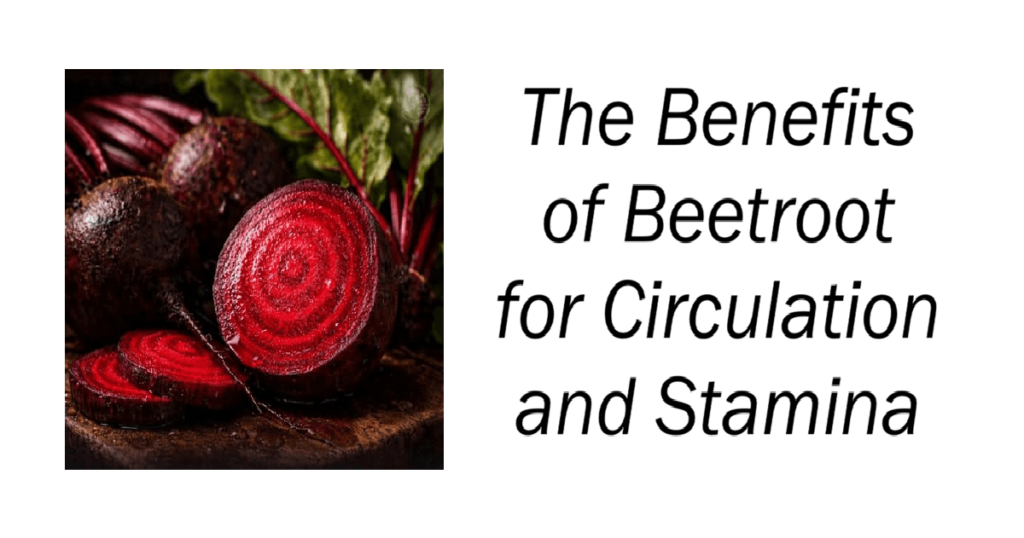
The Benefits of Beetroot for Circulation and Stamina
Beetroot has built a strong reputation in nutrition science as one of the richest natural sources of dietary nitrates. While it might look like an ordinary root vegetable, what happens inside your body after you eat it is what makes it so interesting.
When you consume beetroot, its natural nitrates are converted by the body into nitric oxide, a molecule that plays an important role in vascular health. Nitric oxide helps relax and widen blood vessels in a process known as vasodilation. As the vessels expand, blood can circulate more easily and efficiently throughout the body.
This improved circulation supports better delivery of oxygen and nutrients to tissues, including working muscles. During physical activity, that extra efficiency can make a noticeable difference. With more oxygen available, muscles are able to perform for longer periods before fatigue sets in. That’s one reason beetroot has become popular among athletes and fitness enthusiasts looking for a natural way to support endurance and performance.
But the effects aren’t limited to exercise.
Better blood flow also supports overall cardiovascular health and may contribute to steadier energy levels in daily life. It’s not a dramatic or instant transformation, but rather a subtle, ongoing support for how the body functions from day to day.
Still, it’s important to keep expectations realistic. Beetroot is not a miracle food, and it doesn’t replace training, balanced nutrition, or medical care. Instead, it fits into a broader picture of healthy habits that work together over time.
Whether it’s consumed as fresh juice, roasted, or in powdered form, adding beetroot to your diet is a simple and accessible way to support circulation naturally.
A small habit—but one that can have a meaningful impact over time.
You’ve just read The Benefits of Beetroot. Why not read Drunk Gets Pulled Over