
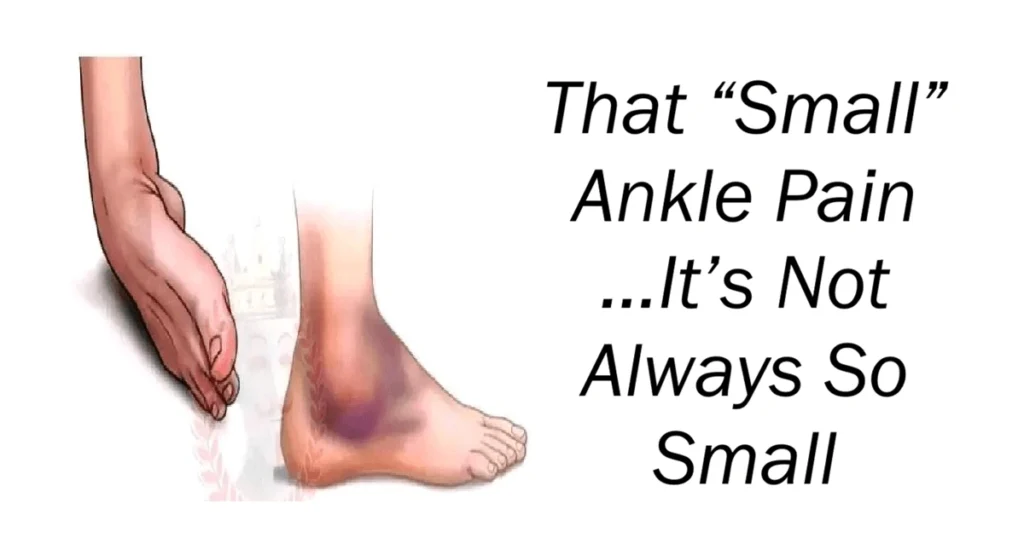
That “Small” Ankle Pain …It’s Not Always So Small
It’s easy to brush off ankle pain. A quick twist, a bit of swelling, and most people just carry on. But while your message raises valid concerns, it leans a bit too far into alarm.
The reality sits somewhere in the middle: most ankle injuries are mild—but some do need proper care early on.
What Ankle Pain Usually Means
The most common cause is a ankle sprain, where ligaments are stretched or torn.
There are different levels:
- Mild (Grade 1): slight stretch, minimal swelling
- Moderate (Grade 2): partial tear, noticeable swelling and pain
- Severe (Grade 3): full tear, instability, difficulty walking
Most people fall into the first two categories—and recover well with basic care.
When It Might Be More Serious
You should take it more seriously if you notice:
- Significant swelling or bruising
- Inability to put weight on the foot
- A popping sound at the time of injury
- Severe pain that doesn’t improve after a day or two
In rare cases, ankle pain could involve:
- Ligament rupture
- Fracture
- Joint instability
But these are not the norm, and it’s important not to assume the worst right away.
What You Should Do Early (This Part Is Solid Advice)
The classic RICE method still works well:
- Rest: avoid putting weight on it
- Ice: 15–20 minutes every few hours
- Compression: light bandage if needed
- Elevation: keep it raised above heart level
This helps reduce swelling and speeds up recovery.
Should You Keep Walking?
Not immediately.
Pushing through pain can:
- Worsen the injury
- Delay healing
- Increase risk of repeat sprains
But once pain improves, gradual movement is actually important to restore strength and stability.
The Balanced Truth
- Not every ankle pain is dangerous
- But ignoring clear warning signs isn’t smart either
- Most injuries heal well with early care and a bit of patience
When to See a Doctor
Get checked if:
- You can’t walk after 24–48 hours
- Swelling is severe
- Pain isn’t improving after a few days
- The ankle feels unstable
Final Thought
Pain isn’t something to panic about—but it is something to respect.
Your body isn’t trying to scare you.
It’s just asking you to slow down, take care of it, and avoid turning a small injury into a bigger one.
You’ve just read That “Small” Ankle Pain . Why not read Warning Signs of a Stroke Your Body May Show