
Should Customers Clean Up After Themselves at Fast-Food Restaurants
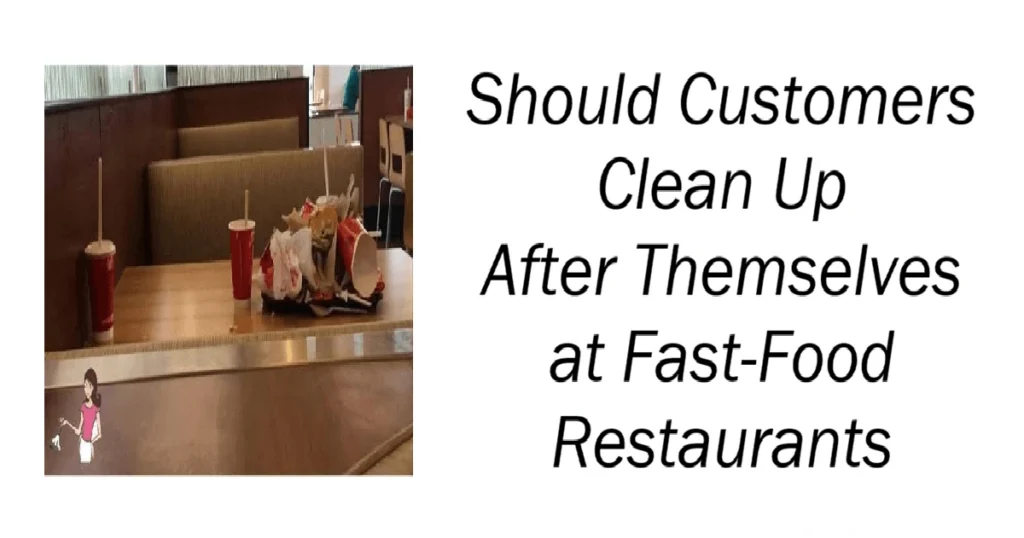
Walk into any fast-food restaurant during the lunch rush, and you’ll notice a striking contrast. Some tables are spotless and ready for the next customer, while others are littered with trays, crumpled wrappers, spilled drinks, and half-eaten meals.
This common sight sparks a surprisingly divisive question: Should customers clean up after themselves at fast-food restaurants?
While the answer may seem straightforward, it touches on broader issues of courtesy, personal responsibility, and the way modern fast-food establishments are designed to operate.
Understanding the Fast-Food Model
Fast-food restaurants differ significantly from traditional full-service dining establishments. Customers place their own orders, carry their food to the table, refill their drinks, and often handle many aspects of the dining experience themselves.
Because these restaurants are built around a self-service model, clearing away your own trash is generally considered part of the process. Employees are responsible for preparing food, handling orders, and maintaining the restaurant—not cleaning up unnecessary messes that customers could easily manage themselves.
Why Cleaning Up After Yourself Matters
1. It Shows Basic Courtesy
Fast-food employees often work in fast-paced environments, serving hundreds of customers during a single shift. Leaving behind a pile of trash can create extra work and send the message that their time and effort are unimportant.
Taking a few moments to throw away your waste is a simple act of respect.
2. It Creates a Better Experience for Everyone
A clean dining area benefits more than just restaurant staff. The next customer who walks in shouldn’t have to search for a clean table or wait for someone else to remove another person’s trash.
Keeping shared spaces tidy helps create a more welcoming, comfortable, and hygienic environment for everyone.
3. It’s Usually Expected
Most fast-food chains provide trash bins, tray return stations, and clear signage encouraging customers to dispose of their waste properly.
These features exist for a reason. They reflect an expectation that customers will participate in keeping the dining area clean.
4. It Teaches Responsibility
For parents, cleaning up after a meal can be a valuable teaching moment. Encouraging children to throw away their trash helps build habits of responsibility and respect for shared spaces.
These lessons extend beyond restaurants and can influence behavior in schools, workplaces, and public environments.
Common Arguments Against Cleaning Up — And Why They Don’t Hold Up
“They Get Paid to Clean”
This is perhaps the most common argument. While it’s true that restaurant employees are responsible for maintaining cleanliness, there’s a distinction between routine cleaning and dealing with avoidable messes.
Staff members are hired to keep the restaurant operating smoothly—not to pick up after customers who choose not to make a minimal effort.
“It’s Not My Job”
In a self-service environment, disposing of your own trash is part of the system. Customers aren’t expected to wipe down tables, sanitize surfaces, or mop floors.
The expectation is simple: take responsibility for the waste you create.
“No One Told Me To”
Many social norms don’t require explicit instructions. In most fast-food restaurants, the presence of trash bins and tray return stations serves as the instruction.
The expectation is understood even when it isn’t stated directly.
When It’s Reasonable Not to Clean Up
Of course, there are situations where clearing a table may not be practical or possible.
For example:
- Individuals with mobility limitations or disabilities
- Pregnant customers carrying multiple items
- Parents managing small children
- Customers who are injured or feeling unwell
- Restaurants where staff specifically request customers to leave trays behind
In these situations, even small gestures—such as organizing trash neatly on the tray—can still help staff members.
What Cleaning Up Actually Means
Some people assume that “cleaning up” implies performing the duties of restaurant employees. That’s not the case.
What Customers Should Do
- Throw away wrappers, cups, and leftover food
- Return trays to designated stations when available
- Wipe up obvious spills if napkins are nearby
What Customers Are Not Expected to Do
- Scrub tables
- Mop floors
- Disinfect surfaces
- Perform employee responsibilities
Cleaning up after yourself is about accountability, not free labor.
A Global Perspective
In many parts of the world, especially across Asia and Northern Europe, cleaning up after yourself in self-service restaurants is considered standard behavior.
Leaving a table covered in trash may be viewed as inconsiderate not only to staff but also to fellow customers.
Although cultural expectations vary from place to place, many societies are increasingly embracing the idea of shared responsibility in public spaces.
The Bigger Picture
Small actions often reveal larger attitudes.
Taking a moment to clear your table demonstrates:
- Respect for workers
- Consideration for others
- Awareness of shared spaces
- Personal responsibility
It’s a small gesture, but one that contributes to a more pleasant environment for everyone.
The Bottom Line
So, should customers clean up after themselves at fast-food restaurants?
In most cases, yes.
If you’re physically able, disposing of your trash and leaving your table reasonably clean is a simple act of courtesy that aligns with how fast-food restaurants are designed to operate.
You don’t need to go above and beyond. You don’t need to do the staff’s job. But leaving a massive mess behind for someone else to handle isn’t considerate either.
After all, it only takes a few seconds to throw away your trash—and those few seconds can make someone else’s day a little easier.
You’ve just read Should Customers Clean Up After Themselves . Why not read What I Found in the Yard Took Me by Surprise