
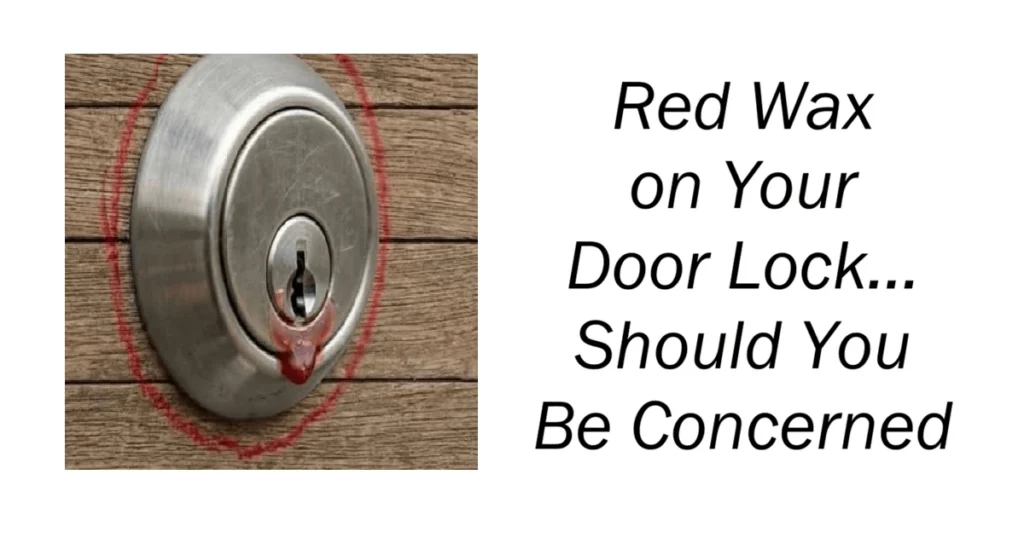
Red Wax on Your Door Lock …Should You Be Concerned
Imagine arriving home and noticing something unusual on your front door lock—a small patch of red wax that definitely wasn’t there before.
Your mind may immediately jump to alarming possibilities. After all, social media is filled with warnings claiming that colored wax, chalk marks, tape, zip ties, or mysterious symbols are secret signals used by burglars to mark potential targets.
But how much of that is actually true?
While any unexplained change around your home deserves attention, finding red wax on a door lock does not automatically mean your property has been targeted by criminals. In many cases, there is a much simpler explanation.
Before assuming the worst, here’s what you should know.
Could Red Wax Be Completely Harmless?
Often, yes.
There are several innocent reasons why red wax or a similar substance might appear on or near a door lock.
1. Accidental Transfer
Red wax can easily come from everyday items such as:
- Candles
- Holiday decorations
- Craft supplies
- Sealing wax used for envelopes or packages
- Construction materials
Something as simple as a package brushing against the lock could leave behind residue without anyone noticing.
2. Maintenance or Repair Work
If a locksmith, contractor, property manager, or maintenance worker has recently been near your property, they may have used lubricants, markers, sealants, or other materials that left traces around the lock.
In some cases, colored compounds are applied temporarily during repairs or inspections.
3. A Practical Joke or Minor Vandalism
Not every unexplained mark has a serious purpose.
Sometimes substances are placed on doors as a prank or random act of mischief, with no connection to burglary or criminal activity.
Could It Be a Sign of Tampering?
Although less common, any unexplained substance near a lock could indicate that someone handled or examined it.
That’s why it’s worth taking a closer look.
Pay attention to signs such as:
- Scratches around the keyhole
- Loose screws
- Bent hardware
- Damage to the lock mechanism
- Difficulty inserting or turning your key
- Signs of forced entry around the door frame
The wax itself may not be important, but evidence of physical tampering could be.
What Should You Do If You Find Red Wax?
Inspect the Area Carefully
Start by checking:
- The lock itself
- The door frame
- Nearby windows
- Security cameras or doorbell footage, if available
Look for anything unusual that may suggest someone attempted to gain access.
Remove the Substance
If it appears safe to do so, gently clean away the wax or residue.
Monitor the area over the following days to see whether it returns.
Test the Lock
Make sure everything functions properly:
- Does the key insert smoothly?
- Does the lock turn normally?
- Does the deadbolt engage fully?
- Does the lock feel secure?
If anything seems unusual, consider having the lock inspected by a professional.
Document What You Found
Taking photographs can be useful, especially if additional signs appear later.
A few quick pictures provide a record of the situation and may help if you need to discuss the issue with law enforcement or a locksmith.
When Should You Contact the Police?
In most situations, red wax alone is not enough reason to assume criminal activity.
However, you may want to contact local authorities if you notice:
- Evidence of attempted forced entry
- Damage to locks or doors
- Suspicious individuals repeatedly near your property
- Similar incidents occurring throughout your neighborhood
Law enforcement can help determine whether the situation warrants further investigation.
Be Careful With Viral Security Warnings
Stories about burglars using wax, chalk marks, colored tape, zip ties, or coded symbols often spread rapidly online.
While some reports may originate from real incidents, many lack verification or are exaggerated as they circulate across social media platforms.
Security experts generally recommend focusing on observable evidence rather than relying solely on viral claims.
In other words, a suspicious mark alone doesn’t necessarily indicate a criminal scheme.
Simple Ways to Improve Home Security
Regardless of why the wax appeared, it’s never a bad time to review your home’s security.
Consider these basic precautions:
- Lock all doors and windows
- Install motion-activated lighting
- Keep entryways well illuminated
- Use security cameras or video doorbells when practical
- Report genuinely suspicious activity to local authorities
- Regularly inspect locks and door hardware
Small preventative measures can go a long way toward improving peace of mind.
Final Thoughts
Finding red wax on your door lock can certainly be surprising, but it shouldn’t immediately trigger panic.
In many cases, the cause is completely innocent—a bit of residue from a candle, decoration, package, or maintenance work. While it’s wise to inspect your property and ensure everything is functioning properly, the presence of wax alone is rarely proof of criminal activity.
The best response is a calm and practical one: investigate, document what you see, address any genuine concerns, and avoid jumping to conclusions based on online rumors.
A little awareness is helpful. Panic usually isn’t.
You’ve just read Red Wax on Your Door Lock . Why not read Why Is My Scalp Itching