
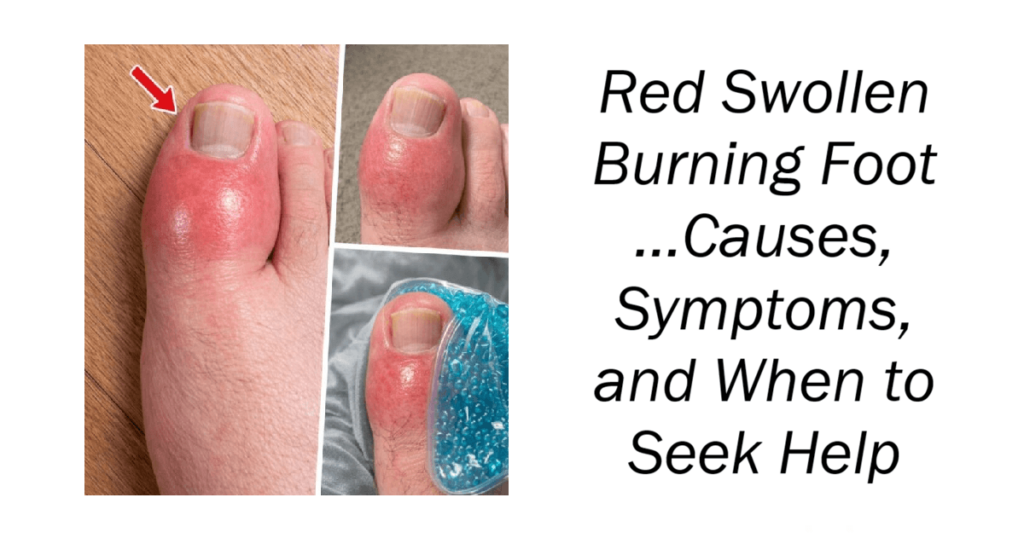
Red Swollen Burning Foot …Causes, Symptoms, and When to Seek Help
A foot that suddenly becomes red, swollen, warm, or intensely burning can be both painful and alarming. Whether the symptoms appear gradually or come on overnight, they often signal that something in the body is affecting circulation, nerves, joints, or the skin itself.
Sometimes the cause is relatively harmless and temporary. Other times, it may point to an underlying condition that needs medical attention.
Understanding the possible reasons behind these symptoms can help you recognize warning signs early and know when it’s time to seek professional care.
And there’s one often-overlooked trigger that surprises many people — we’ll get to that shortly.
Common Causes of a Red, Swollen, Burning Foot
Several conditions can cause these symptoms, ranging from nerve problems to inflammation and infections. Let’s look at the most common possibilities.
1. Nerve or Circulation Problems
One of the leading causes of burning feet is poor nerve function or circulation issues.
Conditions such as peripheral neuropathy — commonly linked to diabetes, vitamin deficiencies, or nerve damage — can create symptoms like:
- Burning sensations
- Tingling
- Numbness
- Warmth
- Redness
In some cases, symptoms worsen after:
- Standing for long periods
- Physical activity
- Exposure to heat
Circulation changes may also cause blood vessels to widen, increasing redness and swelling in the feet.
Simple habits like elevating the feet and staying physically active may sometimes provide temporary relief.
2. Erythromelalgia: A Rare but Important Condition
One lesser-known condition associated with burning feet is erythromelalgia.
This rare disorder affects the small blood vessels and can trigger episodes of:
- Intense burning pain
- Bright redness
- Swelling
- Extreme warmth
Symptoms often flare up after:
- Heat exposure
- Exercise
- Stress
- Warm temperatures
People with erythromelalgia frequently describe the sensation as if their feet are “on fire.”
Cooling the feet may help temporarily, although extreme cold should be avoided because it can irritate the skin further.
Keeping a symptom journal may help identify personal triggers.
3. Infections Such as Cellulitis or Athlete’s Foot
Infections are another common reason for red, swollen, painful feet.
Cellulitis
Cellulitis is a bacterial skin infection that can develop when bacteria enter through:
- Small cuts
- Cracked skin
- Blisters
- Scratches
Symptoms often include:
- Spreading redness
- Swelling
- Warmth
- Tenderness
- Fever in some cases
Because cellulitis can worsen quickly, medical attention is important if symptoms spread rapidly.
Athlete’s Foot
Fungal infections like athlete’s foot may also cause:
- Burning
- Itching
- Redness
- Peeling skin
- Cracking between the toes
Unlike bacterial infections, fungal infections tend to itch more than they hurt.
Good hygiene and keeping the feet dry can help reduce the risk.
4. Gout and Joint Inflammation
Gout is a painful inflammatory condition caused by a buildup of uric acid crystals in the joints.
It often affects:
- The big toe
- The foot
- The ankle
A gout attack can appear suddenly and may cause:
- Severe pain
- Redness
- Swelling
- Heat
- Extreme tenderness
Many people describe the pain as feeling like the joint is burning.
Common triggers include:
- High-purine foods
- Alcohol
- Dehydration
- Certain medications
Other forms of arthritis can also produce warmth and swelling in the feet and joints.
Warning Signs You Shouldn’t Ignore
While some mild cases improve with rest and self-care, certain symptoms require prompt medical attention.
Seek professional care if you experience:
- Rapidly spreading redness
- Fever or chills
- Severe pain
- Difficulty walking
- Open sores or wounds
- New numbness or weakness
- Symptoms that worsen quickly
People with diabetes or circulation problems should be especially cautious, as foot complications can become serious if untreated.
Simple Ways to Ease Discomfort at Home
While waiting for medical advice or monitoring mild symptoms, a few simple steps may help reduce discomfort temporarily.
Elevate the Foot
Raising the foot above heart level for 15–20 minutes can help reduce swelling caused by fluid buildup.
Use a Cool Compress
A cool, damp cloth may soothe burning sensations and calm inflammation. Avoid placing ice directly on the skin for long periods.
Wear Breathable Footwear
Loose, comfortable shoes and breathable socks can reduce pressure and prevent excess heat buildup.
Track Your Symptoms
Pay attention to:
- Changes in redness
- Swelling size
- Pain intensity
- Possible triggers like heat or activity
Keeping notes can help identify patterns and provide useful information for healthcare providers.
One Overlooked Trigger: Heat Exposure
Here’s the surprising factor many people don’t consider:
Heat itself can worsen many foot conditions.
Warm weather, hot showers, tight shoes, exercise, or standing for long periods can increase blood flow and inflammation, making symptoms much more intense.
For people prone to burning feet or circulation issues, avoiding excessive heat may significantly reduce flare-ups.
How to Monitor Symptoms at Home
A simple daily routine can help you stay aware of changes:
Check Your Feet Twice Daily
Look for:
- Increased redness
- Swelling
- Skin changes
- Temperature differences
Compare Both Feet
If one foot looks dramatically different from the other, it may signal inflammation or circulation problems.
Avoid Self-Medicating Excessively
Overusing creams or medications without guidance may mask symptoms instead of addressing the cause.
Seek Help if Symptoms Persist
If symptoms fail to improve within 24–48 hours — or worsen — professional evaluation is important.
Quick Comparison of Common Causes
| Condition | Main Symptoms | Common Triggers |
|---|---|---|
| Peripheral Neuropathy | Burning, tingling, numbness | Diabetes, nerve damage |
| Erythromelalgia | Intense heat, redness, flares | Heat, stress, exercise |
| Cellulitis | Spreading redness, tenderness | Skin infections |
| Athlete’s Foot | Itching, peeling, burning | Moist environments |
| Gout | Sudden joint pain and swelling | Diet, dehydration |
Final Thoughts
A red, swollen, burning foot may result from several different causes — from simple irritation to infections, nerve disorders, or inflammatory conditions like gout.
Paying attention to patterns, triggers, and warning signs can help you respond early and avoid complications.
And sometimes, the factor making symptoms worse isn’t disease alone — but everyday things like heat exposure, tight footwear, or prolonged standing.
Your feet often reveal important clues about your overall health. Listening to those signals matters.
You’ve just read Red Swollen Burning Foot. Why not read Wrap a Cabbage Leaf Around Your Knee