
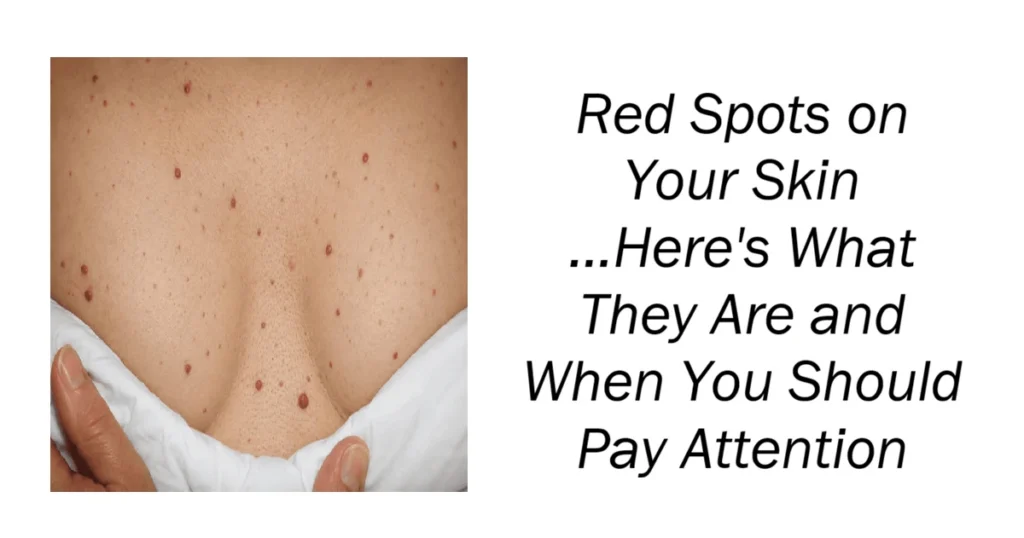
Red Spots on Your Skin …Here’s What They Are and When You Should Pay Attention
Have you ever noticed tiny red spots appearing on your skin and wondered what they are?
For many people, these small red marks seem to show up out of nowhere—on the chest, arms, back, or even the face. While they can be surprising at first, they’re often completely harmless.
In many cases, these spots are known as cherry angiomas, one of the most common skin growths seen in adults.
Let’s take a closer look at what they are, why they appear, and when it’s worth consulting a healthcare professional.
What Are Cherry Angiomas?
Cherry angiomas are small, bright-red skin growths made up of tiny blood vessels clustered together near the surface of the skin.
They are also sometimes called:
- Senile angiomas
- Campbell-De Morgan spots
- Capillary angiomas
- Cherry hemangiomas
Most cherry angiomas are:
- Bright red, purple, or burgundy in color
- Round or oval-shaped
- Between 1–5 millimeters in diameter
- Smooth or slightly raised
Although they may resemble moles or other skin lesions, cherry angiomas are typically benign (non-cancerous).
Some remain tiny throughout life, while others gradually grow larger over time.
Why Do Cherry Angiomas Appear?
The exact cause isn’t fully understood, but several factors are believed to contribute to their development.
1. Natural Aging
The most common reason is simply getting older.
Cherry angiomas become increasingly common after age 30 and tend to multiply with age. By middle age, many adults have at least a few of these small red spots.
2. Genetics
Family history appears to play a significant role.
If your parents or close relatives developed cherry angiomas, you’re more likely to develop them as well.
3. Hormonal Changes
Some people notice new angiomas appearing during periods of hormonal fluctuation, including pregnancy.
Researchers believe hormonal shifts may influence blood vessel growth in certain individuals.
4. Sun Exposure
Although sun exposure isn’t considered a direct cause, long-term ultraviolet (UV) damage may contribute to skin aging and vascular changes that increase the likelihood of developing angiomas.
Protecting your skin from excessive sun exposure remains important for overall skin health.
5. Other Possible Factors
In rare cases, a sudden eruption of numerous cherry angiomas may be associated with underlying medical conditions or environmental exposures.
If many spots appear rapidly over a short period, it’s worth discussing with a healthcare provider.
How Are Cherry Angiomas Diagnosed?
For experienced healthcare professionals, diagnosis is usually straightforward.
A dermatologist can often identify a cherry angioma through a simple visual examination.
Occasionally, additional testing may be recommended if a lesion:
- Looks unusual
- Changes rapidly
- Bleeds frequently
- Causes persistent itching
- Has irregular borders or coloration
Because some skin conditions can resemble angiomas, professional evaluation is always a good idea if you’re uncertain.
When Should You See a Doctor?
Cherry angiomas are usually harmless, but you should seek medical advice if a spot:
- Begins growing rapidly
- Changes shape or color
- Bleeds repeatedly
- Becomes painful
- Causes persistent irritation or itching
While most red spots turn out to be benign, it’s important to rule out other skin conditions that may require treatment.
Can Cherry Angiomas Be Removed?
Yes.
Because cherry angiomas are generally harmless, removal is usually done for cosmetic reasons rather than medical necessity.
Common removal methods include:
- Laser treatment
- Electrocautery (heat treatment)
- Cryotherapy (freezing)
- Minor surgical removal
A dermatologist can recommend the most appropriate option depending on the size and location of the angioma.
Can You Prevent Cherry Angiomas?
There is no guaranteed way to prevent cherry angiomas, especially when genetics plays a role.
However, maintaining healthy skin may help support overall skin health.
Helpful Habits Include:
Protect Your Skin From the Sun
Use a broad-spectrum sunscreen appropriate for your skin type and limit excessive UV exposure whenever possible.
Eat a Balanced Diet
Focus on:
- Fresh fruits
- Vegetables
- Whole grains
- Healthy fats
- Adequate hydration
A nutrient-rich diet supports overall skin function and healthy aging.
Stay Hydrated
Drinking enough water helps maintain skin health and elasticity.
Practice Good Skin Care
Regular cleansing and moisturizing can help keep skin healthy and resilient over time.
Include Healthy Fats
Foods rich in omega-3 and omega-6 fatty acids—such as fish, nuts, seeds, and olive oil—support skin health and may help reduce inflammation.
The Bottom Line
Cherry angiomas are extremely common and are usually nothing to worry about.
These small red spots often develop naturally with age and frequently run in families. While they can sometimes be cosmetically bothersome, they are typically harmless and don’t require treatment.
However, any skin lesion that changes rapidly, bleeds, or behaves unusually should be evaluated by a healthcare professional.
When it comes to skin health, it’s always better to ask questions early rather than ignore changes that concern you.
Disclaimer: This article is for informational purposes only and should not be considered medical advice. Always consult a qualified healthcare professional regarding concerns about your skin or overall health.
You’ve just read Red Spots on Your Skin. Why not read Signs Your Deceased Loved Ones May Be Reaching Out to You