
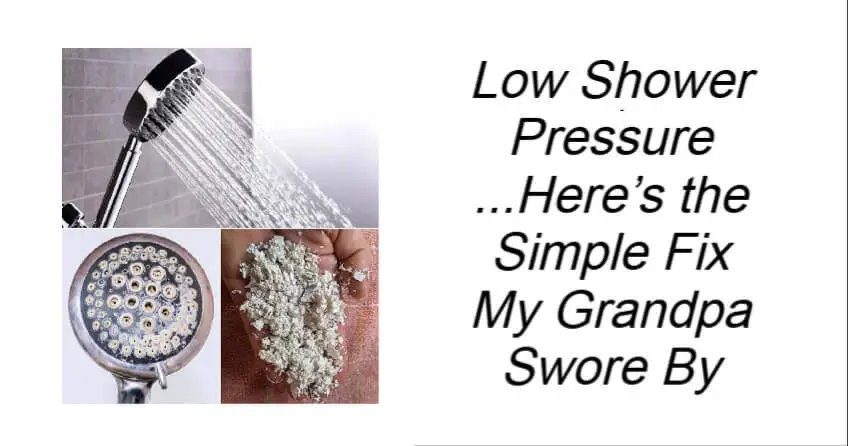
Low Shower Pressure …Here’s the Simple Fix My Grandpa Swore By
There’s nothing more frustrating than stepping into the shower expecting a strong, refreshing spray — only to be met with a weak trickle.
Before you blame your plumbing or consider calling a professional, take a closer look at your showerhead. In many cases, the real problem isn’t your pipes at all — it’s mineral buildup.
And the good news? You can fix it with something you probably already have in your kitchen.
Why Does Shower Water Pressure Decrease?
Over time, several common issues can reduce your shower’s water flow:
🚿 Mineral Deposits
If you live in an area with hard water, minerals like calcium and magnesium gradually accumulate inside the tiny nozzles of your showerhead. This buildup restricts water flow.
🧱 Sediment from Pipes
Older plumbing systems can release rust and debris that clog the showerhead.
💧 Flow Restrictors
Modern showerheads often include flow restrictors to conserve water. While eco-friendly, they can slightly reduce pressure.
🔩 General Debris
Small particles from aging pipes can lodge in the openings and block water from flowing freely.
The most common culprit? Mineral buildup.
Grandpa’s Simple Vinegar Trick
My grandpa believed in practical, natural solutions — and his method for fixing low water pressure is as effective as it is affordable.
The secret ingredient: white vinegar.
Vinegar contains acetic acid, which naturally dissolves mineral deposits without damaging most showerhead finishes. It’s eco-friendly, inexpensive, and surprisingly powerful.
Method 1: If You Can’t Remove the Showerhead
What You’ll Need:
- Plastic bag (zip-top or produce bag)
- White vinegar
- Rubber band, string, or twist tie
- Old toothbrush
Step-by-Step:
- Fill the Bag
Pour enough white vinegar into the bag to fully submerge the showerhead nozzles. - Attach the Bag
Carefully slip the bag over the showerhead so the spray plate is submerged. - Secure It
Use a rubber band or string to tie the bag tightly around the shower arm. - Let It Soak Overnight
Leave it for several hours (or overnight) so the vinegar can break down mineral buildup. - Scrub and Rinse
Remove the bag, scrub any remaining residue with an old toothbrush, and run hot water to flush everything out.
You’ll often notice an immediate improvement.
Method 2: If the Showerhead Is Removable
If your showerhead unscrews easily, cleaning becomes even simpler.
What You’ll Need:
- Bowl or bucket
- White vinegar
- Old toothbrush
Step-by-Step:
- Unscrew the showerhead.
- Submerge it completely in a bowl of white vinegar.
- Let it soak for several hours or overnight.
- Scrub the nozzles with a toothbrush.
- Rinse thoroughly and reattach.
For Stubborn Buildup
If mineral deposits are especially tough, try this:
- Mix baking soda with a little water to form a paste.
- Apply it to the nozzles after soaking.
- Gently scrub with a toothbrush.
This combination works wonders on heavy scaling.
How to Prevent Future Clogs
Once your shower pressure is restored, a little maintenance can keep it that way.
✔ Clean Every Few Months
Regular vinegar soaks prevent heavy mineral accumulation.
✔ Install a Water Softener
If you have hard water, a softener reduces mineral content significantly.
✔ Use a Showerhead Filter
Filters trap sediment before it reaches the nozzles.
✔ Check the Flow Restrictor
If pressure is still low, inspect for a built-in flow restrictor. Removing it may increase flow — but check local water regulations first.
The Takeaway
You don’t need expensive tools, harsh chemicals, or a plumber to restore strong water pressure.
Sometimes the simplest solutions — like a bag of vinegar and a little patience — are the most effective. My grandpa’s trick proves that practical wisdom, passed down through generations, still works beautifully today.
So before you replace your showerhead, give this method a try. You might be surprised at how powerful a natural solution can be.
You’ve just read, Low Shower Pressure. Why not read Manager Had To Hire A New Employee.