
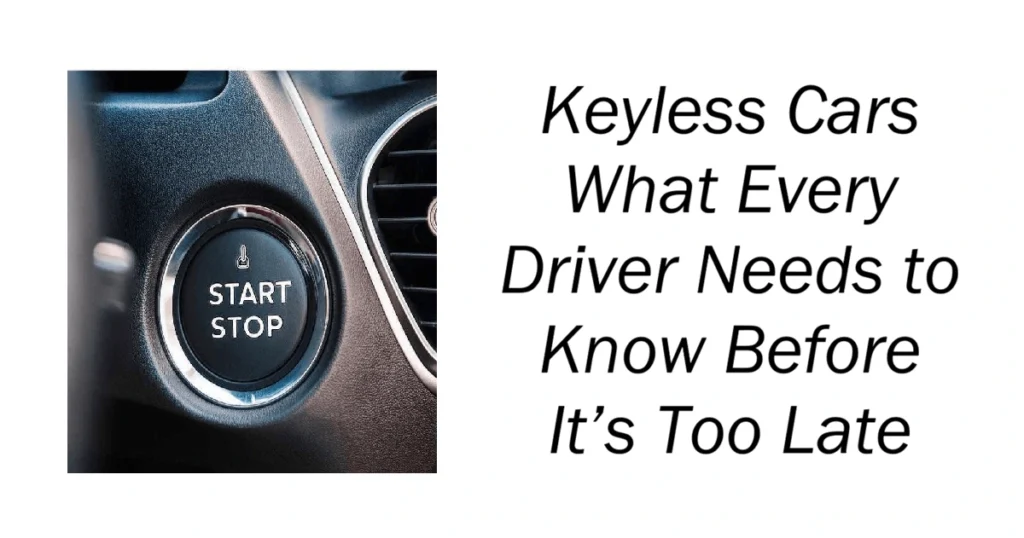
Keyless Cars What Every Driver Needs to Know Before It’s Too Late
Keyless cars have quickly gone from a luxury feature to a standard convenience. With just a fob in your pocket, you can unlock your car, start the engine, and drive away—no keys required.
Sounds perfect, right?
Well, while keyless systems make life easier, they also come with a few important risks and responsibilities that many drivers overlook. If you own—or plan to own—a keyless car, here’s what you should know.
How Keyless Entry Actually Works
At the heart of keyless systems is wireless communication.
Your key fob constantly sends a secure signal using radio frequency technology. When you’re close enough, your car recognizes the signal and automatically unlocks the doors—or even starts the engine with the push of a button.
It’s seamless… but it’s not foolproof.
Why Drivers Love Keyless Systems
There’s a reason this technology has become so popular.
Keyless entry offers:
- Convenience – No more digging through your bag or pockets
- Speed – Instant access to your vehicle
- Smart security features – Many systems use rolling codes that change after every use
It’s especially helpful when your hands are full or the weather is less than ideal.
Common Myths (That Aren’t Actually True)
Let’s clear up a few misconceptions:
“Keyless cars are easy to steal.”
Not exactly. While risks exist, modern systems use advanced encryption to prevent simple hacking.
“Your car will shut off if the fob dies.”
Nope. Most vehicles will keep running until you turn them off manually—even if the fob battery is dead.
The Real Security Risks You Should Know
Here’s where things get serious.
One of the biggest threats to keyless cars is something called a relay attack. This is when thieves amplify your key fob’s signal—even from inside your home—to unlock and start your car remotely.
It sounds like something out of a movie, but it happens more often than you’d think.
How to Protect Your Keyless Car
The good news? A few simple habits can dramatically reduce your risk.
- Store your keys in a signal-blocking pouch (Faraday bag)
- Keep your car parked in a secure, well-lit area
- Use extra security like steering wheel locks
- Regularly update your car’s software (if supported)
Think of it as adding layers of protection.
Does It Affect Insurance?
Yes—keyless systems can influence your insurance.
Some insurers may offer discounts for advanced security features. However, due to rising theft methods like relay attacks, premiums for certain models may also increase.
It’s always worth checking how your specific car is rated.
Don’t Forget About the Key Fob Battery
A dead key fob battery can be more than just annoying—it can leave you locked out.
To avoid that:
- Replace the battery every 1–2 years
- Keep a spare battery handy
- Learn how to use your car’s backup key or emergency start feature
A little preparation goes a long way.
What’s Next for Keyless Technology?
The future of keyless cars is already here.
Newer systems are introducing:
- Fingerprint and facial recognition
- Smartphone keys that replace physical fobs entirely
These innovations aim to make cars not just more convenient—but significantly more secure.
Final Thoughts
Keyless cars are a perfect example of how technology can simplify everyday life—but they’re not something you should use on autopilot.
Understanding how they work—and how to protect yourself—can make all the difference.
Because while convenience is great, security should never be an afterthought.
You’ve just read Keyless Cars What Every Driver Needs to Know. Why not read Meaning Behind One of History’s Oldest Hand Gestures