
Found a Strange Shield-Shaped Bug Indoors …Here’s What It Is and What to Do About It
Spotting an unfamiliar bug crawling on your wall—especially in the colder months—can be unsettling. If it’s shield-shaped with a speckled brown back, you’re likely dealing with an unexpected (but very common) houseguest.
The good news? It’s probably harmless.
Let’s take a closer look at what this bug is, why it shows up in your home, and how to deal with it without making things worse.
Meet the Culprit: The Brown Marmorated Stink Bug
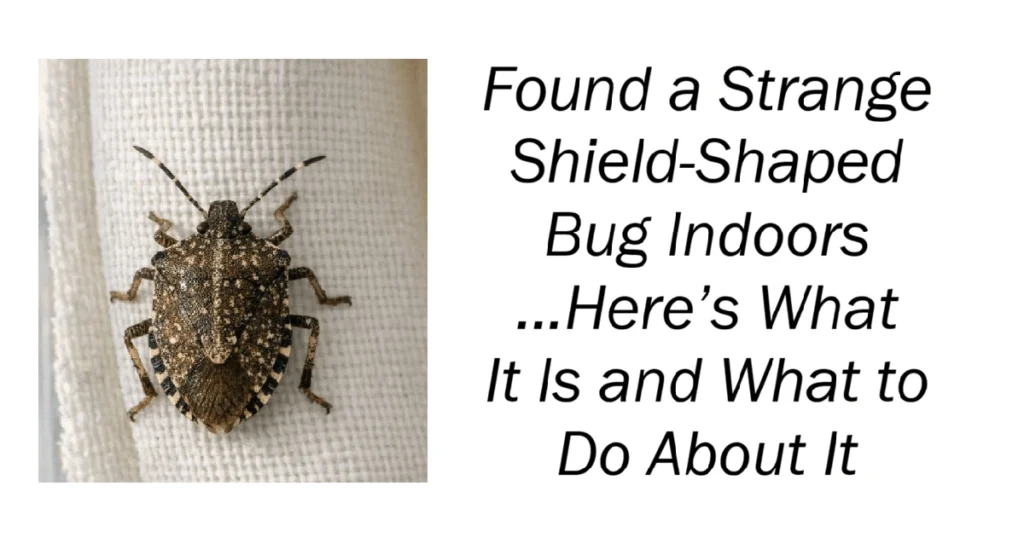
That odd-looking insect is most likely the brown marmorated stink bug (Halyomorpha halys).
Originally from Asia, this invasive species has spread widely across Europe and North America. It’s easy to recognize thanks to its:
- Shield-shaped body
- Mottled brown coloring
- Light and dark bands on its antennae and wings
During colder months, these bugs often sneak indoors—so if you’re seeing one in winter, you’re definitely not alone.
How to Tell It Apart From Other Bugs
Stink bugs can be confused with similar insects, but a few features set them apart:
- Banded antennae with alternating light and dark sections
- A flattened, shield-like shape
- Subtle white banding on the legs
- A lighter-colored underside
Unlike beetles, they don’t have hard, shiny wing covers—and they move a bit more slowly.
Why They Invade Your Home in Winter
These bugs aren’t trying to bother you—they’re trying to survive.
As temperatures drop, stink bugs look for warm, sheltered spaces to enter a hibernation-like state called diapause. Your home, with its cozy cracks and hidden corners, is the perfect refuge.
They typically sneak in through:
- Window gaps
- Door frames
- Vents and small openings
Once inside, they’ll stay quiet and hidden until spring.
Are They Dangerous?
Short answer: No.
Brown marmorated stink bugs:
- Don’t bite or sting
- Don’t spread diseases
- Aren’t harmful to pets
They’re more of a nuisance than a threat.
However, they do have one annoying defense mechanism…
The Real Problem: That Infamous Smell
When threatened or crushed, stink bugs release a strong, unpleasant odor. It can linger in the air—and even cling to fabrics.
That’s why how you remove them matters.
Will One Bug Lead to an Infestation?
Not indoors.
Stink bugs don’t reproduce inside your home. They’re just using it as a winter shelter.
That said, if they’ve found a way in, others might follow. So while one bug isn’t a problem, multiple sightings mean it’s time to seal entry points.
The Best Way to Get Rid of Them (Without the Smell)
Do this instead of squashing:
- Trap the bug using a glass or jar
- Slide a piece of paper underneath
- Release it outside, away from your home
You can also:
- Use a vacuum cleaner (preferably with a bag)
- Dispose of the bag quickly to avoid lingering odor
What Not to Do
Avoid these common mistakes:
- ❌ Don’t crush them (unless you enjoy the smell)
- ❌ Don’t spray chemicals indoors unnecessarily
- ❌ Don’t ignore repeated sightings
Handling them gently is key to keeping your home odor-free.
How to Keep Them From Coming Back
Prevention is your best defense.
Try these simple fixes:
- Seal cracks around windows and doors
- Install or repair window screens
- Add weather stripping and door sweeps
- Cover vents with fine mesh
These steps not only block stink bugs—but other pests too.
When to Call a Professional
If you’re seeing large numbers or feel overwhelmed, a pest control expert can help.
They can:
- Identify entry points
- Apply preventative treatments
- Offer long-term solutions
Quick Checklist for Next Time
If you spot one again:
- Identify – Shield shape, brown speckled body, banded antennae
- Capture – Use a jar or cup
- Release – Take it outside
- Avoid – Don’t squash it
- Prevent – Seal up entry points
Final Thoughts
Finding a stink bug indoors might be unpleasant—but it’s rarely serious. With the right approach, you can handle the situation quickly, safely, and without turning your home into a smelly disaster.
A little knowledge (and a gentle touch) goes a long way.
You’ve just read Found a Strange Shield-Shaped Bug Indoors. Why not read Why Your Deli Roast Beef Turns Grey-Brown