
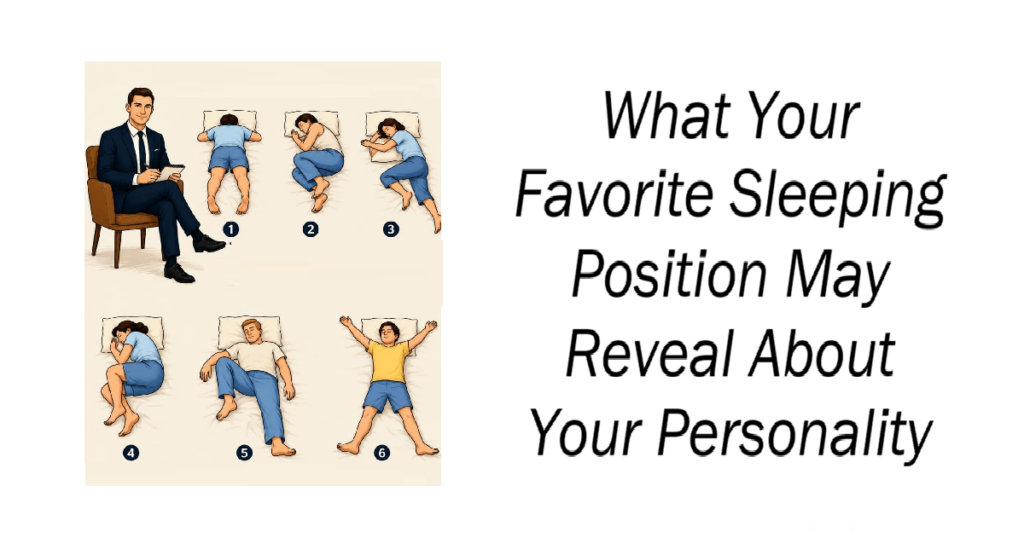
What Your Favorite Sleeping Position May Reveal About Your Personality
Have you ever woken up in the exact same position you fell asleep in and wondered why? It turns out that the way you naturally sleep may reveal more than just what’s comfortable for your body.
While sleep position is influenced by factors like physical comfort, age, and health, psychologists and sleep researchers have long explored whether our preferred sleeping posture might also reflect aspects of our personality. Although these interpretations aren’t scientifically proven personality tests, many people find them surprisingly relatable.
So, what does your favorite sleeping position say about you? Let’s take a look at the six most common sleep positions and the personality traits often associated with each one.
1. The Freefall Position (Sleeping Face Down)
If you sleep on your stomach with your arms wrapped around or above your pillow, you’re using what’s commonly known as the Freefall Position.
People who prefer this posture are often described as bold, energetic, and outgoing. They enjoy taking charge and usually like having a sense of control over situations. Unexpected changes or surprises, however, may leave them feeling uncomfortable.
Although they often appear confident and fearless, they can also be quite sensitive to criticism. Beneath their strong exterior is someone who values approval and may take negative comments more personally than others realize.
2. The Full Fetal Position
Curling up tightly with your knees drawn toward your chest is one of the most common sleeping positions.
This posture is frequently linked with people who value security, comfort, and emotional stability. While they may seem reserved or cautious when meeting new people, they often have warm, compassionate personalities beneath the surface.
They don’t always trust easily, but once someone earns their confidence, they’re known for being loyal, dependable, and deeply caring friends.
3. Sleeping on Your Side While Hugging a Pillow
If you can’t fall asleep without hugging a pillow, it may reflect your appreciation for close relationships and emotional connection.
People who naturally sleep this way are often affectionate, empathetic, and family-oriented. They enjoy nurturing others and place great importance on friendships and meaningful relationships.
Because they value harmony, they usually avoid unnecessary conflict and prefer peaceful solutions whenever possible. Their trusting nature is one of their greatest strengths, although it can occasionally make them vulnerable to disappointment.
4. The Relaxed Side Sleeper
Unlike the tightly curled fetal position, this posture involves lying comfortably on your side with only a slight bend in your knees.
This sleeping style is commonly associated with calm, balanced, and practical individuals. They tend to approach life’s challenges with patience rather than panic and are comfortable adapting when circumstances change.
Before making important decisions, they’re more likely to weigh the facts carefully than act on impulse. Friends often see them as dependable, thoughtful, and emotionally steady.
5. Side Sleeping with One Leg Raised
Some people naturally sleep on their side while one leg is bent or lifted higher than the other.
This position is often linked to adventurous, curious, and charismatic personalities. These individuals enjoy exploring new experiences and dislike routines that feel repetitive or predictable.
They may hesitate before making major life decisions, but once they commit to a goal, they’re determined to see it through. Their confidence and enthusiasm often make them naturally engaging and memorable.
6. The Starfish Position
Sleeping on your back with your arms stretched upward or outward is known as the Starfish Position.
People who favor this posture are often described as generous listeners and supportive friends. They’re usually happy to help others without expecting recognition or praise.
Rather than seeking attention, they prefer peaceful environments and meaningful relationships. Many value emotional balance and tend to avoid unnecessary drama whenever possible.
Can Your Sleeping Position Change?
Absolutely.
Your preferred sleeping position isn’t fixed for life. It may change depending on:
- Stress or anxiety levels
- Pregnancy
- Back, neck, or shoulder pain
- Injuries or medical conditions
- A new mattress or pillow
- Aging and changing comfort needs
During stressful periods, many people naturally curl into more protective positions, while times of greater relaxation may encourage more open and comfortable postures.
Does Science Support These Personality Claims?
While sleep researchers have identified clear links between sleeping position and factors like spinal health, breathing, snoring, and sleep quality, the connection between sleeping position and personality remains limited. Most personality interpretations are based on observational studies and popular psychology rather than strong scientific evidence.
That doesn’t mean they’re meaningless—many people genuinely recognize aspects of themselves in these descriptions—but they should be viewed as interesting possibilities rather than established facts.
The Bottom Line
Your favorite sleeping position may offer a fascinating glimpse into your habits, preferences, and emotional tendencies—but it’s only one small piece of the puzzle.
Whether you’re a protective fetal sleeper, an adventurous side sleeper, or a peaceful starfish, the most important thing is finding a position that allows you to sleep comfortably and wake up feeling refreshed.
After all, a good night’s sleep contributes far more to your health than any personality label ever could.
You’ve just read Favorite Sleeping Position. Why not read Which Part of the Human Body Is the Dirtiest