
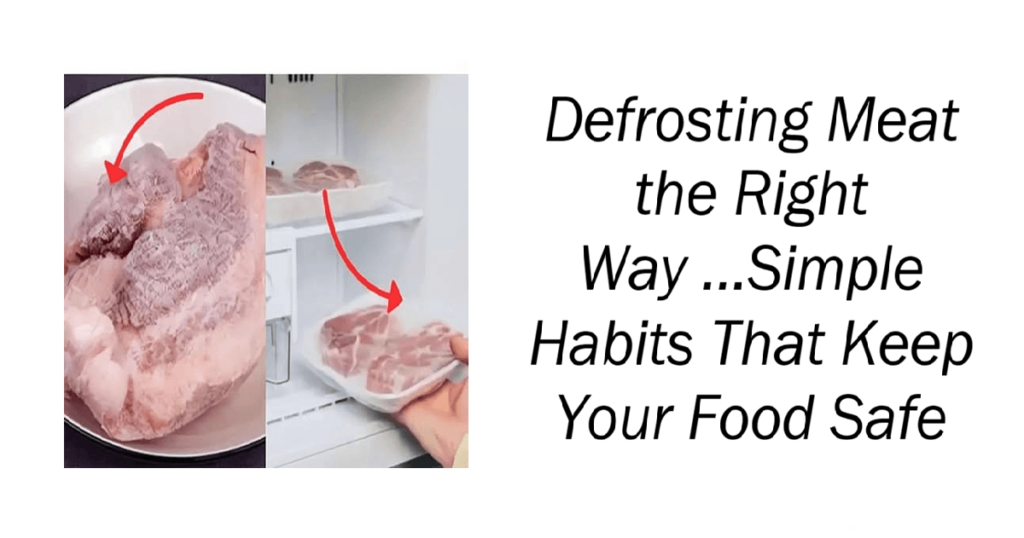
Defrosting Meat the Right Way …Simple Habits That Keep Your Food Safe
Defrosting meat might seem like a small step in cooking—but it’s one of the most important.
Do it right, and you protect both the flavor of your food and your health. Do it wrong, and you create the perfect conditions for harmful bacteria to grow.
The good news? Safe thawing is simple once you know what to do.
Why Defrosting Matters More Than You Think
When meat is frozen, bacteria are essentially paused—they can’t grow at low temperatures.
But as soon as the meat starts to thaw, especially at room temperature, things change quickly. The outer layer warms up first, creating an ideal environment for bacteria to multiply—even while the inside is still frozen.
That’s why controlled thawing is key.
The Safest Method: Refrigerator Thawing
If you have time, this is the best option—hands down.
Placing meat in the refrigerator allows it to thaw slowly at a safe, consistent temperature. There’s no sudden warming, no risky conditions—just steady, controlled defrosting.
What to expect:
- Small cuts (like chicken breasts): overnight
- Larger cuts (like roasts): up to 24 hours or more
One major advantage?
Once thawed, the meat can safely stay in the fridge for another day or two before cooking.
It requires a bit of planning—but it’s the safest and most reliable method.
Need It Faster? Try the Cold Water Method
Short on time? This method works well—if done properly.
Here’s how:
- Place the meat in a sealed, leak-proof plastic bag
- Submerge it in cold water
- Change the water every 30 minutes
This keeps the temperature low while speeding up the thawing process.
Depending on the size, meat can defrost in just a few hours.
Important:
Once thawed this way, cook the meat immediately. Don’t put it back in the fridge for later use.
And never use warm or hot water—it may seem faster, but it creates unsafe conditions.
The Microwave Option (Use Carefully)
The microwave is the fastest method—but also the trickiest.
While convenient, it often defrosts unevenly. Some parts of the meat may begin to cook while others are still frozen.
If you use it:
- Select the defrost setting
- Rotate or flip the meat frequently
- Monitor closely
And most importantly:
cook the meat immediately after thawing.
What You Should Never Do
Some common habits can actually increase your risk of foodborne illness:
- Leaving meat out on the counter
- Using hot water to speed things up
- Thawing in direct sunlight
These methods allow the outer layer of meat to enter the “danger zone” (where bacteria grow rapidly), even if the inside is still frozen.
Also, avoid refreezing meat that’s been thawed improperly—it can affect both safety and texture.
Simple Tips for Better Results
A little planning goes a long way:
- Move meat from freezer to fridge the night before
- Store meat in smaller portions for faster thawing
- Use leak-proof packaging to prevent contamination
These small habits can make your cooking routine smoother—and safer.
Final Thoughts
Defrosting meat isn’t complicated—but it does require a bit of attention.
By choosing safe methods and avoiding shortcuts, you reduce health risks and improve the quality of your meals.In the end, it’s a simple rule:
Take your time, keep it cold, and cook it right.
Because the best meals don’t just taste good—they’re prepared safely from start to finish.
You’ve just read Defrosting Meat the Right Way. Why not read The Truth About 10,000 Steps a Day