
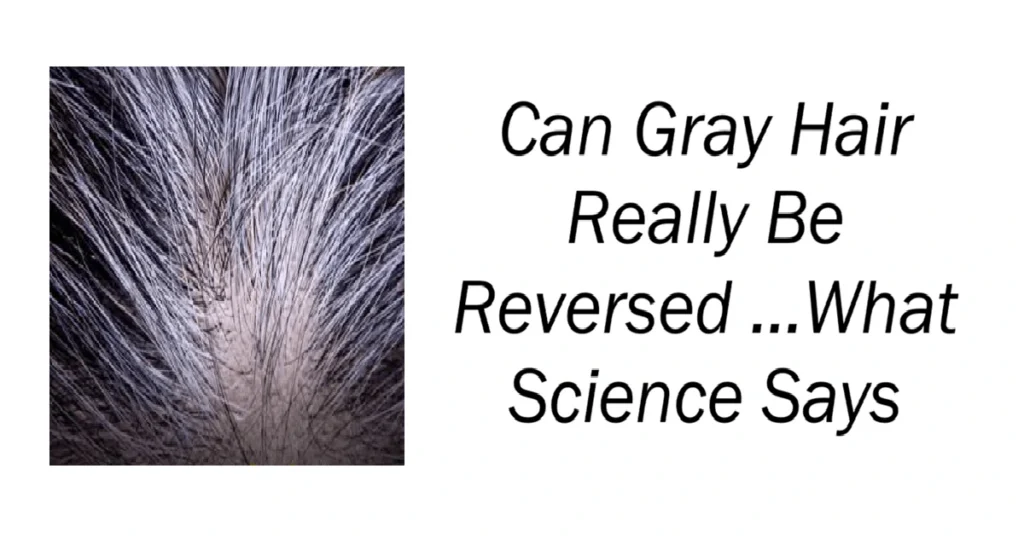
Can Gray Hair Really Be Reversed …What Science Says
For generations, gray hair has been viewed as an unavoidable part of getting older—a visible sign that time is marching on. Once those silver strands appeared, most people assumed they were there to stay.
But what if that isn’t always true?
Recent scientific research has challenged the long-held belief that gray hair is completely irreversible. While aging remains the primary cause of graying, studies suggest that under certain circumstances, some gray hairs may regain their natural color.
This surprising discovery is changing how researchers think about aging, stress, and hair health.
Why Does Hair Turn Gray?
Hair gets its color from a pigment called melanin, which is produced by specialized cells known as melanocytes.
As long as these cells remain active, hair continues to grow with its natural color. However, when melanocytes slow down or stop functioning, melanin production decreases, causing hair to appear gray, silver, or white.
Several factors can contribute to this process.
Natural Aging
The most common cause of gray hair is simply getting older. Over time, melanocytes become less efficient and eventually produce less pigment.
Genetics
Some people begin developing gray hair in their twenties, while others maintain their natural color well into their fifties or beyond. Genetics plays a major role in determining when graying begins.
Chronic Stress
Growing evidence suggests that long-term stress may accelerate the graying process by affecting cellular health and pigment-producing cells.
Nutritional Deficiencies
Low levels of certain nutrients—including vitamin B12, iron, copper, and zinc—have been linked to premature graying in some individuals.
The Discovery That Changed the Conversation
In 2021, researchers at Columbia University published a study that attracted worldwide attention.
The scientists closely analyzed individual human hairs and discovered something remarkable: some gray hairs naturally regained pigment and returned to their original color.
Even more intriguing was the connection they observed between hair pigmentation and psychological stress.
The study found that periods of increased stress often coincided with graying, while reductions in stress were sometimes associated with the return of natural hair color.
These findings suggest that, in certain situations, gray hair may be more dynamic than previously believed.
How Stress May Affect Hair Color
Stress impacts the body in countless ways, from sleep quality and hormone levels to inflammation and cellular repair.
Researchers believe that chronic stress may place additional strain on melanocytes, making it more difficult for them to maintain pigment production.
When stress levels decrease, some melanocytes may recover their function—allowing pigment to return to newly growing sections of hair.
It’s important to note that this effect appears to occur only in specific circumstances and is not guaranteed for everyone.
Habits That May Support Healthy Hair Pigmentation
While there is currently no proven method to reverse all gray hair, certain lifestyle factors may help support overall hair and cellular health.
1. Managing Stress
Reducing chronic stress may be one of the most promising strategies identified by researchers.
Helpful approaches include:
- Meditation
- Mindfulness practices
- Yoga
- Deep breathing exercises
- Spending time in nature
2. Eating an Antioxidant-Rich Diet
Antioxidants help protect cells from oxidative stress, which may contribute to aging processes.
Foods rich in antioxidants include:
- Berries
- Leafy greens
- Colorful vegetables
- Green tea
- Turmeric
- Nuts and seeds
3. Ensuring Adequate Vitamin and Mineral Intake
Nutrients linked to healthy hair pigmentation include:
- Vitamin B12
- Iron
- Copper
- Zinc
- Folate
A balanced diet or appropriate supplementation under medical guidance may help address deficiencies.
4. Prioritizing Quality Sleep
Sleep is essential for cellular repair and regeneration throughout the body, including the scalp and hair follicles.
5. Staying Physically Active
Regular exercise supports healthy circulation, delivering oxygen and nutrients to tissues throughout the body, including hair follicles.
Can All Gray Hair Be Reversed?
Unfortunately, no.
Experts emphasize that the potential for repigmentation depends largely on the condition of the hair follicle.
If melanocytes are still present but temporarily inactive, there may be a chance for color to return.
However, once melanocytes are permanently lost or destroyed, the hair follicle can no longer produce pigment, making the gray hair permanent.
This is why some people may experience partial reversal while others do not.
What Does This Mean for the Future?
The discovery that some gray hairs can naturally regain color has opened an exciting new area of aging research.
Scientists are now exploring how stress, metabolism, genetics, and cellular health influence hair pigmentation. Future treatments may focus on preserving melanocyte function or reactivating dormant pigment-producing cells.
While a universal cure for gray hair remains out of reach, researchers are learning that the process may be more flexible—and more reversible—than once believed.
Final Thoughts
Gray hair has long been considered a one-way journey, but emerging research suggests the story may be more complex.
Although genetics and aging remain the dominant factors behind graying, evidence indicates that stress reduction, proper nutrition, quality sleep, and overall health may influence hair pigmentation in certain individuals.
While not every gray hair can be reversed, science has shown that some can regain their natural color under the right conditions. As research continues, our understanding of hair aging may evolve even further.
For now, maintaining a healthy lifestyle remains one of the best ways to support both your hair and your overall well-being.
Disclaimer: This article is for informational purposes only and should not be considered medical advice. If you experience sudden or premature graying, consult a qualified healthcare professional to rule out underlying health conditions or nutritional deficiencies.
You’ve just read Can Gray Hair Really Be Reversed . Why not read Can You Spot the Odd Shape Out