
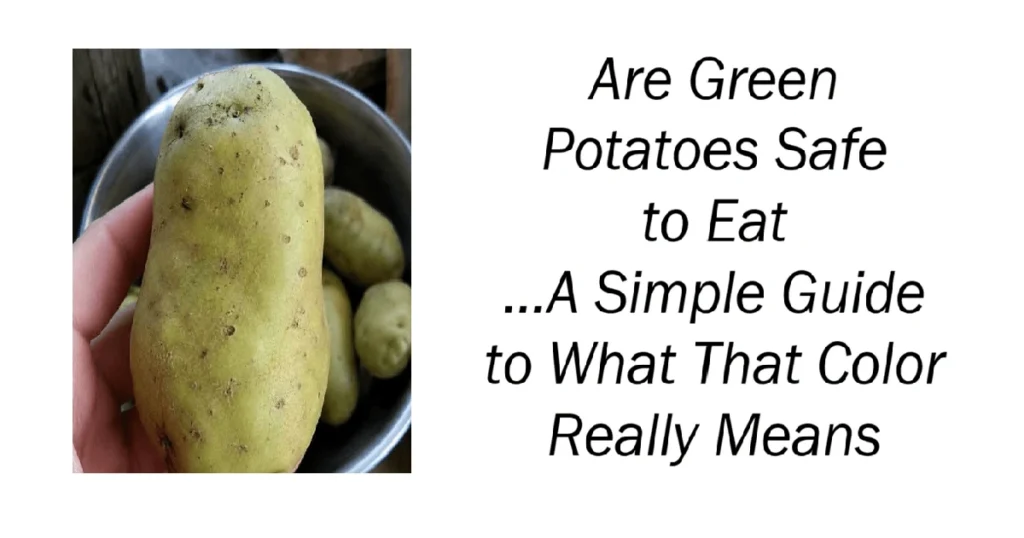
Are Green Potatoes Safe to Eat …A Simple Guide to What That Color Really Means
Oh, my dear friend, I know that moment of hesitation all too well.
You reach into the pantry for a potato to make a comforting mash or a hearty stew, only to notice a distinct green tint on the skin. Suddenly, you pause.
Is it safe to eat? Did I store it incorrectly? Do I need to throw away the entire bag?
The good news is that there’s no need to panic. Green potatoes are a common kitchen occurrence, and understanding why they turn green can help you make a sensible decision about what to do next.
So, put the kettle on, take a breath, and let’s look at the simple science behind green potatoes—and how to decide whether one belongs in your dinner or the compost bin.
Why Do Potatoes Turn Green?
The green color itself comes from chlorophyll, the natural pigment that gives plants their green color. When potatoes are exposed to light, they can begin producing chlorophyll, which is why potatoes stored in bright places may develop green patches.
Chlorophyll itself isn’t the main concern.
The reason food-safety experts recommend caution with green potatoes is that exposure to light can also be associated with increased levels of naturally occurring compounds called glycoalkaloids, particularly solanine and chaconine.
These compounds are part of the potato plant’s natural defense system. When present at high enough levels, they can cause unpleasant symptoms such as nausea, vomiting, stomach cramps, and headaches.
That is why a green potato deserves a closer look rather than an automatic trip to the trash.
Can You Still Eat a Green Potato?
Sometimes, yes—but it depends on the potato.
A Few Small Green Patches
If the potato is firm and otherwise looks healthy, with only a small amount of green discoloration, you can remove the affected areas generously.
Peel the potato rather than simply scraping the surface, and cut away the green portions, eyes, and any sprouts. If there is only a small amount of discoloration and the potato looks normal underneath, it may still be suitable for cooking.
When preparing potatoes, don’t be tempted to keep questionable green portions simply to avoid waste. A little extra trimming is a small price to pay for sensible food safety.
Very Green, Sprouted, Soft, or Bitter Potatoes
This is where I prefer to take the simple route: when in doubt, throw it out.
If a potato is extensively green, heavily sprouted, soft, shriveled, or has an unusually bitter taste, it’s best not to eat it.
And one important point: ordinary cooking does not reliably remove potato glycoalkaloids, so boiling, baking, or frying shouldn’t be treated as a way to make a heavily green potato safe.
Sometimes the most practical choice is simply to let that potato go.
Why Does a Potato’s Taste Matter?
A noticeably bitter taste can be a useful warning sign, particularly when you’re already dealing with a heavily green or sprouted potato.
Of course, you shouldn’t deliberately taste a questionable potato to test whether it’s safe. But if a properly prepared potato tastes distinctly bitter or unpleasant, don’t force yourself to finish it.
Your kitchen doesn’t need to become a place of anxiety. A little common sense goes a long way.
My Simple Pantry Rule
Whenever I’m sorting through potatoes, I like to remember three things:
Look. Feel. Decide.
- Look: Is there just a small patch of green, or is the potato extensively green?
- Feel: Is it firm and healthy-looking, or soft and shriveled?
- Decide: If you’re unsure, it’s perfectly reasonable to discard it.
There is no prize for rescuing every single potato in the pantry.
How to Keep Potatoes From Turning Green
The easiest solution is prevention.
Keep Them Cool, Dark, and Dry
Potatoes prefer a cool, dark, dry, well-ventilated place. A paper bag, open basket, or suitable pantry container can work well.
Light is one of the biggest culprits behind that familiar green color.
Keep Potatoes Away From Light
Don’t leave potatoes sitting on a sunny countertop or in a clear container where they’re exposed to bright kitchen lighting.
A dark cupboard or pantry is a much better home.
Give Potatoes and Onions Their Own Space
Potatoes and onions may look like natural pantry companions, but storing them together isn’t ideal. Both can contribute to faster deterioration under certain storage conditions.
Keeping them separate is a simple habit that can help extend their usefulness.
Don’t Automatically Put Raw Potatoes in the Fridge
For ordinary raw potatoes, a cool, dark, dry pantry is generally preferable to refrigeration. Refrigerating raw potatoes can alter their starches and affect how they cook and taste.
Buy What You’ll Use
This may be my favorite tip of all.
Buying a huge bag because it looks like a bargain isn’t much of a bargain if half of it ends up in the compost.
If you don’t use potatoes frequently, buying a smaller quantity can save both money and food waste.
A Little Kitchen Calm
There’s something wonderfully reassuring about understanding the ordinary mysteries of our kitchens.
A green potato doesn’t have to send us into a panic. It simply gives us a reason to pause, inspect it carefully, and make an informed choice.
And if one potato has gone too far? Let it go.
Food safety is more important than avoiding a few pennies of waste.
Once I’ve finished sorting through the pantry, I like to make something simple and comforting. For me, that might be a slice of whole-grain toast topped with creamy avocado, a squeeze of lemon, and just a little flaky salt.
Then I can sit down with my tea, take a few slow breaths, and remind myself that good health isn’t about doing everything perfectly. It’s about making sensible choices, one small habit at a time.
The Takeaway
The next time you discover a green potato, remember:
A little green doesn’t automatically mean the entire potato—or the whole bag—is ruined.
Inspect it carefully. Remove small green areas generously when appropriate, and discard potatoes that are extensively green, heavily sprouted, soft, shriveled, or otherwise questionable.
Most importantly, store your potatoes somewhere cool, dark, dry, and well ventilated to help prevent the problem in the first place.
A little knowledge can turn an everyday kitchen mystery into something wonderfully simple.
And isn’t that what we all want? A pantry that feels less like a source of worry and more like a place of nourishment, comfort, and good food.
Do you have a favorite pantry-storage trick that helps keep your produce fresh? I’d love to hear about it in the comments.
This version keeps the personal, reassuring farmhouse character but makes the article more readable, less repetitive, and more responsible around health and food-safety claims.
You’ve just read Are Green Potatoes Safe to Eat . Why not read I Found Strange White Oval Objects Beside My Bed