
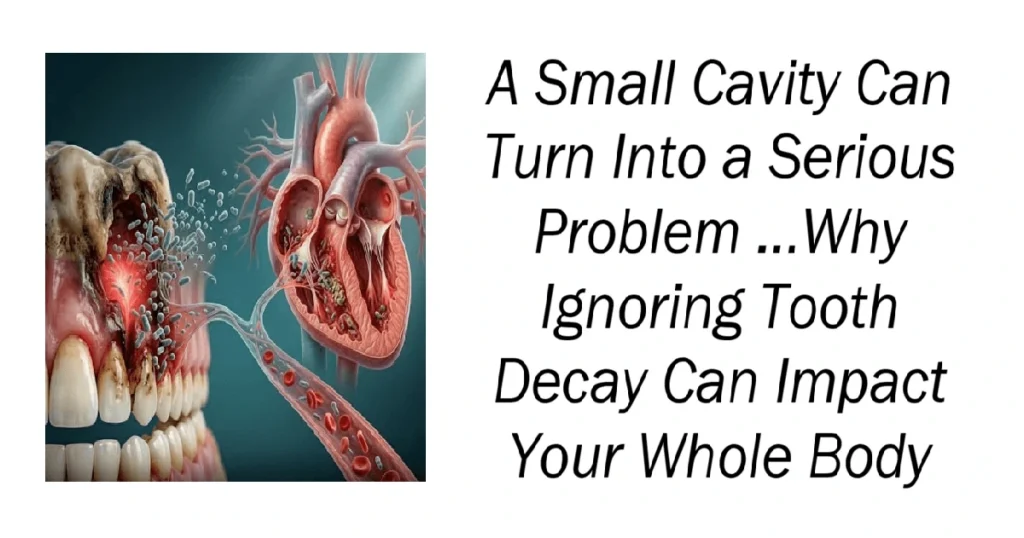
A Small Cavity Can Turn Into a Serious Problem … Why Ignoring Tooth Decay Can Impact Your Whole Body
A tiny cavity may not seem like a big deal at first.
Sometimes there’s no pain at all. No swelling. No obvious warning signs. It may just look like a small dark spot on a tooth — easy to ignore during busy daily life.
But underneath the surface, a cavity is much more than a cosmetic issue.
It’s an active bacterial infection that can continue spreading deeper into the tooth over time if left untreated.
What Actually Causes Cavities?
Dental caries — commonly known as cavities — develop when bacteria inside the mouth feed on sugars and starches from food and drinks.
As the bacteria break down these sugars, they produce acids that gradually weaken and erode the protective outer layer of the tooth, known as enamel.
At first, this damage may be painless.
But once the enamel is worn down, the decay can continue moving deeper into the tooth structure.
Why Early Cavities Often Go Unnoticed
One reason cavities become dangerous is because early decay often causes very few symptoms.
Many people don’t realize they have a problem until they begin experiencing:
- Tooth sensitivity
- Pain while eating
- Sharp discomfort with hot or cold foods
- Visible holes or dark spots
- Swelling near the gums
By the time pain appears, the infection may already be affecting deeper layers of the tooth.
When the Infection Reaches the Pulp
Inside every tooth is a soft inner area called the pulp.
The pulp contains:
- Nerves
- Blood vessels
- Connective tissue
When bacteria reach this sensitive area, the infection can become much more serious.
This may lead to:
- Severe tooth pain
- Inflammation
- Sensitivity
- Swelling
- Infection around the tooth root
In some cases, a Dental abscess can form.
A dental abscess is a collection of pus caused by bacterial infection, and it often requires urgent treatment.
Why Untreated Dental Infections Can Be Dangerous
A serious tooth infection doesn’t always stay isolated to the mouth.
If bacteria spread beyond the tooth, complications can potentially affect other parts of the body.
In severe cases, untreated dental infections may contribute to:
- Jawbone infections
- Deep facial or neck infections
- Difficulty swallowing or breathing
- Bloodstream infections
- Rare heart complications such as Endocarditis
Although severe complications are not common, they are one reason dentists strongly encourage early treatment.
The Good News: Cavities Are Preventable
The good news is that Dental caries are often preventable with consistent daily habits.
Simple steps can make a huge difference:
Brush Thoroughly
Brush at least twice a day using fluoride toothpaste.
Floss Daily
Floss helps remove plaque and food particles between teeth where brushing cannot reach.
Limit Sugary Foods and Drinks
Frequent sugar exposure feeds the bacteria responsible for cavities.
Visit the Dentist Regularly
Routine dental checkups help catch small cavities before they become painful or expensive to treat.
Why Early Treatment Matters
Treating a small cavity early is usually quick, simple, and much less invasive than treating advanced decay later.
A small filling today can prevent:
- Root canals
- Tooth extractions
- Severe pain
- Serious infections
Ignoring a cavity rarely makes it disappear on its own.
Final Thoughts
A cavity may start as something tiny and painless, but it has the potential to become a much bigger problem over time.
Paying attention to oral health now can prevent discomfort, expensive treatments, and serious complications later.
Sometimes the smallest warning signs are the ones most worth taking seriously.
You’ve just read A Small Cavity Can Turn Into a Serious Problem. Why not read I Thought My Husband Was Cheating