
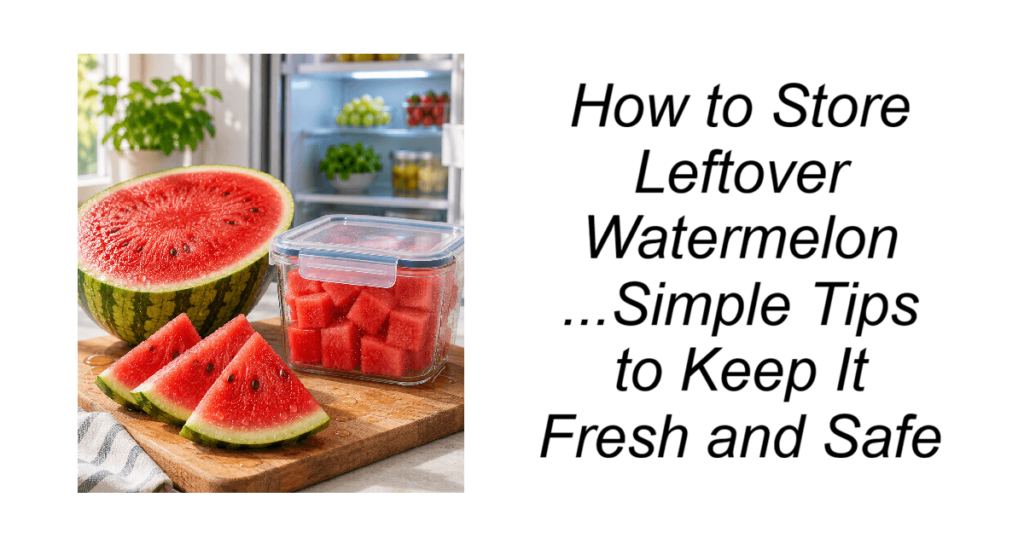
How to Store Leftover Watermelon …Simple Tips to Keep It Fresh and Safe
The picnic is over, the dishes have been cleared away, and there’s still half a watermelon sitting on the kitchen counter. It looks too delicious to waste, but what’s the best way to keep it fresh until tomorrow?
Should you simply cover it and put it in the fridge, or are there a few extra steps worth taking?
The truth is that keeping watermelon fresh involves more than choosing the right container. Whether the fruit is whole or already sliced, how long it has been sitting out, and how it was handled all play an important role.
The good news is that a few simple storage habits can help you enjoy every last juicy bite while avoiding food waste and keeping your leftovers safe to eat.
The Rind Offers Natural Protection—Until You Cut It
An uncut watermelon is naturally protected by its thick outer rind, which helps keep the juicy flesh inside fresh.
According to University of Georgia Extension, whole watermelons can generally last around seven to ten days at room temperature, or approximately two weeks when stored at temperatures below 60°F (15.5°C).
However, these are general guidelines rather than guarantees. The fruit’s freshness when purchased and the temperature at which it is stored can make a difference.
For the best results, keep an uncut watermelon in a cool place away from direct sunlight and sources of heat. Before purchasing one, check for cracks, leaking areas, soft patches, or signs of visible decay.
Remember, a watermelon stored in a hot kitchen may deteriorate much faster than one kept somewhere cooler.
Wash Your Watermelon Before Cutting It
It might seem unnecessary to wash a watermelon because nobody eats the rind. However, skipping this step can create an opportunity for bacteria and dirt on the outside to transfer to the edible flesh when you cut through it.
Before preparing your watermelon, take a moment to:
- Wash your hands thoroughly.
- Rinse the watermelon under clean running water.
- Gently scrub the rind with a clean produce brush.
- Dry it with a clean towel.
- Make sure your knife, chopping board, and work surface are clean.
Avoid using soap, detergent, or household cleaning products on the fruit.
The FDA recommends washing produce even when the outer skin or peel will not be eaten. It’s a simple precaution that can make food preparation safer.
Once You Cut It, Refrigeration Becomes Essential
Once a watermelon has been sliced, its protective rind is no longer enough to keep the exposed flesh safe.
For the best quality and food safety, store cut watermelon in the refrigerator and aim to eat it within three to four days. Health Canada recommends keeping cut melon refrigerated for no longer than four days.
Your refrigerator should be set to 40°F (4°C) or below.
If you’ve already cut the watermelon into smaller pieces, transfer them into a clean, airtight container. For larger wedges or half a watermelon, cover the exposed flesh tightly with food-safe cling film.
It’s also helpful to label the container with the date you prepared the fruit. This makes it easier to keep track of how long it has been stored.
A little organisation now can save you from discovering forgotten watermelon hiding at the back of the fridge later!
At Picnics and Outdoor Gatherings, Time Matters
Watermelon is a popular choice for summer picnics, barbecues, and outdoor parties. Unfortunately, warm weather can make food spoilage a greater concern.
Even if the slices still look bright, fresh, and delicious, that doesn’t necessarily mean they’ve been kept at a safe temperature.
As a general food-safety rule, discard cut watermelon that has been left unrefrigerated for more than two hours.
If the temperature is above 90°F (32°C), the safe limit drops to just one hour.
Putting the fruit back into the refrigerator afterwards does not reverse the time it has spent sitting out.
When serving watermelon outdoors, consider these simple precautions:
- Keep the main supply in a cooler with plenty of ice or frozen packs.
- Bring out smaller portions rather than placing all the fruit on the table.
- Refill the serving platter with chilled pieces when needed.
- Avoid leaving cut watermelon sitting in direct sunlight.
These small steps help keep your fruit fresh and your guests safe.
Prepare Watermelon in Portions That Suit Your Needs
A large watermelon doesn’t necessarily need to be cut into one enormous bowl of cubes.
Think about how you and your family prefer to enjoy it, and prepare portions accordingly.
Here are a few easy ideas:
- Watermelon sticks: Perfect for quick snacks and little hands.
- Fresh wedges: Ideal for picnics, barbecues, and sharing.
- Watermelon cubes: Convenient for fruit salads, breakfast bowls, and lunchboxes.
Use a stable chopping board and a sharp knife that you can handle safely. When cutting larger pieces, create a flat surface first to help prevent the fruit from slipping.
It’s also worth considering how much watermelon your household can realistically eat over the next few days. If you regularly find yourself throwing away leftovers, buying a smaller melon might be a more practical option.
Give Leftover Watermelon a Delicious Second Life
If you’re worried about having too much watermelon to finish, don’t assume it all has to be eaten in exactly the same way.
A few simple additions can make leftover fruit feel like an entirely different treat.
Try adding a squeeze of fresh lime juice and a few mint leaves for a refreshing snack. You can also blend chilled watermelon into a smoothie, prepare a fresh fruit salad, or add small pieces to a refreshing summer drink.
Freezing is another useful option.
Cut the watermelon into cubes, arrange them in a single layer on a lined baking tray, and freeze until solid. Once frozen, transfer the pieces into a suitable freezer container or bag.
Keep in mind that watermelon becomes softer after thawing because of its high water content. Frozen pieces are therefore better suited to smoothies, blended drinks, and other recipes than to a fresh fruit platter.
Always freeze watermelon while it is still fresh and has been handled safely.
Know When It’s Time to Throw It Away
Sometimes, despite your best efforts, leftover watermelon simply doesn’t last.
Watch out for visible mould, an unpleasant sour smell, or a slimy texture. These are warning signs that the fruit should be discarded.
However, it’s important to remember that harmful bacteria don’t always produce noticeable changes in appearance, smell, or taste. Never rely on a quick sniff or taste test to determine whether watermelon is safe to eat.
If it has been left out for too long or stored incorrectly, it’s safer to throw it away.
A Little Planning Can Help You Waste Less Watermelon
Watermelon is one of those fruits that’s difficult to resist, especially on a warm day. But when half of it is left over after a picnic or family gathering, knowing how to store it properly makes all the difference.
Keep whole melons somewhere cool, wash the rind before cutting, refrigerate prepared pieces promptly, and use airtight containers to protect the exposed flesh.
Most importantly, remember that safe storage begins before the first slice is served.
With a little preparation, you can enjoy that leftover watermelon the following day without unnecessary waste—and look forward to another refreshing, juicy treat.
You’ve just read How to Store Leftover Watermelon. Why not read My 3-Year-Old Grandson Refused to Call Me Grandma