
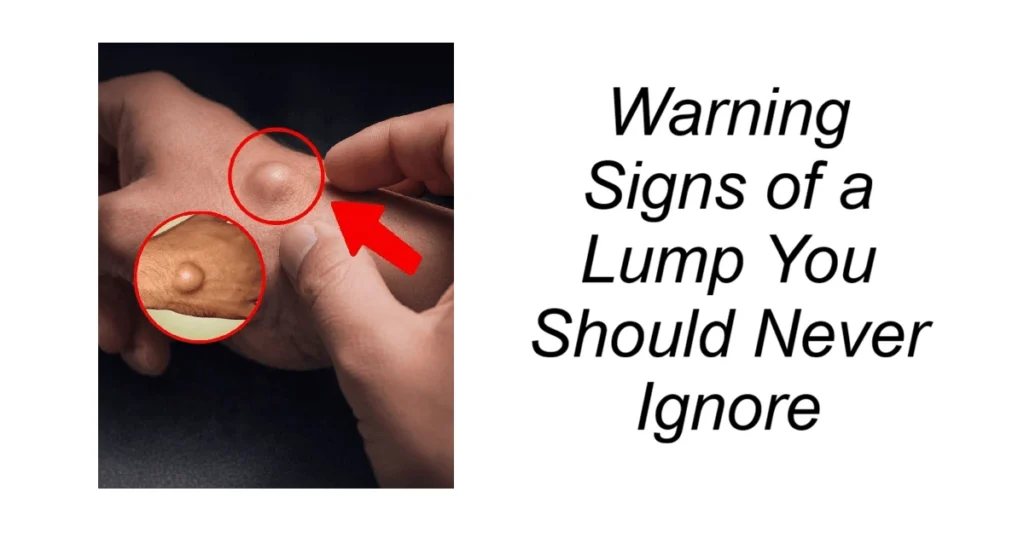
Warning Signs of a Lump You Should Never Ignore
Finding a lump on your body can be frightening. Whether you notice it under your skin, around your neck, or in another part of your body, it’s natural to wonder what it means.
The good news is that many lumps are harmless. Common causes include cysts, lipomas (fatty growths), swollen lymph nodes, and infections. However, some lumps may require medical attention, particularly if they change over time or appear alongside other unexplained symptoms.
So, how do you know when a lump needs checking? Here are five important warning signs to look out for.
1. The Lump Is Gradually Getting Bigger
One of the most important changes to watch for is growth.
A lump that gradually increases in size over several weeks or months should be assessed by a healthcare professional. Although growth does not automatically mean cancer, it can indicate that something needs further investigation.
Pay attention to whether the lump becomes more noticeable, changes shape, or starts affecting the surrounding area. You can make a note of when you first noticed it and any changes you observe.
Why it matters: A growing lump may be caused by a benign condition, but identifying the underlying cause is important for determining whether treatment is needed.
2. It Feels Hard or Doesn’t Move Under the Skin
Another clue is how the lump feels when you touch it.
Some harmless lumps, such as lipomas, are typically soft and may move slightly beneath the skin. Cysts can have a different texture, depending on their contents and location.
A lump that feels unusually hard, is firmly attached to surrounding tissue, or does not move easily deserves medical assessment. However, texture alone cannot tell you whether a lump is cancerous.
What to do: Avoid repeatedly squeezing or pressing the lump to test it. If it feels unusual or you are unsure what it is, arrange an appointment with your doctor.
3. The Skin Around the Lump Changes
Sometimes, the surrounding skin provides additional clues.
Watch for changes such as:
- Persistent redness or unusual warmth.
- Dimpling or thickening of the skin.
- Skin that becomes swollen or changes appearance.
- A sore that does not heal.
These changes can result from infections, inflammation, and other conditions. In some cases, they may signal a more serious underlying problem.
If a lump develops alongside noticeable skin changes, particularly if those changes persist or worsen, seek medical advice rather than assuming they will resolve on their own.
4. You Experience Other Unexplained Symptoms
A lump can sometimes appear alongside symptoms that affect the rest of your body.
These may include:
- Unintentional weight loss.
- Persistent or unexplained fever.
- Night sweats that are not related to room temperature.
- Unusual or ongoing fatigue.
- A general feeling of being unwell.
These symptoms can have many possible causes, and they do not necessarily indicate cancer. However, when they occur alongside a persistent or changing lump, they are worth discussing with a healthcare professional.
The key is to look at the bigger picture. Your doctor can consider your symptoms, medical history, and the lump’s characteristics to decide whether further tests are necessary.
5. The Lump Persists or Keeps Coming Back
Not every concerning lump grows quickly or causes pain. Some remain relatively small or change very little over time.
A lump that persists without an obvious explanation, repeatedly returns after disappearing, or does not improve as expected should be checked. This is particularly important if it is new or accompanied by other changes.
Although a stable lump may be less concerning than one that is rapidly growing, stability alone does not guarantee that it is harmless.
If you have noticed a new lump and are unsure what caused it, getting medical advice is safer than relying on its appearance or size alone.
Does a Lump Always Mean Cancer?
Absolutely not. Many lumps are caused by non-cancerous conditions, including cysts, lipomas, swollen lymph nodes, and minor infections.
Even lumps that feel hard, grow over time, or appear alongside other symptoms can have benign explanations. Equally, some serious conditions may not cause obvious warning signs in their early stages.
That is why self-diagnosis can be misleading. A healthcare professional may examine the lump and, depending on the findings, recommend an ultrasound, blood tests, or another investigation.
You should seek medical advice for an unexplained lump, especially if it is growing, persistent, hard, fixed, or accompanied by other symptoms. If a lump is rapidly enlarging, very painful, red, or hot, seek prompt medical assessment.
What Should You Do If You Find a Lump?
If you discover a lump, try not to panic. Instead, take a few sensible steps:
- Notice when it appeared. Think about when you first became aware of it and whether it has changed.
- Look for other symptoms. Pay attention to changes in the surrounding skin, pain, fever, or unexplained weight loss.
- Avoid squeezing it. Repeatedly pressing or manipulating a lump can irritate the area.
- Arrange a medical appointment. A doctor can assess the lump and determine whether further investigation is needed.
You do not need to wait for a lump to become painful or noticeably larger before seeking advice.
The Bottom Line
Finding a lump can be worrying, but it is important to remember that many lumps are harmless and treatable. The most useful things to watch for are changes in size, texture, mobility, surrounding skin, and any additional unexplained symptoms.
No single warning sign can confirm whether a lump is serious. However, noticing changes and seeking medical advice when something seems unusual can help you get the right assessment without unnecessary delay.
If you discover a new or unexplained lump, don’t ignore it or assume the worst. Get it checked, find out what is causing it, and take the next steps based on professional advice.
Your health is worth the reassurance.
You’ve just read Warning Signs of a Lump You Should Never Ignore. Why not read Powder Keeps Appearing Under Your Vents