
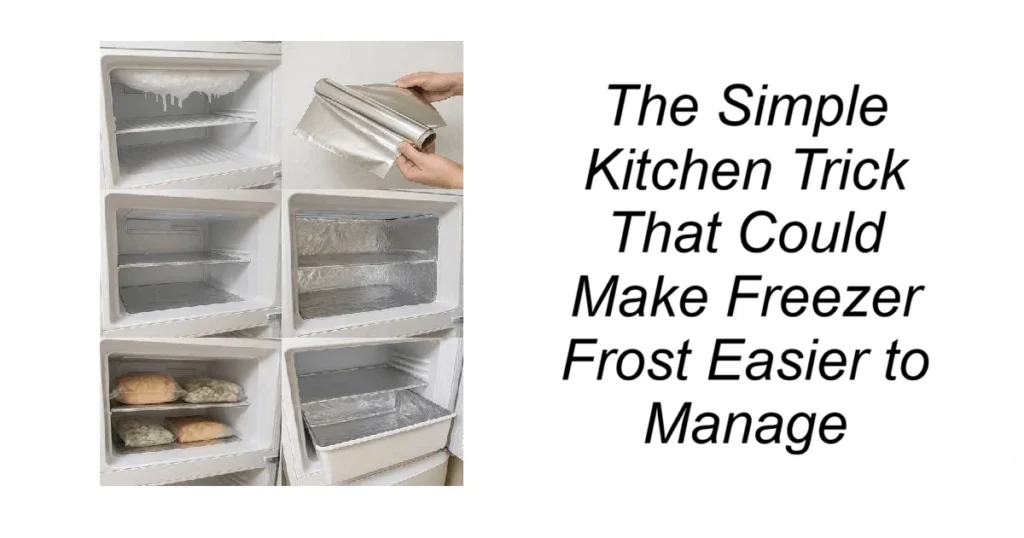
The Simple Kitchen Trick That Could Make Freezer Frost Easier to Manage
Freezer frost is one of those annoying household problems that seems harmless at first. A thin layer of white ice appears along the walls or around the edges of the drawers, and it’s easy to ignore. But give it enough time, and that delicate coating can turn into thick, stubborn ice that takes over valuable storage space.
Suddenly, freezer drawers refuse to slide open, food packages become frozen together, and finding a bag of frozen vegetables becomes more difficult than it should be.
The usual solution? Defrosting the freezer. Unfortunately, that means removing the food, dealing with melting ice and water, and waiting for everything to return to normal. It’s no wonder many people put it off for as long as possible.
But what if there were a simpler way to make freezer maintenance less of a chore?
You may have heard about using aluminum foil to help manage freezer frost. It’s an inexpensive household item with several practical uses, but before trying this trick, it’s worth understanding what it can—and cannot—do.
Why Freezer Frost Is More Than Just an Eyesore
Frost develops when moisture enters the freezer, usually through warm, humid air that gets inside when the door is opened or when the door seal fails to close properly. That moisture freezes on cold surfaces, gradually creating layers of ice.
Over time, excessive frost can cause several problems:
- Less storage space: Thick ice takes up room that could be used for food.
- Stubborn drawers: Ice buildup can make drawers and compartments difficult to open.
- More difficult maintenance: Heavy frost takes longer to remove and can make cleaning a messy job.
- Potentially higher energy consumption: Excessive ice can interfere with normal operation, particularly in appliances that are not designed to manage frost automatically.
Even a small amount of frost can become frustrating when it repeatedly returns. The key is to tackle the underlying cause rather than simply removing the ice whenever it becomes too thick.
The Aluminum Foil Trick Explained
Aluminum foil is commonly used for cooking, food storage and cleaning tasks. Some household tips also recommend using it inside the freezer to make frost easier to remove.
The idea is straightforward: a smooth, removable surface may be easier to clean than a textured surface where ice and food residue can collect.
However, aluminum foil is not a proven way to prevent freezer frost from forming. It does not stop moisture from entering the appliance, and it should not be treated as a replacement for proper defrosting or maintenance.
There is also an important safety consideration. Lining freezer shelves, walls or the area around drawers with foil can obstruct airflow, interfere with temperature sensors or affect the appliance’s intended operation. For that reason, don’t line the freezer interior unless the manufacturer specifically permits it.
Fortunately, there are other simple ways to make frost less troublesome.
What Actually Causes Frost to Build Up?
Understanding the source of the problem is often the best way to prevent it from returning.
1. Warm, Moist Air Entering the Freezer
Every time the freezer door opens, some warm air can enter. When that air cools, moisture may freeze onto the interior surfaces.
Try to organise your frozen food so you can find what you need quickly, reducing the time the door stays open.
2. A Damaged or Dirty Door Seal
The rubber gasket around the door helps keep warm air out. If it is dirty, cracked or worn, humid air may enter even when the door appears to be closed.
Wipe the seal clean and check that it sits firmly against the freezer cabinet. If it is damaged or no longer seals properly, it may need replacing.
3. Putting Warm Food Inside
Food that is still hot releases heat and moisture into the freezer. Allow freshly cooked food to cool appropriately before freezing it, following food-safety guidance and avoiding leaving perishable food at room temperature for too long.
4. Blocked Air Vents
Freezer vents help distribute cold air throughout the compartment. Packing food tightly against them can interfere with circulation and may contribute to uneven cooling.
Leave the manufacturer’s recommended clearance around vents and avoid overcrowding the freezer.
How to Make Defrosting Easier
If your freezer has developed a thick layer of ice, proper defrosting is usually the most effective solution.
Here’s how to make the job more manageable:
- Remove the food. Store frozen items in a suitable insulated cool box or another freezer while you work.
- Switch off the appliance. Follow the manufacturer’s defrosting instructions.
- Protect the surrounding area. Place towels around the base to collect melting water.
- Allow the ice to melt naturally. Use only methods approved by the manufacturer.
- Clean and dry the interior. Remove any remaining water before restarting the appliance.
- Check the door seal and airflow. Address any obvious causes of recurring frost.
Never use knives, screwdrivers or other sharp tools to chip away ice. Avoid boiling water, hairdryers and other improvised heating methods unless the manufacturer explicitly recommends a safe procedure.
These methods can damage the freezer lining, electrical components or cooling system.
Can Reducing Frost Help Lower Energy Bills?
Potentially, yes—but the effect depends on the freezer and the amount of ice present.
A heavy frost buildup can interfere with heat transfer and normal operation in some freezers, meaning the appliance may have to work harder to maintain the required temperature. Keeping the freezer properly maintained can therefore help it operate as intended.
However, aluminum foil itself does not directly reduce electricity consumption, and there is no guarantee that using it will lower your energy bill.
For better results, keep the door seal in good condition, maintain suitable airflow, follow the manufacturer’s defrosting recommendations and ensure the temperature is set correctly.
A Few Simple Habits That Can Prevent Frost
Small changes to your everyday routine can make a noticeable difference over time.
- Open the door only when necessary. Decide what you need before opening the freezer.
- Check the door closes fully. Make sure food packages aren’t preventing it from shutting.
- Inspect the seals regularly. Clean them and look for signs of wear.
- Keep vents clear. Follow the appliance’s guidance on food placement.
- Use the correct temperature setting. Your freezer should generally be kept at around -18°C.
- Defrost when necessary. Follow your appliance manual, particularly if it isn’t a frost-free model.
If frost returns unusually quickly, don’t simply keep removing it. Persistent ice buildup may indicate a door-seal problem, a faulty component or another issue that requires attention.
The Takeaway: A Little Prevention Goes a Long Way
Aluminum foil may be useful for many everyday household tasks, but using it to line the inside of a freezer isn’t a universally recommended frost-prevention method. Depending on the appliance, it can interfere with airflow or other components.
The better approach is to identify why frost is forming, keep the door seal in good condition, avoid blocking vents and defrost the appliance according to the manufacturer’s instructions.
These small steps can help keep your freezer cleaner, easier to use and operating as intended—without turning a simple household chore into a bigger problem.
Sometimes, the most effective household trick isn’t adding another material to the appliance. It’s making a few small changes that stop the problem from returning in the first place.
You’ve just read Trick That Could Make Freezer Frost Easier to Manage. Why not read Found Something Strange Growing on a Tree