
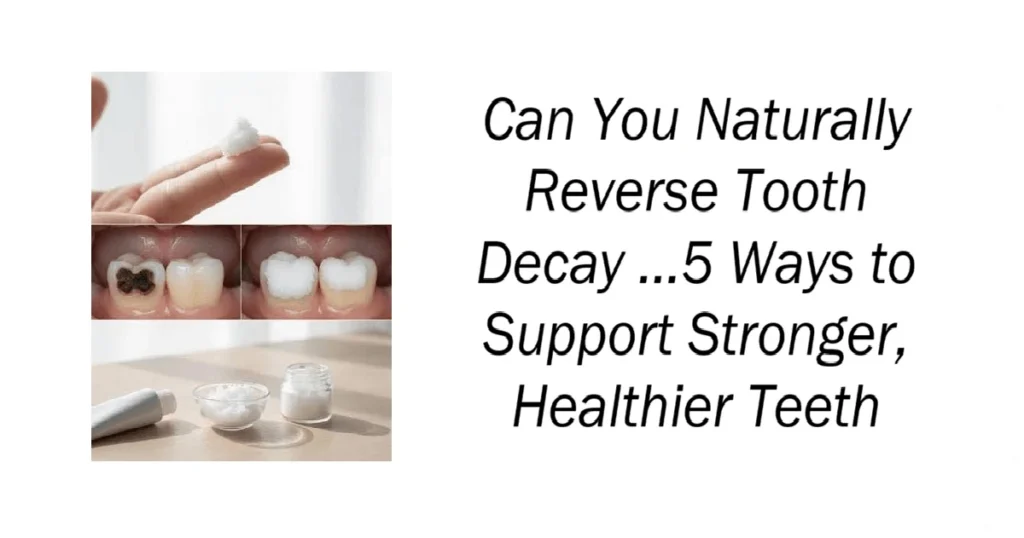
Can You Naturally Reverse Tooth Decay …5 Ways to Support Stronger Healthier Teeth
Have you ever felt a sudden twinge when sipping a cold drink or noticed a suspicious spot on your tooth? If so, you’re not alone. Tooth decay is a common oral health problem that can affect people at any age, even those who brush and floss regularly.
For many people, the thought of a dental appointment brings anxiety, especially when they suspect they might need a filling. The good news is that early tooth decay can sometimes be reversed before a cavity fully develops. With the right oral hygiene habits, dietary choices, and professional guidance, you can support your teeth’s natural remineralization process and help prevent further damage.
But there’s an important distinction: early enamel damage may be reversible, while an established hole in a tooth generally requires dental treatment. Understanding the difference can help you protect your smile without relying on unproven home remedies.
Let’s explore five practical ways to support healthier teeth and reduce your risk of cavities.
Understanding Tooth Decay: Can Your Teeth Repair Themselves?
Tooth enamel is the hard outer layer that protects your teeth. Throughout the day, acids produced by bacteria in dental plaque can remove minerals from enamel. This process is known as demineralization.
Fortunately, your saliva helps restore some of those minerals, particularly calcium and phosphate. This natural repair process is called remineralization.
When mineral loss is detected early, before a hole forms, the damage may be stopped or partially reversed. Fluoride toothpaste and professional fluoride treatments can help strengthen enamel and support this process.
However, once decay creates a cavity, the tooth cannot reliably rebuild the missing structure on its own. A dentist can determine whether the affected area can be managed without drilling or requires a filling or another treatment.
The goal, therefore, is not to avoid the dentist altogether. It’s to catch problems early and give your teeth the best possible chance of staying healthy.
Tip #1: Support Enamel with Essential Minerals
Calcium and phosphate are important building blocks of tooth enamel. Getting enough essential nutrients through a balanced diet supports healthy teeth, gums, and bones.
Consider including these foods in your daily routine:
- Dairy products: Milk, cheese, and plain yogurt provide calcium and other valuable nutrients.
- Leafy green vegetables: Options such as kale and broccoli contribute minerals and other nutrients.
- Fish: Sardines and other edible-bone fish can provide calcium, while oily fish can contribute vitamin D.
- Nuts and seeds: Almonds, sesame seeds, and other varieties can contribute minerals as part of a balanced diet.
Saliva also plays an essential role by delivering minerals to the tooth surface and helping neutralize acids.
Rather than relying on homemade remineralizing rinses or unverified recipes, focus on a balanced diet, good oral hygiene, and fluoride toothpaste. If you suspect a cavity, arrange a dental examination to establish what treatment is needed.
Tip #2: Reduce Sugar Exposure and Consider Sugar-Free Gum
Cavity-causing bacteria use sugars from food and drinks to produce acids that attack enamel. The more frequently your teeth are exposed to these acids, the less opportunity they have to recover between meals.
You can help reduce this risk by making a few simple changes:
- Limit sugary snacks and drinks, particularly between meals.
- Choose water instead of frequently sipping sugary beverages.
- Avoid repeatedly snacking throughout the day.
- Chew sugar-free gum after meals if appropriate for you.
Sugar-free gum stimulates saliva production, helping wash away food particles and neutralize acids. Some varieties contain xylitol, a sweetener that oral bacteria cannot use in the same way as ordinary sugar. Xylitol may offer additional benefits, although the strength of the evidence varies.
Remember that sugar-free gum is an additional preventive measure, not a substitute for brushing, cleaning between your teeth, or professional dental care.
Tip #3: Get the Nutrients Your Teeth Need
Vitamins and minerals contribute to overall oral health, but supplements are not a guaranteed way to repair cavities.
Vitamin D helps your body absorb calcium, while vitamins A and K have important roles in other bodily functions, including maintaining healthy tissues. A balanced diet can help you obtain these nutrients.
Foods worth including in your meals include:
- Eggs and oily fish for vitamin D.
- Carrots, sweet potatoes, and leafy greens for vitamin A.
- Green vegetables and other nutrient-rich foods for vitamin K.
- Dairy products, beans, nuts, and seeds for a range of essential minerals.
If you think you have a nutritional deficiency, speak with a healthcare professional before starting supplements. High doses of certain vitamins can cause harm, and taking additional nutrients will not replace treatment for an existing cavity.
The key takeaway: Good nutrition supports healthy teeth, but no specific combination of vitamins has been proven to regrow a tooth or reliably heal an established cavity.
Tip #4: Protect Your Mouth’s Natural Defences
Your saliva is one of your body’s most important natural defences against tooth decay. It helps neutralize acids, clear food debris, and supply minerals that support enamel.
Fortunately, several everyday habits can help maintain a healthier oral environment.
Stay hydrated
Drink water regularly throughout the day. If your mouth frequently feels dry, discuss it with your dentist or healthcare professional, as some medications and health conditions can reduce saliva production.
Brush and clean between your teeth
Brush twice daily for two minutes using fluoride toothpaste, and clean between your teeth every day with floss or interdental brushes.
After brushing, spit out the toothpaste rather than rinsing immediately with water. This helps retain fluoride on your teeth.
Be mindful of acidic foods and drinks
Frequent exposure to acidic drinks, including fizzy drinks and fruit juices, can contribute to enamel erosion. Try to limit how often you consume them and avoid brushing immediately after an acidic drink.
Keep regular dental appointments
Dental check-ups can identify early changes before they become more serious. Your dentist can also recommend preventive treatments based on your individual risk.
Tip #5: Choose Toothpaste That Supports Remineralization
The toothpaste you use every day can make a meaningful difference to your oral health.
Fluoride toothpaste
Fluoride helps strengthen enamel, makes teeth more resistant to acid attacks, and supports remineralization in the early stages of tooth decay. For most adults, brushing twice daily with fluoride toothpaste is one of the most effective ways to help prevent cavities.
Your dentist may recommend a higher-strength fluoride product if you have an increased risk of decay.
Hydroxyapatite toothpaste
Hydroxyapatite is a mineral similar to the main mineral component of teeth. Some toothpastes containing hydroxyapatite may help reduce sensitivity and support enamel repair, and research into their effectiveness is ongoing.
However, evidence varies between products and studies. Do not assume that a hydroxyapatite toothpaste will repair an established cavity or that it is necessarily more effective than fluoride toothpaste.
What about homemade toothpastes?
Be cautious with homemade mixtures containing abrasive powders, clay, or essential oils. These preparations may not provide reliable cavity protection and could irritate your mouth or damage tooth surfaces, depending on their ingredients.
Choose a reputable toothpaste formulated for oral health, and ask your dentist which option is most suitable for your needs.
What About Oil Pulling?
Oil pulling involves swishing edible oil, such as coconut oil, around the mouth before spitting it out. Although it is sometimes promoted as a natural method for removing bacteria or reversing tooth decay, reliable evidence that it prevents or reverses cavities is lacking.
If you enjoy the practice, it should never replace brushing with fluoride toothpaste, cleaning between your teeth, or dental treatment.
Similarly, no homemade rinse can reliably rebuild a tooth once decay has created a hole.
When Should You See a Dentist?
Although preventive habits can make a real difference, certain symptoms should not be ignored.
Arrange a dental appointment if you notice:
- Persistent tooth sensitivity or toothache.
- White, brown, or black spots on your teeth.
- Pain when eating or drinking hot, cold, or sweet foods.
- A visible hole, rough area, or damaged tooth.
- Pain that keeps returning or gradually becomes worse.
Seek urgent dental care for severe or worsening pain, facial swelling, or signs of infection. Difficulty breathing or swallowing, particularly with significant swelling, requires emergency medical attention.
Early assessment may allow a dentist to recommend preventive or non-invasive treatment. If a cavity has already formed, a filling or another procedure may be necessary.
Your Daily Oral Health Checklist
Small, consistent habits can help protect your smile over time.
- Brush twice a day for two minutes with fluoride toothpaste.
- Clean between your teeth daily.
- Limit sugary foods and drinks, especially between meals.
- Drink water regularly.
- Eat a balanced diet that provides essential nutrients.
- Consider sugar-free gum to stimulate saliva after meals.
- Keep up with recommended dental check-ups.
- Seek advice promptly if you notice pain, sensitivity, or visible tooth changes.
Final Thoughts: Support Your Teeth, Don’t Ignore Them
Natural remineralization is a real process, and supporting it can help protect your enamel and reverse some forms of very early tooth decay. A balanced diet, adequate saliva, sensible sugar habits, and consistent fluoride use all contribute to healthier teeth.
However, it is important to separate evidence-based prevention from claims that promise to heal every cavity naturally. Supplements, oil pulling, and homemade pastes are not substitutes for a professional assessment.
The best approach combines daily preventive care with timely dental advice. By looking after your teeth consistently and addressing problems early, you can reduce your risk of more extensive treatment and give your smile the best chance of staying healthy for years to come.
If you suspect you already have a cavity, book a dental appointment rather than waiting for home remedies to work.
You’ve just read Can You Naturally Reverse Tooth Decay. Why not read I Refused to Give My Grown Son Money for a New Car