
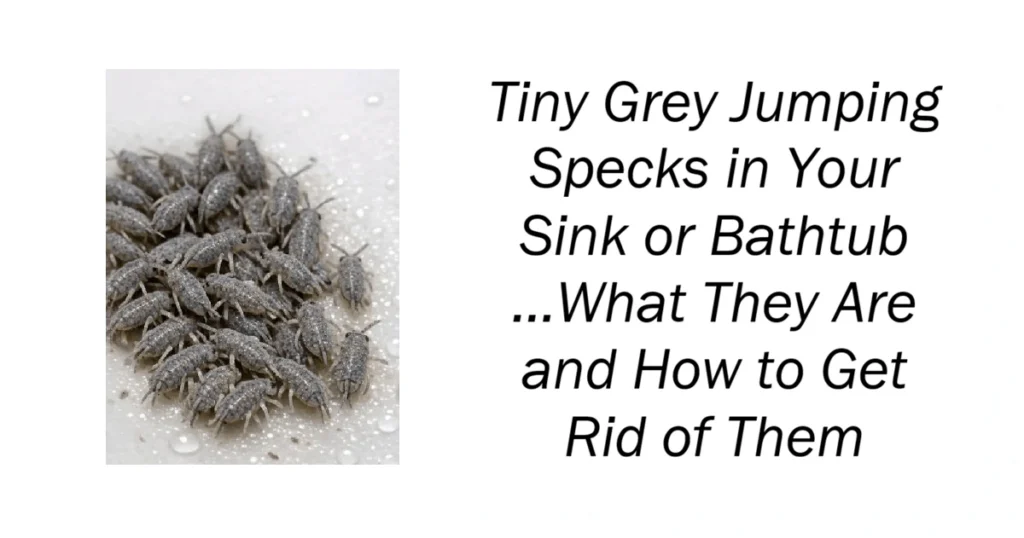
Tiny Grey Jumping Specks in Your Sink or Bathtub …What They Are and How to Get Rid of Them
Have you ever walked into your bathroom, glanced into the bathtub or sink, and noticed tiny grey specks suddenly jumping around? At first, they might look like dust or bits of dirt. But when those little specks start moving unpredictably, it’s natural to wonder what they are, where they came from, and whether they’re a sign of a bigger problem.
The good news is that these tiny jumpers are often springtails, harmless creatures commonly found in damp environments. Although they don’t pose a direct threat to people, their presence can sometimes point to excess moisture, condensation, or hidden damp spots around your home.
So, should you be worried? Not necessarily. Understanding what these creatures are, why they appear, and how to prevent them can help you tackle the problem before it becomes a recurring nuisance.
Let’s take a closer look at those mysterious jumping specks and discover what you can do about them.
1. What Are Those Tiny Grey Jumping Specks in Your Bathroom?
If you’ve spotted tiny grey specks jumping around your sink, bathtub, or shower, springtails are one possible explanation.
Springtails are very small, wingless arthropods belonging to the group Collembola. Most are only around 1–2 millimetres long, which makes them difficult to identify without looking closely. Their colour varies, ranging from grey and white to brown or darker shades.
What makes springtails particularly noticeable is their unusual jumping ability. When disturbed, they can use a specialised structure called a furcula to propel themselves into the air. This sudden movement can make them appear to vanish and reappear in a completely different spot.
Springtails thrive in damp environments and feed mainly on fungi, mould, algae, and decaying organic matter. Bathrooms and kitchens can therefore provide suitable conditions for them, especially where condensation, moisture, and organic debris accumulate.
The important thing to remember: Finding springtails doesn’t automatically mean your plumbing is faulty or your home is dirty. However, it’s worth investigating why the area is staying damp.
2. How to Tell Springtails Apart From Fleas, Bedbugs, and Dust Mites
Tiny household pests can look surprisingly similar at first glance. However, their behaviour and preferred environments can offer useful clues.
Here’s how to distinguish springtails from some of the other common culprits.
- Springtails: Usually tiny, often grey or pale, and capable of sudden jumps. They’re commonly found in damp areas and don’t bite people.
- Fleas: Typically darker, laterally flattened insects that jump quickly. They’re parasitic and may bite people or pets, often causing itchy marks.
- Bedbugs: Generally larger and reddish-brown, with flat, oval-shaped bodies. They crawl rather than jump and are usually associated with sleeping areas.
- Dust mites: Microscopic organisms that cannot be seen clearly with the naked eye. They don’t jump and are commonly associated with household dust, bedding, and upholstered furniture.
If the specks are appearing around a wet sink or bathtub and seem to spring away when disturbed, springtails are a possibility. However, appearance alone isn’t enough to confirm their identity.
If you’re unsure, take a close-up photograph or collect a specimen for identification before choosing a treatment.
3. Why Are Tiny Jumping Specks Suddenly Appearing in Your Sink and Bathtub?
One day, your bathroom looks perfectly normal. The next, tiny jumping specks seem to be everywhere. What causes this sudden appearance?
In many cases, the answer comes down to moisture.
Springtails need damp conditions to survive and reproduce. Bathrooms and kitchens can provide plenty of suitable hiding places, particularly around sinks, shower trays, bath seals, and areas where condensation regularly forms.
Several factors may contribute to their appearance:
- High humidity: Poor ventilation allows moisture to linger in the air and settle on surfaces.
- Leaking plumbing: Even a small, slow leak can create a persistently damp environment.
- Mould and mildew: These provide food sources for many springtails.
- Heavy rainfall: Wet weather can increase outdoor moisture and encourage springtails to move indoors.
- Seasonal changes: Warmer, wetter conditions can increase springtail activity and make them more noticeable.
It’s also worth checking whether the specks are actually coming from the drain, rather than simply gathering around it. Springtails are often attracted to moisture around plumbing fixtures, but their presence doesn’t necessarily mean they’re breeding inside the pipes.
4. Hidden Moisture Sources in Bathrooms and Kitchens You Might Be Missing
Sometimes, the biggest moisture problems are the ones you barely notice.
A bathroom can look clean and dry while hidden areas remain damp enough to attract springtails. The same is true in kitchens, particularly around sinks, appliances, and cupboards.
Start by checking these often-overlooked spots:
- Underneath kitchen and bathroom sinks, where small leaks can go unnoticed.
- Around taps, pipe connections, and waste fittings.
- Along the edges of bathtubs, shower trays, and silicone seals.
- Behind washing machines, dishwashers, and other water-using appliances.
- Under damp bathmats, sponges, and cleaning cloths.
- Around windows and external walls where condensation develops.
- Inside cupboards or corners where air circulation is poor.
Pay particular attention to areas that remain damp long after you’ve finished bathing or washing dishes.
Wiping away standing water, drying wet fabrics, improving ventilation, and repairing damaged seals can all help make these areas less attractive to springtails.
5. When Could a Springtail Infestation Signal a Plumbing Problem?
Seeing a few springtails doesn’t necessarily mean you have a plumbing problem. However, a persistent or unusually large number of them can be a useful reason to investigate moisture levels more closely.
For example, if springtails repeatedly appear beneath a sink, around a toilet, or near a bath panel, there could be a hidden source of dampness nearby.
Look for additional warning signs, including:
- Water stains on walls, ceilings, or cupboards.
- Musty smells that linger even after cleaning.
- Peeling paint, bubbling wallpaper, or damaged flooring.
- Visible mould around seals or behind furniture.
- Damp patches that keep returning after you dry them.
These signs don’t prove that a leak is present, but they suggest that further investigation may be needed.
Don’t focus on eliminating the insects alone. If excess moisture is the underlying cause, treating the springtails without correcting the conditions that attract them may only provide temporary relief.
6. Simple Checks You Can Do Today to Look for Leaks and Dampness
Before calling in a professional, there are several straightforward checks you can carry out around your home.
Check beneath sinks and around plumbing fixtures
Open the cupboards beneath your sinks and inspect the pipes, joints, and surrounding surfaces. Look for droplets, damp patches, swollen wood, or signs of water damage.
Check around the base of toilets and the edges of baths and showers, too. Avoid dismantling plumbing unless you’re confident doing so safely.
Monitor your indoor humidity
A small device called a hygrometer can help you measure indoor relative humidity.
A commonly recommended indoor range is around 30–50%, although appropriate levels depend on the building, climate, and circumstances. If your home regularly feels damp or condensation persists, improving ventilation and investigating the source of the moisture may help.
Look for signs of persistent condensation
Check windows, external walls, and corners of rooms, especially after showering or cooking. Use extractor fans where available and allow damp areas to dry.
Check your water meter if you suspect a leak
If you have a water meter, turn off taps and appliances that use water and make sure no one is using water during the test. Record the reading and check it again after a suitable interval.
Unexpected movement may indicate water use or a possible leak, but meter behaviour varies. Some leaks may be intermittent, so a steady reading doesn’t rule out every plumbing problem.
If you find clear evidence of a leak or dampness that you cannot explain, arrange a professional inspection.
7. Easy Cleaning Tips to Get Rid of Springtails
Once you’ve spotted springtails, it’s tempting to reach for the strongest insecticide you can find. In reality, reducing moisture is usually the most important first step.
Here’s how to tackle the problem.
Step 1: Remove visible springtails
Wipe affected surfaces with a damp cloth or use a vacuum cleaner to remove visible insects. Empty the vacuum promptly and clean the area afterwards.
Step 2: Clean away mould and organic debris
Clean suitable hard surfaces with an appropriate household cleaner, following the product instructions. Pay particular attention to corners, seals, and areas where grime accumulates.
Never mix cleaning products, especially bleach with vinegar or other acidic cleaners, because dangerous gases can be released.
Step 3: Dry the affected area thoroughly
Use an extractor fan, open a window when practical, and wipe away standing water. Allow bathmats, towels, and cleaning cloths to dry fully between uses.
Step 4: Reduce access to damp hiding places
Repair damaged seals where necessary, seal suitable cracks and gaps, and investigate any persistent damp patches.
Step 5: Be cautious with insecticides
Diatomaceous earth and other insect-control products are sometimes recommended for crawling insects, but they aren’t always necessary or suitable for wet bathroom environments. Dust products can also irritate the lungs and eyes.
If you choose to use a pesticide, select one specifically labelled for the intended pest and location, and follow all safety instructions. Avoid applying powders or chemicals directly into drains unless the product explicitly permits that use.
In most cases, drying the area and removing the conditions that support springtails is more useful than relying on insecticides alone.
8. How to Make Your Home Less Attractive to Springtails Long-Term
Getting rid of the springtails you can see is only half the job. The real goal is to stop them from returning.
Fortunately, a few simple habits can make a difference.
- Fix leaks promptly. Repair dripping taps, faulty pipe connections, and damaged seals.
- Improve ventilation. Use extractor fans during and after showers or cooking, and make sure they work effectively.
- Keep surfaces dry. Wipe sinks, shower trays, and windowsills where water regularly collects.
- Wash and dry bathmats. Damp textiles can retain moisture for hours.
- Check hidden spaces regularly. Inspect under sinks, behind appliances, and inside cupboards.
- Address mould early. Clean small areas appropriately and investigate recurring growth rather than repeatedly wiping it away.
- Reduce outdoor moisture near the building. Where practical, keep drainage clear and avoid allowing water to collect against external walls.
You don’t need to maintain a perfectly sterile home to discourage springtails. The priority is to prevent persistent dampness and remove the conditions in which they thrive.
9. DIY Springtail Treatments: When to Handle It Yourself and When to Call a Professional
For a small number of springtails in a bathroom or kitchen, DIY measures are often a sensible starting point.
Improving ventilation, removing visible insects, cleaning affected surfaces, and correcting moisture problems may be enough to resolve the issue.
However, there are situations where professional help is worth considering.
DIY measures may be suitable when:
- You’ve spotted only a few insects.
- They appear in one damp area.
- You can identify and correct the likely moisture source.
- Their numbers decline as the area dries.
Consider professional assistance when:
- Springtails continue appearing despite your efforts.
- They’re present in several rooms.
- You suspect a concealed leak or persistent damp problem.
- Mould keeps returning or water damage is visible.
- You cannot confidently identify the insects.
A pest-control professional can help identify the species and recommend an appropriate treatment. If the problem is related to dampness, a plumber or damp specialist may also be needed.
10. Should You Call a Plumber, an Exterminator, or Both?
Choosing the right professional depends on what’s causing the problem.
Call a plumber if you suspect a leak
If you notice dripping pipes, damp cupboards, water stains, or moisture around plumbing connections, a plumber can inspect the system and repair faults.
Call pest control if the insects persist
If the springtails remain widespread after moisture problems have been addressed, a pest-control professional can help confirm their identity and assess whether additional treatment is necessary.
Consider both if the problem has multiple causes
In some homes, a plumbing fault creates the damp conditions that attract springtails. A plumber can resolve the water problem, while a pest-control professional can advise on managing any continuing insect activity.
The key is to address the underlying cause rather than repeatedly treating the visible symptoms.
11. Are Tiny Jumping Specks in Your Bathroom Harmful to Your Health?
The reassuring news is that springtails are generally considered harmless to people. They don’t bite, sting, or feed on human blood, and they aren’t known to transmit human diseases.
However, their presence can draw attention to another issue: excess moisture.
Persistent dampness can encourage mould growth, and mould may trigger allergic reactions or aggravate respiratory symptoms in susceptible people. That’s why recurring damp patches, musty odours, and visible mould deserve attention even when the insects themselves aren’t dangerous.
If you’re finding springtails in your bathroom, there’s no need to panic. Instead, use their presence as a reason to check for dampness, improve ventilation, and make sure your plumbing is in good condition.
Final Thoughts: What Should You Do About Tiny Grey Jumping Specks?
Finding tiny grey specks jumping around your sink or bathtub can be unsettling, especially when you have no idea where they’ve come from.
In many cases, springtails are a likely explanation. These tiny creatures prefer damp environments, and their appearance often points towards moisture rather than a serious pest problem.
Start by cleaning the affected area, drying surfaces thoroughly, checking for leaks, and improving ventilation. If the insects keep returning or you notice signs of water damage, investigate further and seek professional advice where needed.
Ultimately, the best long-term solution is to make your home less damp and less welcoming to springtails. By tackling moisture at its source, you can reduce their numbers and help keep your bathroom and kitchen clean, dry, and comfortable.
You’ve just read Tiny Grey Jumping Specks in Your Sink or Bathtub. Why not read I Put a Wooden Cutting Board Under My Toaster Oven