
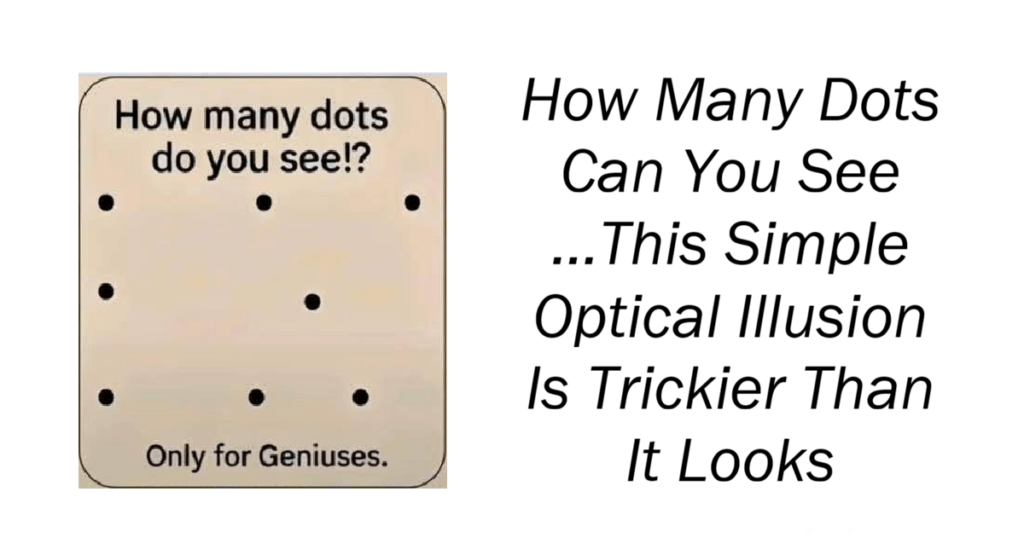
How Many Dots Can You See …This Simple Optical Illusion Is Trickier Than It Looks
At first glance, it seems like an easy challenge.
You look at the image and see what appears to be a simple collection of dots. Counting them should only take a few seconds, right?
Not so fast.
This classic visual puzzle has been confusing and entertaining people for years because what seems obvious at first isn’t always what your brain actually perceives. The real question is simple:
How many dots do you see?
The answer may surprise you—and it might not match what someone else sees.
Why Is This Dot Puzzle So Difficult?
Our brains are incredibly good at processing visual information, but they don’t always show us reality exactly as it is.
Instead of examining every tiny detail individually, the brain often looks for patterns, fills in missing information, and groups objects together to help us understand what we’re seeing more quickly.
Most of the time, this is incredibly useful. But when it comes to optical illusions, it can work against us.
Some dots may appear to:
- Blend into the background
- Overlap with nearby dots
- Disappear when you focus on another area
- Seem to appear and disappear as your eyes move
That’s why two people can look at the exact same image and confidently give completely different answers.
What Does Your Answer Say About You?
While this puzzle isn’t a scientific personality or vision test, it’s a fun way to think about how different people process visual information.
For example:
- If you counted quickly, you may naturally rely on pattern recognition and your first impressions.
- If you counted slowly, you might prefer to analyze details carefully before reaching a conclusion.
- If your answer changed after looking again, you’ve experienced how easily our perception can shift when we refocus our attention.
The challenge highlights an interesting fact: our brains don’t simply record what our eyes see—they interpret it.
Want a More Accurate Count? Try These Tips
If you’re not completely confident in your answer, don’t worry. Most people change their count after taking a second look.
Here are a few strategies that can help:
- Step back from your screen, then move closer again.
- Count one small section at a time instead of scanning the whole image.
- Cover parts of the picture and reveal them gradually.
- Take a short break before looking again with fresh eyes.
You may be surprised at how many additional dots you notice the second time around.
Why Are Optical Illusions So Addictive?
Visual brain teasers like this have become incredibly popular online—and it’s easy to see why.
They offer a quick mental challenge while encouraging us to slow down and pay closer attention.
Many people enjoy them because they can:
- Improve focus and concentration
- Encourage careful observation
- Give the brain a fun workout
- Spark conversations and friendly debates
- Show how differently people perceive the same image
Sometimes the discussion afterward is even more entertaining than the puzzle itself!
So… How Many Dots Did You Count?
Did you spot every dot on your first try, or did your answer change after looking again?
There’s no shame in taking a second—or even a third—look. That’s exactly what makes this illusion so fascinating.
Now it’s your turn to put your observation skills to the test. Compare your answer with friends and family and see who notices the details others miss. You may discover that everyone sees the same image a little differently—and that’s part of the fun.
You’ve just read How Many Dots Can You See. Why not read Does “Kit Kat” Really Stand for Something