
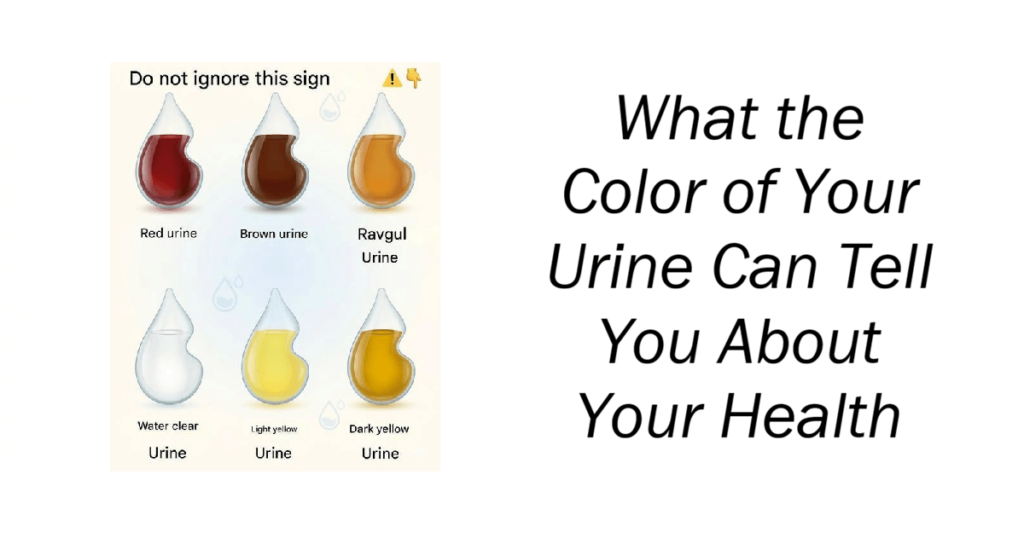
What the Color of Your Urine Can Tell You About Your Health
Most of us don’t pay much attention to the color of our urine unless something seems unusual. However, this everyday detail can offer valuable clues about your hydration, diet, medications, and, in some cases, your overall health.
While occasional changes in urine color are often harmless, persistent or dramatic changes shouldn’t be ignored. Understanding what different colors may mean can help you know when a simple lifestyle change is enough—and when it’s time to speak with a healthcare professional.
Why Does Urine Change Color?
Urine gets its yellow color from a natural pigment called urochrome, which is produced when the body breaks down old red blood cells.
The amount of water in your urine determines how light or dark that yellow appears. Well-hydrated people usually have lighter urine, while dehydration causes urine to become darker and more concentrated.
Other factors that can affect urine color include:
- Foods
- Vitamins and supplements
- Prescription medications
- Certain medical conditions
Clear or Nearly Transparent Urine
Crystal-clear urine often means you’re drinking a large amount of water.
While staying hydrated is essential, consistently producing completely clear urine may indicate you’re consuming more fluids than your body needs. In most cases, this isn’t harmful. However, if it’s accompanied by excessive thirst or frequent urination, it’s worth discussing with your healthcare provider.
Pale Yellow: The Healthy Standard
Light yellow urine is generally considered a sign of healthy hydration and normal kidney function.
This color usually indicates that your body is getting enough fluids without becoming overhydrated. Many healthcare professionals consider pale yellow urine to be an ideal target.
Dark Yellow or Amber
Dark yellow or amber urine commonly signals mild dehydration.
This often happens:
- After exercise
- During hot weather
- After spending several hours without drinking enough fluids
Drinking water usually restores a lighter color fairly quickly. If dark urine persists despite good hydration, another cause may be responsible.
Orange Urine
Orange urine can result from several factors, including:
- Dehydration
- Certain medications
- Vitamin supplements (especially high-dose B vitamins)
- Foods containing strong natural or artificial pigments
Occasionally, orange urine may be linked to liver or bile duct problems, particularly if it’s accompanied by yellowing of the skin or eyes. Persistent orange urine should be evaluated by a healthcare professional.
Pink or Red Urine
Seeing red or pink urine can be startling, but it isn’t always a medical emergency.
Sometimes the cause is simply food, including:
- Beets
- Blackberries
- Rhubarb
However, red urine can also indicate blood in the urine, which may be associated with:
- Urinary tract infections (UTIs)
- Kidney stones
- Kidney disease
- Bladder conditions
- Other urinary tract disorders
If you can’t explain the color by something you’ve recently eaten or taken, it’s important to seek medical evaluation promptly.
Brown Urine
Brown urine may occur because of:
- Severe dehydration
- Certain medications
- Some foods
- Liver disorders
- Kidney disease
In rare cases, intense exercise can lead to muscle breakdown that causes brown urine. If brown discoloration continues or is accompanied by other symptoms, medical assessment is recommended.
Blue or Green Urine
Blue or green urine is uncommon but can occur after:
- Certain medications
- Medical dyes used during diagnostic procedures
- Artificial food coloring
Less commonly, these colors may be associated with specific infections or rare metabolic disorders. If the change cannot be explained and persists, consult your healthcare provider.
When Should You See a Doctor?
Although many urine color changes are harmless, seek medical advice if you notice color changes along with:
- Pain or burning during urination
- Blood in the urine
- Fever
- Persistent abdominal, side, or back pain
- Yellowing of the skin or eyes
- Urine that remains unusually dark or discolored despite adequate hydration
These symptoms may indicate an underlying condition that requires medical evaluation.
Tips for Healthy Hydration
Keeping your urine a healthy pale yellow often starts with simple daily habits:
- Drink water regularly throughout the day.
- Increase fluid intake during hot weather or exercise.
- Eat water-rich fruits and vegetables.
- Avoid waiting until you’re extremely thirsty to drink fluids.
- Speak with your healthcare provider if you notice persistent changes in urine color or urinary habits.
The Bottom Line
Urine color is one of the body’s simplest health indicators. In many cases, changes are caused by hydration levels, diet, or medications and are nothing to worry about.
However, persistent or unusual colors—especially when accompanied by other symptoms—can sometimes signal an underlying medical condition that deserves attention.
Paying attention to these changes isn’t about becoming overly concerned; it’s about recognizing one of the body’s natural signals. If something doesn’t seem right or the color change doesn’t resolve after improving hydration, don’t hesitate to seek medical advice. Early evaluation can provide reassurance—or help identify a problem before it becomes more serious.
You’ve just read What the Color of Your Urine Can Tell You . Why not read How to Clean a Fan Without Taking It Apart