
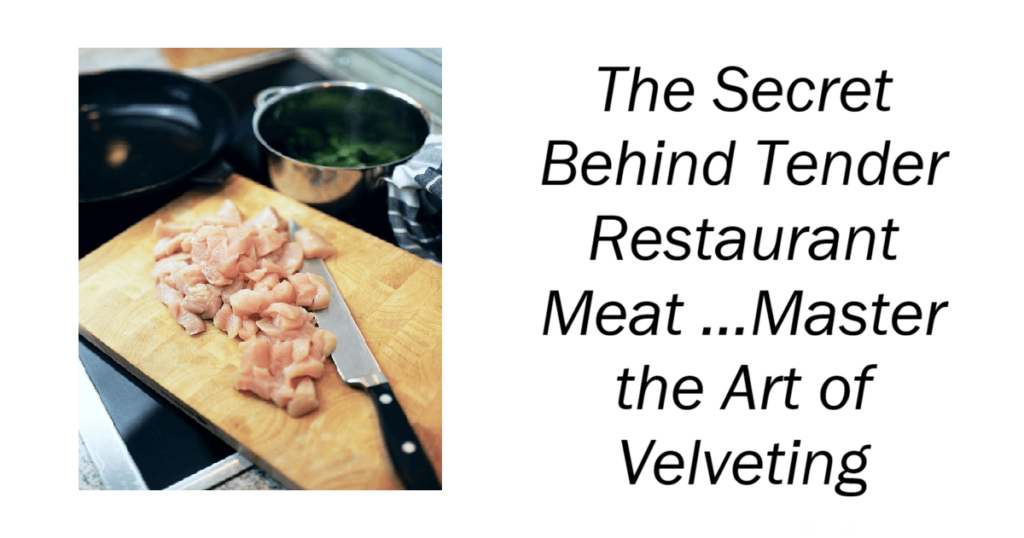
The Secret Behind Tender Restaurant Meat …Master the Art of Velveting
Have you ever wondered why the chicken in your favorite stir-fry is so incredibly tender? Or why the beef in Chinese restaurant dishes seems to melt in your mouth instead of turning chewy?
The answer isn’t a special cut of meat or an expensive ingredient—it’s a centuries-old cooking technique known as velveting.
For generations, Chinese chefs have relied on this simple method to keep meat juicy, silky, and perfectly tender, even when cooking over the intense heat of a wok. The best part? You don’t need professional equipment or advanced cooking skills to do it at home.
Once you learn how to velvet meat, your homemade stir-fries, noodle dishes, and fried rice will have that unmistakable restaurant-quality texture you’ve always admired.
What Is Velveting?
Velveting is a traditional Chinese cooking technique that coats meat in a light marinade made from ingredients such as cornstarch, egg white, rice wine, and sometimes soy sauce.
This thin coating acts like a protective shield during cooking. Instead of allowing the meat to dry out over high heat, it locks in moisture and creates an exceptionally smooth, tender texture.
The result is meat that’s juicy on the inside, silky on the outside, and evenly cooked from edge to center.
A Technique with Centuries of History
Velveting has been used in Chinese kitchens for hundreds of years.
It originated as a practical solution for cooking lean meats quickly over extremely hot woks. Because stir-frying happens in just a few minutes, chicken breast, beef, pork, and shrimp can easily become tough if they’re not properly prepared.
Chinese cooks discovered that coating the meat before cooking created a protective barrier that helped preserve its natural moisture while improving its texture.
Today, velveting remains a staple technique in both restaurant kitchens and home cooking around the world.
Why Velveting Works
The secret lies in a bit of kitchen science.
Cornstarch forms a thin coating around each piece of meat, helping to seal in moisture.
Egg white creates a delicate layer that becomes smooth and silky once cooked.
Rice wine or soy sauce adds flavor while helping the marinade coat the meat evenly.
After a brief blanching step, the protective coating partially sets before the meat is stir-fried, allowing it to withstand high heat without becoming dry or chewy.
The result is remarkably tender meat with a texture that’s difficult to achieve using ordinary marinades.
How to Velvet Meat at Home
The process is surprisingly simple.
Step 1: Slice the Meat
Cut chicken, beef, pork, or shrimp into thin, evenly sized pieces.
Uniform slices ensure everything cooks evenly and quickly.
Step 2: Prepare the Marinade
In a bowl, combine:
- 1 egg white
- 1 tablespoon cornstarch
- 1 tablespoon rice wine or dry sherry
- 1 teaspoon soy sauce (optional)
- A small pinch of salt
Whisk until the mixture is smooth and creamy.
Step 3: Coat the Meat
Add the sliced meat and toss until every piece is evenly coated.
Cover and refrigerate for 20 to 30 minutes.
This short resting time allows the coating to adhere properly without making the texture overly soft.
Step 4: Blanch the Meat
Bring a pot of water or oil to a gentle simmer.
Avoid a vigorous boil, which can disturb the coating.
Working in small batches, cook the meat for 30 to 60 seconds, just until it turns opaque.
Remove immediately and drain.
At this stage, the meat is only partially cooked.
Step 5: Finish the Dish
Transfer the blanched meat to your hot wok or skillet.
Stir-fry it with vegetables, noodles, rice, or your favorite sauce until fully cooked.
Because the meat is already partially cooked, this final step happens quickly while preserving its tenderness.
Why It Tastes So Much Better
Unlike acidic marinades that can sometimes change the texture or flavor of meat, velveting simply protects it.
As the cornstarch and egg white cook, they form a delicate gel-like coating that traps moisture inside.
This creates the silky, succulent texture that people often associate with restaurant-quality Chinese food.
The meat stays juicy without becoming mushy, and its natural flavor remains the star of the dish.
Dishes That Benefit from Velveting
Once you’ve mastered this technique, you’ll find yourself using it in countless recipes.
Some of the best include:
- Kung Pao Chicken with tender, flavorful chicken pieces
- Beef and Broccoli featuring melt-in-your-mouth slices of beef
- Lemon Chicken with crisp edges and juicy interiors
- Shrimp Stir-Fry with shrimp that stay plump and tender
- Fried Rice made even more satisfying with velveted chicken or pork
You can also use velveting for lo mein, chow mein, vegetable stir-fries, and many other Asian-inspired dishes.
Tips for Perfect Results
A few simple tips can make all the difference.
- Don’t marinate the meat for too long, as it may become overly soft.
- Blanch in small batches to maintain the proper cooking temperature.
- Use clean oil or fresh simmering water to keep the coating light and smooth.
- Slice meat against the grain whenever possible, especially beef, for extra tenderness.
- Feel free to experiment by adding a few drops of sesame oil or substituting mirin for rice wine to create subtle flavor variations.
A Small Step That Makes a Big Difference
Velveting is one of those cooking techniques that delivers impressive results with very little effort.
In just a few extra minutes, you can transform ordinary chicken, beef, pork, or shrimp into incredibly tender, restaurant-style protein that elevates even the simplest weeknight meal.
It’s no surprise that professional chefs have relied on this method for generations.
Final Thoughts
The next time you’re craving your favorite Chinese takeout, skip the delivery app and head to your kitchen instead.
With a handful of pantry ingredients and a few extra minutes of preparation, you can recreate that signature silky texture that makes restaurant stir-fries so irresistible.
Once you experience the difference velveting makes, you’ll likely find yourself using this technique again and again. Sometimes, the smallest cooking secrets have the biggest impact—and velveting is one of the best-kept secrets worth sharing.
You’ve just read The Secret Behind Tender Restaurant Meat . Why not read Tomatoes The Everyday Superfood