
I Grew Up Poor… One Dinner Invitation Changed the Course of My Life
I grew up knowing what it meant to go without.
By the time I was thirteen, I’d learned how to pretend I wasn’t hungry, how to say I’d already eaten, and how to stretch the smallest meal into something that looked enough.
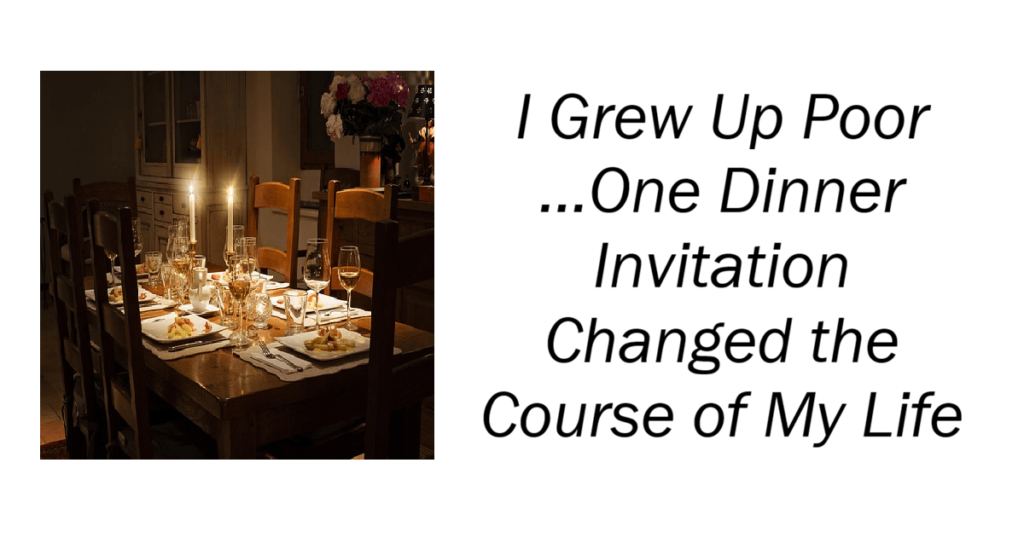
One afternoon, I stayed after school at my classmate Zara’s house to work on a project. When her mother invited me to stay for dinner, I hesitated before quietly saying yes.
It was the first time I’d ever sat around a table like that.
Fresh bread still warm from the oven.
A roast with vegetables.
A salad that wasn’t just lettuce.
Everyone was talking and laughing, but I barely heard them.
I couldn’t stop staring at the food.
Every time someone offered me another roll or another spoonful of potatoes, I accepted without thinking. Then I’d catch everyone looking at me, and embarrassment would wash over me.
I kept my eyes on my plate for the rest of the meal.
The next afternoon, I came home from school and found Zara’s mother, Ms. Allen, sitting in our living room.
My mother’s face was bright red.
“We need to have a talk,” she said quietly.
My stomach dropped.
I was sure I’d done something wrong.
Ms. Allen spoke gently.
“I noticed how uncomfortable you seemed during dinner,” she said. “At first, I thought maybe we had upset you.”
She paused before continuing.
“But then I realized… you weren’t uncomfortable because of us.”
“You just aren’t used to having enough to eat.”
I wanted the floor to open beneath me.
She wasn’t being cruel.
If anything, she looked heartbroken.
My mother lowered her eyes.
“Ms. Allen wants to help us,” she said softly.
Every instinct in me wanted to refuse.
I was tired of feeling poor.
Tired of pity.
Tired of people seeing what I tried so hard to hide.
Then Ms. Allen smiled.
“What if you came over every Wednesday after school?” she asked.
“You could help me cook dinner.”
“It wouldn’t be charity.”
“It would just be two people making a meal together.”
Something about the way she said it made all the difference.
She wasn’t offering leftovers.
She was offering a place at the table.
I looked at my mother.
Tears filled her eyes.
“Only if you want to,” she whispered.
After a long silence, I nodded.
“I’d like that.”
That first Wednesday, I nearly turned around before ringing the doorbell.
Ms. Allen opened it before I could change my mind.
“Perfect timing,” she smiled. “The onions are waiting.”
And just like that, we started cooking.
There was never any fuss.
No speeches.
No reminders that she was helping me.
She simply handed me a knife, showed me how to hold it properly, and trusted me to learn.
Week after week, I chopped vegetables, stirred soups, seasoned chicken, baked bread, and learned how a handful of simple ingredients could become something extraordinary.
Zara teased me for taking everything so seriously.
“You look like you’re studying for an exam,” she’d laugh.
Maybe I was.
Because every Wednesday felt like another lesson in a life I never knew existed.
Before long, I realized Ms. Allen was teaching me far more than recipes.
She taught me patience.
Pride in doing something well.
The joy of sharing food with people you love.
And slowly, without realizing it, she helped me believe I was capable of more than I’d ever imagined.
One afternoon, while we waited for biscuits to finish baking, she asked me a question no adult had ever asked before.
“What do you want to be when you grow up?”
I shrugged.
“I don’t know.”
“Somewhere, I guess.”
She smiled.
“You’re allowed to dream bigger than ‘somewhere.'”
I laughed quietly.
“It’s hard to dream big when you’re worried about dinner.”
She nodded thoughtfully.
“Maybe that’s exactly why you should.”
Then she looked me straight in the eye.
“You have real talent.”
“You don’t just follow recipes.”
“You taste.”
“You adjust.”
“You pay attention.”
“That’s something people can’t teach.”
Those words stayed with me.
The following week, she handed me a blank notebook.
“For your recipes,” she said.
“And for your own ideas.”
That notebook became my greatest treasure.
Every meal we cooked went into it.
Stews.
Soups.
Roasted vegetables.
Fresh pasta sauces.
Banana bread.
Little notes about what worked and what didn’t.
Soon I wasn’t just cooking.
I was creating.
Years passed.
Life at home slowly became more stable.
My mom worked every job she could find, and while we never had much, we finally had enough.
Ms. Allen never stopped encouraging me.
When I turned sixteen, she surprised me with an envelope.
Inside was a gift certificate for a culinary workshop.
“I thought you might like to meet a real chef,” she said with a grin.
I couldn’t speak.
No one had ever invested in my future before.
The workshop changed everything.
For the first time, I met other teenagers who loved cooking as much as I did.
Professional kitchens no longer felt like impossible places.
They felt like somewhere I belonged.
During my final year of high school, Ms. Allen helped me apply for a culinary scholarship.
I didn’t expect much.
When the acceptance email finally arrived, I stared at the screen for nearly a full minute before believing it.
My mom cried.
I cried.
Then we drove straight to Ms. Allen’s house.
She hugged me so tightly I could barely breathe.
“I knew you could do it,” she whispered.
Years later, I opened a small restaurant in my hometown.
Nothing fancy.
Just honest food made with care.
My mother still comes by almost every week.
Ms. Allen and Zara have their own table near the window.
Sometimes we laugh about the thirteen-year-old who couldn’t dice an onion without crying.
These days, I hire teenagers who remind me of myself.
Kids who need someone to believe in them before they believe in themselves.
I teach them everything Ms. Allen taught me.
Not just how to cook.
How to take pride in their work.
How to be patient.
How to keep learning.
How to dream bigger than the circumstances they were born into.
Looking back, it wasn’t the dinner itself that changed my life.
It was what came afterward.
One woman saw a hungry child.
Instead of offering pity, she offered dignity.
Instead of giving me food for one night, she gave me skills that would feed me for a lifetime.
I’ve learned that kindness isn’t always about giving someone what they need today.
Sometimes it’s about giving them the confidence to build a better tomorrow.
And that kind of generosity can change a life forever.
You’ve just read One Dinner Invitation Changed the Course of My Life . Why not read If He Doesn’t Appreciate You