
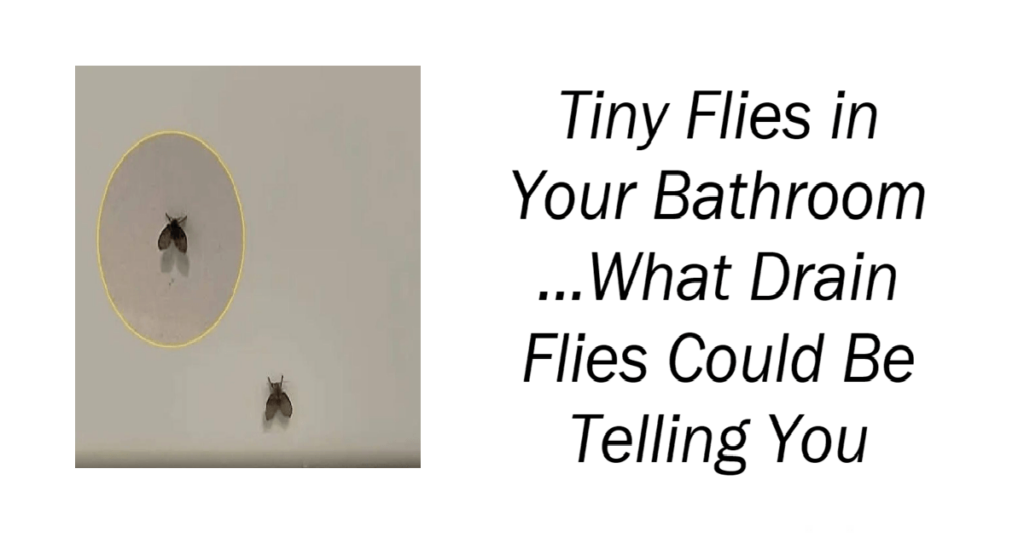
Tiny Flies in Your Bathroom …What Drain Flies Could Be Telling You
Have you ever noticed tiny, moth-like insects resting on your bathroom walls, around the sink, or near the shower drain?
Many people assume these little bugs appear randomly and are simply another household pest. But drain flies—also known as sewer flies or shower flies—are often a sign that something is happening inside your plumbing system.
They are small, slow-moving, and easy to ignore at first. However, if they keep returning, they may be pointing to excess moisture, buildup, or hidden debris that needs attention.
Why Do Drain Flies Appear in Bathrooms?
Drain flies love damp, humid environments with organic material. This makes bathrooms one of their favorite places to settle.
Unlike common house flies, drain flies usually stay close to where they hatch. You’ll often find them near:
- Bathroom drains
- Sinks
- Shower areas
- Damp walls
- Condensation around pipes
- Poorly ventilated spaces
Although they are not usually considered dangerous, their presence often indicates that cleaning or maintenance is needed.
What Do Drain Flies Look Like?
Drain flies have a very recognizable appearance.
They are usually:
- Small in size
- Gray, brown, or dark-colored
- Covered with tiny hairs
- Similar in appearance to miniature moths
Unlike many other flying insects, they do not travel far. Instead, they prefer to stay near their breeding areas, which are usually damp spots containing organic buildup.
The Hidden Problem Inside Your Drain
The main reason these insects appear is often hidden beneath the surface.
Inside pipes, a sticky layer can develop over time. This buildup may contain:
- Soap residue
- Hair
- Dirt
- Body oils
- Organic debris
This creates the perfect environment for drain flies to lay eggs and develop.
That’s why a bathroom can look completely clean while still having a drain fly problem. The source is often inside the plumbing, where regular surface cleaning cannot reach.
Common causes include:
- Dirty or neglected drains
- Slow drainage
- Standing water
- Hair buildup
- Small leaks
- Pipes that remain damp and unused for long periods
Why Sprays Often Don’t Solve the Problem
One of the most common mistakes is relying only on insect sprays.
While insecticides may kill adult drain flies, they do not remove the eggs or breeding material hidden inside the drain. If the organic buildup remains, new flies can appear again within days.
The key is treating the source, not just the insects you see.
How to Find Where Drain Flies Are Coming From
If you have multiple drains in your home, it can be difficult to know where the problem starts.
One simple method is to place a small piece of clear tape over part of a drain overnight, leaving enough space for airflow. In the morning, the drain with trapped insects is likely the area causing the issue.
The Best Way to Get Rid of Drain Flies
The most effective solution is a thorough drain cleaning.
Start by:
1. Remove Visible Debris
Take out drain covers or strainers and remove trapped hair, soap residue, and dirt.
2. Clean Inside the Pipe
Use a flexible drain brush or cleaning tool to scrub the inside walls of the pipe. This removes the organic layer where larvae can grow.
3. Flush the Drain
Hot water can help loosen buildup and wash away debris. However, use caution with older or fragile plumbing systems.
Enzyme-based drain cleaners can also help break down organic material and may be useful for ongoing maintenance.
Reduce Moisture to Prevent Future Problems
Drain flies thrive in humidity, so keeping the bathroom dry can make a big difference.
Helpful habits include:
- Improving ventilation
- Using an exhaust fan
- Opening windows when possible
- Drying wet surfaces after showers
- Checking for leaks
Reducing moisture makes the environment much less attractive to these insects.
Do Home Remedies Work?
Some people use simple traps, such as apple cider vinegar mixed with a few drops of dish soap placed near the drain.
These methods may reduce the number of adult flies you see, but they do not remove the breeding source. A proper drain cleaning is still the most reliable solution.
When Should You Call a Professional?
Sometimes drain flies can indicate a larger plumbing issue.
Consider getting professional help if you notice:
- Persistent foul odors
- Very slow drainage
- Flies appearing in multiple rooms
- Signs of leaks
- Repeated infestations after cleaning
These symptoms may point to deeper blockages, hidden moisture problems, or damaged pipes.
The Bottom Line
Drain flies are more than just a bathroom annoyance. While they are usually harmless, they can be a warning sign that moisture and organic buildup are collecting somewhere in your plumbing.
Regular drain cleaning, good ventilation, and proper maintenance are simple ways to prevent these tiny insects from making your bathroom their permanent home.
You’ve just read Tiny Flies in Your Bathroom. Why not read The Way You Sit