
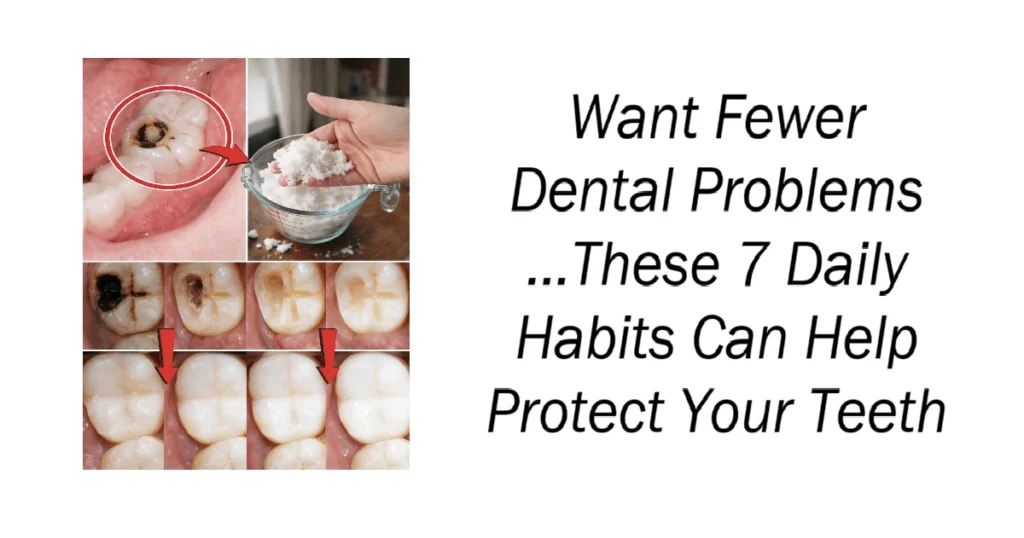
Want Fewer Dental Problems …These 7 Daily Habits Can Help Protect Your Teeth
Most people would love to spend less time in the dentist’s chair. While regular dental visits remain essential, the truth is that many common oral health problems can be prevented with consistent daily care.
The good news? Protecting your teeth doesn’t require expensive treatments or complicated routines. A few simple habits can go a long way toward keeping your smile healthy and reducing the risk of cavities, gum disease, and other dental issues.
Here’s what dental professionals recommend.
1. Brush Properly—Not Just Quickly
Brushing your teeth may seem straightforward, but how you brush matters just as much as how often you do it.
For the best results:
- Use a fluoride toothpaste.
- Brush twice a day.
- Spend at least two full minutes brushing.
- Pay special attention to the back teeth, gum line, and tongue.
Many people brush too hard, thinking it cleans better. In reality, gentle and thorough brushing is far more effective than aggressive scrubbing.
Remember: good technique beats excessive force every time.
2. Make Flossing a Daily Habit
Even the best toothbrush can’t reach every surface of your teeth.
That’s where flossing comes in.
Floss at least once a day, gently sliding the floss between each tooth and curving it around the sides to remove hidden plaque and food particles.
Regular flossing helps prevent cavities between teeth and reduces the risk of gum inflammation.
Think of it as cleaning the areas your toothbrush simply can’t access.
3. Consider Using a Mouth Rinse
While not a replacement for brushing and flossing, mouthwash can be a useful addition to your oral care routine.
An antibacterial mouthwash may help reduce bacteria and freshen breath. Some people also find that occasionally rinsing with warm salt water helps soothe minor gum irritation.
Used correctly, rinsing can provide an extra layer of protection for your oral health.
4. Pay Attention to What You Eat
Your diet plays a major role in the health of your teeth.
Try to limit:
- Sugary snacks
- Soft drinks
- Highly acidic beverages
Instead, focus on foods that support oral health, such as:
- Crunchy fruits like apples
- Fresh vegetables
- Dairy products rich in calcium
These foods can help support strong enamel and contribute to a healthier mouth overall.
5. Stay Hydrated Throughout the Day
Water is one of the simplest tools for maintaining good oral health.
Drinking plenty of water helps wash away food particles, reduce acid buildup, and support healthy saliva production. Saliva plays an important role in protecting teeth by neutralizing acids and helping prevent decay.
Whenever possible, choose water over sugary beverages.
Your teeth will thank you.
6. Don’t Ignore Early Warning Signs
Dental problems rarely improve on their own.
Pay attention to symptoms such as:
- Tooth sensitivity
- Persistent pain
- Dark spots on teeth
- Swollen or bleeding gums
Addressing problems early often means simpler, less expensive treatment. Waiting too long can allow minor issues to become much more serious.
When it comes to dental health, early action is always your best friend.
7. Keep Up with Regular Dental Checkups
Even if your home care routine is excellent, professional dental care still matters.
Most dentists recommend:
- Checkups every six months
- Regular professional cleanings
These visits help identify potential problems before they become severe and remove plaque or tartar that brushing and flossing can’t eliminate completely.
Prevention doesn’t mean avoiding the dentist—it means making dental visits easier and less stressful.
The Truth About Salt and DIY Cavity Remedies
You may have seen claims online suggesting that salt can “fix” cavities naturally.
Unfortunately, this is a myth.
While salt water rinses may temporarily soothe irritated gums and help maintain oral hygiene, they cannot repair tooth decay or reverse an existing cavity.
Once a cavity forms, professional dental treatment is typically required.
Be cautious about relying on home remedies that promise quick fixes for serious dental issues.
Final Thoughts
The secret to avoiding major dental problems isn’t skipping dentist appointments—it’s building healthy habits every day.
Brushing properly, flossing consistently, making smart dietary choices, staying hydrated, and seeking professional care when needed can dramatically improve your oral health over time.
A few minutes of daily effort can mean fewer treatments, less discomfort, and a healthier, brighter smile for years to come.
You’ve just read These 7 Daily Habits Can Help Protect Your Teeth. Why not read Why Wool Sweaters Get Those Annoying Little Pills