
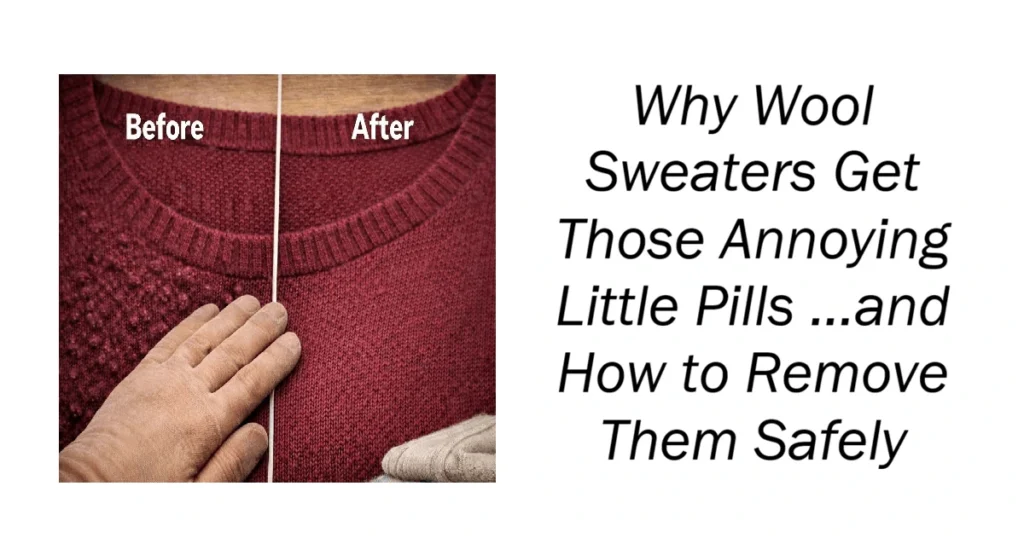
Why Wool Sweaters Get Those Annoying Little Pills …and How to Remove Them Safely
Have you ever pulled your favorite wool sweater out of the closet only to discover it’s covered in tiny fuzz balls? No matter how carefully you care for your clothes, those little pills seem to appear out of nowhere, making even a beloved sweater look worn and aged.
The good news? Pilling is completely normal—and understanding why it happens is the first step toward keeping your knitwear looking fresh, elegant, and cozy for years to come.
Why Do Wool Sweaters Pill?
Before searching for a quick fix, it helps to understand what’s actually happening.
Pilling isn’t a sign of poor quality or improper care. In fact, it’s a natural characteristic of wool and other soft fibers, such as cashmere. These materials are made up of fine, flexible fibers that move and rub against one another during everyday wear.
Every time your sweater comes into contact with a coat, handbag strap, seatbelt, or even a chair, friction causes loose fibers to rise to the fabric’s surface. Over time, these fibers tangle together and form the small balls we know as pills.
Here’s the surprising part: the softer and finer the fiber, the more likely it is to pill. That’s why luxurious, high-quality sweaters can sometimes develop pills faster than heavier or rougher fabrics.
Washing Can Make It Worse
Another major contributor to pilling is washing.
During a wash cycle, garments rub against the drum and against each other. Water, detergent, and movement create countless microscopic frictions that gradually loosen fibers and encourage pilling.
While these tiny changes aren’t visible right away, they eventually become noticeable, especially in areas exposed to frequent wear.
Where Do Pills Usually Appear?
If you’ve noticed pilling under the arms, along the sides, or on the sleeves, you’re not imagining things.
These are the parts of a sweater that experience the most friction throughout the day. Areas where handbags rest, arms move, or fabrics rub together tend to develop pills first.
The important thing to remember is that pilling affects appearance—not performance. Your sweater remains just as warm, comfortable, and functional as before.
Rather than retiring it to the back of your closet, a little maintenance can quickly restore its polished look.
How to Remove Pills Without Damaging Wool
The key is to remove the pills gently without pulling on the fibers or stretching the knit.
Fortunately, you don’t need expensive tools to get great results.
1. Use a Fabric Shaver
A fabric shaver is one of the safest and most effective solutions. Designed specifically for knitwear, it trims away pills while leaving the fabric intact.
Simply lay the sweater flat and move the device lightly across the surface.
2. Try a Sweater Comb
A sweater comb is another popular option for wool and cashmere garments. Its fine teeth gently lift and remove pills without damaging delicate fibers.
Use light strokes and avoid pressing too hard.
3. Use a Disposable Razor Carefully
In a pinch, a clean disposable razor can help remove pills.
Lay the sweater on a flat surface and lightly glide the razor across the fabric. Use minimal pressure and move slowly to avoid snagging the knit.
This method works best on thicker wool garments rather than delicate cashmere pieces.
4. Remove Pills by Hand
For small areas, carefully picking off pills by hand can be surprisingly effective.
Although it takes more time, it minimizes the risk of damaging delicate fabrics.
How to Prevent Future Pilling
While it’s impossible to eliminate pilling entirely, you can reduce it significantly with a few simple habits:
- Turn sweaters inside out before washing.
- Use a gentle wool cycle or hand wash whenever possible.
- Wash wool garments separately from rough fabrics like denim.
- Use a mesh laundry bag for added protection.
- Avoid overloading the washing machine.
- Fold sweaters instead of hanging them to preserve their shape.
- Store knitwear carefully during the off-season.
Final Thoughts
Pilling may be frustrating, but it’s a completely normal part of owning and wearing wool garments. In fact, it often occurs on some of the softest and most luxurious sweaters.
The good news is that a few minutes of gentle maintenance can make a dramatic difference. With the right care techniques and a little prevention, your favorite wool sweaters can continue looking stylish, comfortable, and well-maintained for many seasons to come.
After all, a few tiny pills shouldn’t stand between you and the sweater you love.
You’ve just read Why Wool Sweaters Get Those Annoying Little Pills. Why not read Hate Cleaning Up Fish Scales