
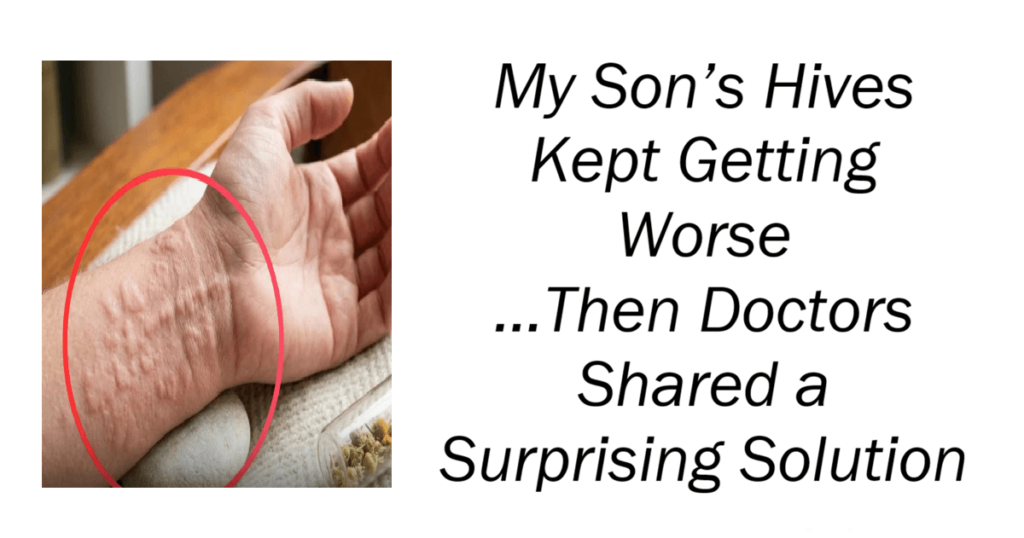
My Son’s Hives Kept Getting Worse …Then Doctors Shared a Surprising Solution
Hives are one of the most common skin conditions, affecting approximately one in five people at some point in their lives. While they are usually not dangerous, hives can cause intense itching, discomfort, and significant disruption to daily activities.
So what exactly are hives, what causes them, and when should you seek medical attention? Here’s everything you need to know.
What Are Hives?
Hives, also known as urticaria, are a skin reaction that occurs when the body releases histamine and other chemical mediators from specialized immune cells called mast cells. This causes small blood vessels beneath the skin to leak fluid, resulting in raised, itchy welts.
These welts may:
- Appear red, pink, or skin-colored
- Be round, oval, or ring-shaped
- Merge into larger patches
- Develop anywhere on the body
- Cause intense itching or burning sensations
Individual hives often disappear within 24 hours, but new ones may continue to appear, making the condition seem persistent.
Hives vs. Angioedema: Understanding the Difference
Many people with hives also experience angioedema, a type of swelling that occurs deeper beneath the skin.
Angioedema commonly affects:
- The lips
- Eyelids
- Tongue
- Inside the mouth and throat
Unlike hives, angioedema is often painful rather than itchy and may take longer to resolve.
If swelling occurs without hives, it may indicate a rare inherited condition known as hereditary angioedema, which requires different diagnostic tests and treatment approaches.
Types of Hives
Acute Hives
Acute hives are the most common form of urticaria. Symptoms appear suddenly and usually resolve within six weeks.
In many cases, the trigger can be identified.
Common Causes of Acute Hives
Allergic Reactions
Certain foods are frequent triggers, including:
- Peanuts
- Shellfish
- Eggs
- Milk and dairy products
Insect stings and latex allergies can also provoke hives.
Medications
Several medications are known to trigger hives, including:
- Aspirin
- Nonsteroidal anti-inflammatory drugs (NSAIDs)
- Certain antibiotics, especially penicillin
Infections
Viral and bacterial infections can lead to hives, including:
- The common cold
- Hepatitis
- Mononucleosis
This is particularly common in children.
Environmental Factors
External triggers may include:
- Extreme heat
- Extreme cold
- Emotional stress
- Physical exertion
Acute hives often respond well to oral antihistamines and typically improve within days or weeks.
Chronic Hives
Hives are considered chronic when symptoms persist for more than six weeks or recur frequently.
Unlike acute hives, chronic hives can be difficult to explain. In approximately 80–90% of cases, no specific trigger can be identified.
The Autoimmune Connection
Research suggests that nearly half of chronic hives cases may involve an autoimmune process.
In these situations, the body’s immune system mistakenly attacks its own tissues. Autoantibodies stimulate mast cells to release histamine continuously, leading to recurring outbreaks.
Associated Medical Conditions
Chronic hives may sometimes be linked to underlying health conditions, such as:
- Hypothyroidism
- Lupus
- Rheumatoid arthritis
- Other autoimmune disorders
Impact on Daily Life
Although individual welts often disappear within a day, new ones continue to develop elsewhere on the body.
As a result, chronic hives can cause:
- Sleep disturbances
- Anxiety and emotional distress
- Fatigue
- Reduced quality of life
For severe cases, treatment may include high-dose antihistamines, biologic therapies such as omalizumab, or other immune-modulating medications.
Physical Hives (Inducible Urticaria)
Physical hives occur when symptoms are triggered by specific external stimuli rather than internal causes.
The reaction usually appears within minutes of exposure.
Dermatographism (Skin Writing)
People with dermatographism develop raised, itchy marks after scratching, rubbing, or applying pressure to the skin.
Even light scratching can leave visible welts.
Cold Urticaria
This type occurs after exposure to:
- Cold air
- Cold water
- Ice
In rare cases, full-body exposure to cold water can trigger a severe allergic reaction.
Cholinergic Urticaria
This condition develops when body temperature rises due to:
- Exercise
- Hot showers or baths
- Spicy foods
- Emotional stress
Delayed Pressure Urticaria
This form appears several hours after sustained pressure on the skin, such as from:
- Heavy backpack straps
- Tight belts
- Prolonged sitting
Unlike other forms of physical urticaria, symptoms may not appear for 4–8 hours and are often more painful than itchy.
When Should You Seek Emergency Medical Care?
Most cases of hives are harmless. However, immediate medical attention is required if symptoms are accompanied by:
- Difficulty breathing
- Wheezing
- Swelling of the tongue or throat
- Dizziness
- Chest tightness
These symptoms may indicate anaphylaxis, a life-threatening allergic reaction that requires emergency treatment.
How to Identify Your Triggers
One of the most effective ways to uncover potential triggers is to keep a symptom diary.
Record details such as:
- Foods you eat
- Medications you take
- Stress levels
- Daily activities
- The timing of outbreaks
Over time, patterns may emerge that help you and your healthcare provider identify possible causes.
Lifestyle Tips to Reduce Flare-Ups
Simple lifestyle adjustments can help minimize outbreaks:
✔ Wear loose-fitting clothing
✔ Use fragrance-free skincare products
✔ Avoid harsh soaps and detergents
✔ Keep your skin cool
✔ Manage stress effectively
✔ Apply cold compresses to relieve itching
These small changes can make a meaningful difference in controlling symptoms.
Living Well With Hives
Living with chronic hives can be frustrating, especially when symptoms seem unpredictable. However, many people successfully manage the condition once they identify their triggers and find an effective treatment plan.
If your symptoms become severe, occur frequently, or begin affecting your quality of life, consult a healthcare professional. Early diagnosis and appropriate treatment can help reduce discomfort and improve long-term well-being.
Final Thoughts
Although hives can be uncomfortable and sometimes challenging to manage, they are often treatable. Understanding the different types of hives, recognizing potential triggers, and working closely with your healthcare provider can help you regain control and reduce future flare-ups.
With the right approach, most people can successfully manage their symptoms and continue living healthy, active lives.
You’ve just read My Son’s Hives Kept Getting Worse . Why not read The First Dove You See Could Reveal Something