
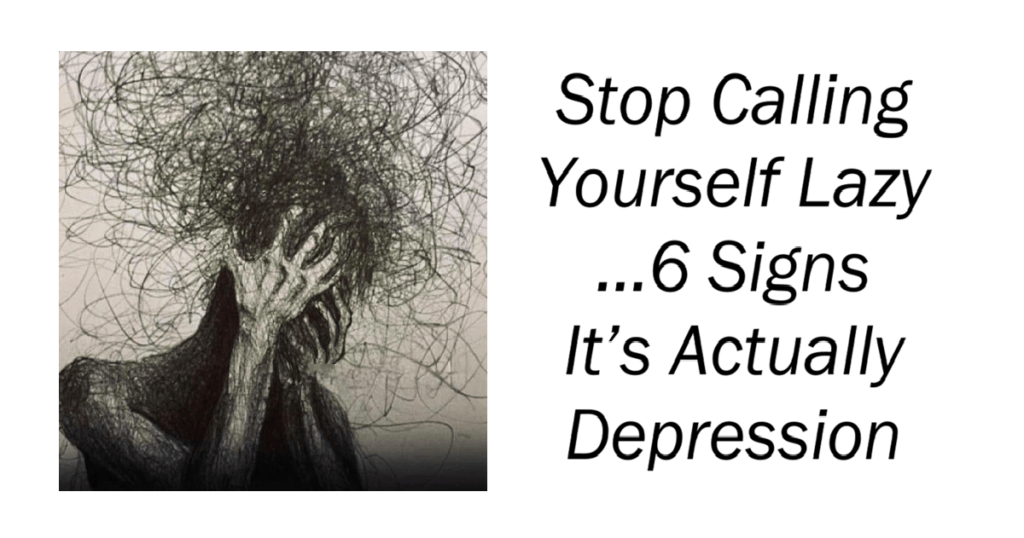
Stop Calling Yourself Lazy …6 Signs It’s Actually Depression
We’ve all had days when getting out of bed feels harder than usual. Sometimes life simply becomes overwhelming. Work pressure, financial stress, emotional exhaustion, and nonstop digital noise can drain both the body and mind.
But there’s an important difference between occasionally feeling unmotivated and struggling with something deeper.
Unfortunately, modern culture often glorifies constant productivity. People are praised for always being busy, always achieving, and always pushing forward. As a result, many individuals begin blaming themselves when they feel emotionally exhausted or unable to function normally.
What gets misunderstood far too often is that depression does not always look like obvious sadness.
Sometimes it looks like:
- Ignored text messages
- Piles of laundry
- Constant exhaustion
- Losing interest in things you once loved
- Feeling emotionally numb for weeks at a time
And many people mistake those symptoms for “laziness.”
Here are six important signs that what you’re experiencing may be something much more serious than simply lacking motivation.
1. You Want to Function — But Feel Mentally Stuck
Laziness is usually a conscious choice to delay effort or responsibility.
Depression feels very different.
Many people with depression desperately want to complete tasks but feel mentally and physically unable to begin. Even simple responsibilities — answering
emails, cleaning, showering, or getting out of bed — can feel overwhelmingly difficult.
It’s not about not caring.
It’s about feeling emotionally frozen.
Mental health experts explain that depression can affect areas of the brain related to motivation, energy, concentration, and reward processing. That’s why productivity advice and motivational quotes often feel useless to someone struggling with depression.
If you truly want to function but feel unable to move forward, that may be a symptom — not a character flaw.
2. Nothing Really Helps You Feel Better
Usually, temporary stress or burnout improves with rest, entertainment, or time with loved ones.
Depression often doesn’t.
One of the most painful parts of depression is that the emotional heaviness can remain no matter what you try. You may:
- Sleep more
- Go out with friends
- Watch comforting movies
- Take breaks
- Try self-care routines
…and still feel emotionally empty afterward.
Many people describe depression not as intense sadness, but as numbness — like existing behind a wall of fog that disconnects them from the world around them.
3. You’ve Lost Interest in Things You Once Loved
One of the clearest signs of depression is something called anhedonia — the inability to feel pleasure or excitement from activities you once enjoyed.
Hobbies, passions, and social interactions that once made you happy may suddenly feel exhausting or meaningless.
You may stop:
- Listening to music
- Exercising
- Gaming
- Reading
- Painting
- Socializing
- Responding to friends
Not because you don’t care anymore, but because joy itself feels distant.
A lazy person still seeks enjoyment and entertainment. A depressed person often struggles to feel enjoyment at all.
4. Everyday Tasks Feel Overwhelming
Depression doesn’t only affect emotions — it affects daily functioning.
Simple tasks may suddenly feel enormous:
- Replying to a message
- Washing dishes
- Folding laundry
- Taking a shower
- Cooking food
- Opening emails
Many people become extremely harsh toward themselves during this stage, especially when comparing themselves to others who appear productive and organized.
But depression can impair:
- Focus
- Decision-making
- Memory
- Mental clarity
- Energy levels
When the brain is overwhelmed emotionally, even basic routines can feel mentally exhausting.
5. You Feel Guilty for Feeling This Way
One of the most confusing parts of depression is that it can appear even when life looks “fine” on the outside.
You may have:
- A stable job
- Supportive friends or family
- Financial security
- A comfortable lifestyle
…and still feel deeply exhausted, hopeless, or disconnected.
That often creates guilt.
People begin telling themselves:
- “I have no reason to feel this way.”
- “Other people have it worse.”
- “Maybe I’m just lazy.”
But depression is not always caused by one obvious event. Mental health conditions can be influenced by:
- Brain chemistry
- Genetics
- Chronic stress
- Trauma
- Emotional burnout
- Life experiences
Sometimes there is no clear explanation — and that does not make your feelings less real.
6. It Doesn’t Feel Like a Choice
At the heart of it all, this is often the biggest difference between laziness and depression.
Laziness usually feels comfortable.
Depression often feels painful.
People struggling with depression frequently experience:
- Intense guilt
- Frustration with themselves
- Shame
- Emotional exhaustion
- Constant self-criticism
Many still force themselves to work, smile, socialize, and appear “normal” while privately battling overwhelming emotional weight every day.
Depression is not weakness.
And it is not simply a lack of willpower.
It is a real mental health condition that deserves understanding, compassion, and support.
Final Thoughts
Everyone feels tired, overwhelmed, or unmotivated sometimes. But when emotional exhaustion becomes constant, when joy disappears, and when daily life starts feeling impossible to manage, it may be time to stop blaming yourself and start paying attention to your mental health.
Recognizing the signs is not about labeling yourself — it’s about understanding yourself more honestly and compassionately.
And perhaps most importantly:
You do not have to go through it alone.
You’ve just read Stop Calling Yourself Lazy. Why not read How to Support Your Partner When They’re Stressed